Nathan Covey Ditches Smartphone for a Month, Reports Boost in Focus and Real‑World Interaction

Why It Matters
Covey’s month‑long digital detox provides a rare, data‑light case study of how removing a smartphone can reshape daily routines, communication patterns and mental bandwidth. In the motivation space, the experiment illustrates that habit change is possible when the friction of a new tool is low and the perceived benefits—more focus, deeper conversations, and a return to analog methods—are tangible. If replicated, such low‑tech swaps could become a lever for employers and wellness programs seeking to curb distraction without mandating costly technology solutions. The broader implication is a shift from passive screen‑time monitoring to active, user‑driven redesign of personal tech ecosystems. Covey’s public narrative may encourage a wave of self‑experiments, feeding into a feedback loop that informs product designers, mental‑health advocates and productivity coaches about the real‑world impact of smartphone overuse.
Key Takeaways
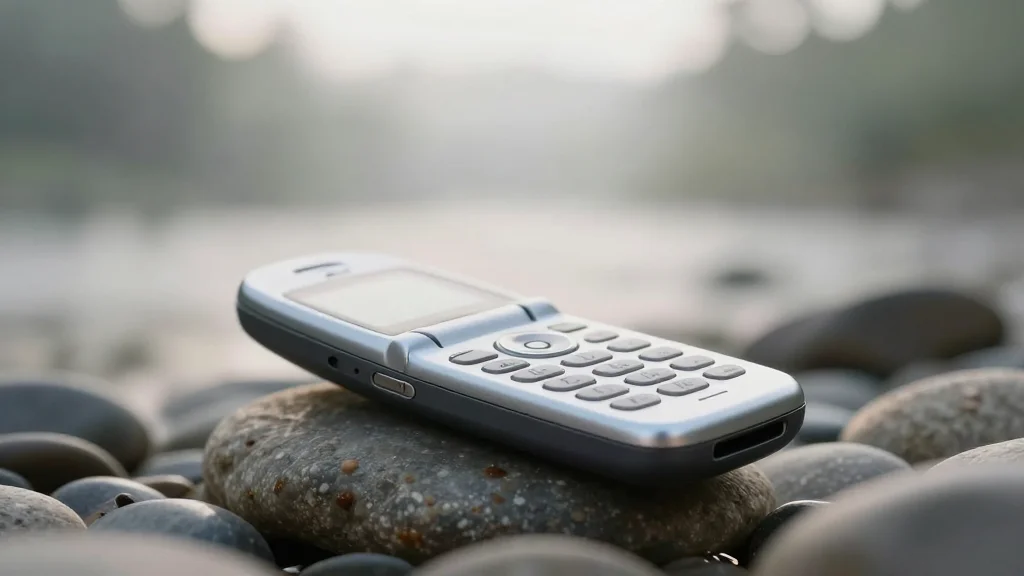
- •Nathan Covey replaced his iPhone with a flip phone for 30 days starting June 1, 2026.
- •He reported increased mental presence, more phone calls, and a renewed reliance on paper and pen.
- •Covey felt initial embarrassment but grew comfortable with the low‑tech device.
- •He declared he will not return to a smartphone, signaling a permanent habit shift.
- •The experiment aligns with rising interest in digital‑detox strategies for better focus.
Pulse Analysis
Covey’s experiment underscores a classic motivation principle: the removal of a high‑friction habit can unlock latent productivity. By swapping a multifunctional smartphone for a single‑purpose flip phone, he eliminated the constant cue‑response loop of notifications, thereby reducing decision fatigue. This aligns with behavioral economics research that suggests fewer choices lead to higher satisfaction when the remaining options are aligned with core goals.
From a market perspective, the story may pressure tech firms to rethink how they design engagement loops. While many companies add features to increase dwell time, Covey’s experience shows a counter‑trend where users actively seek simplicity. Companies that can offer “focus‑first” hardware or software—think minimalist phones, dedicated work‑mode devices, or subscription‑based distraction‑free tools—could capture a niche yet growing segment of consumers fatigued by digital overload.
Looking ahead, the sustainability of Covey’s gains will be the true test. If his productivity improvements persist beyond the novelty phase, it could validate a broader hypothesis that strategic tech abstinence, rather than incremental app‑based solutions, is a more effective lever for lasting behavioral change. Future research and longitudinal anecdotes will determine whether this anecdote becomes a catalyst for a new wave of low‑tech motivation strategies.
Nathan Covey Ditches Smartphone for a Month, Reports Boost in Focus and Real‑World Interaction
Comments
Want to join the conversation?
Loading comments...