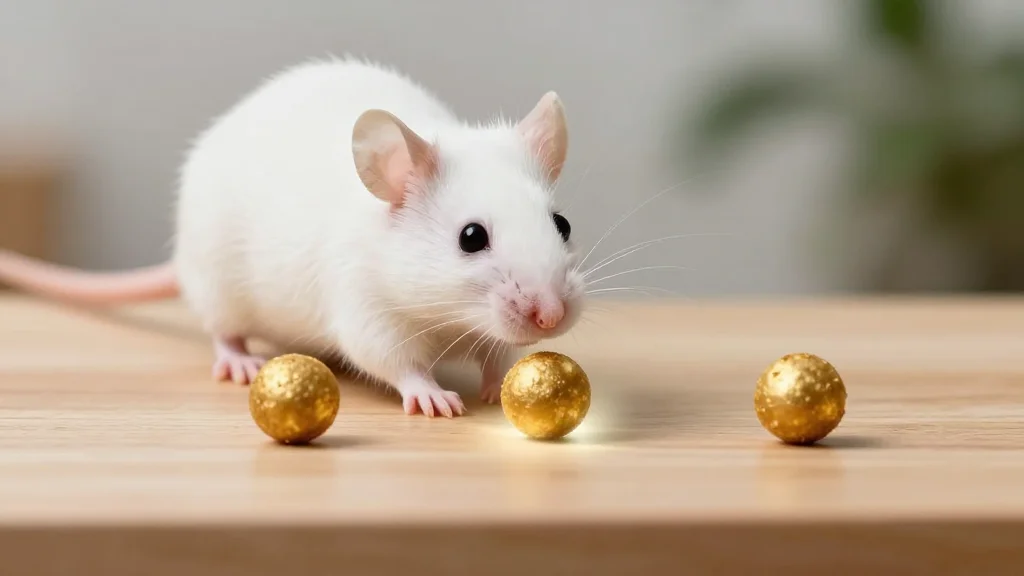
Study Finds Habits Can Form in Just Three Trials, Upending Classic Theory

Why It Matters
The discovery that habits can form after only three repetitions forces a reevaluation of how motivation is sustained over time. For clinicians, it underscores the urgency of early intervention when trying to prevent maladaptive behaviors, as the brain may lock in a pattern before a person even notices it. For product designers and marketers, the finding highlights the power of initial user experiences; a well‑crafted first few interactions could cement long‑term engagement. Beyond individual applications, the research could influence public‑policy approaches to habit‑related health issues. If habit formation is indeed a rapid switch, campaigns aimed at reducing smoking, unhealthy eating, or sedentary lifestyles might prioritize intense, short‑term interventions that target the critical early moments when the brain is most pliable. Conversely, programs that aim to build positive habits may need to concentrate resources on those first few exposures to ensure the habit lock‑in occurs.
Key Takeaways
- •Johns Hopkins study shows habit formation can occur after ~3 trials
- •Mice were motivated with citric‑acid‑flavored water to isolate choice behavior
- •Researchers observed a sudden, stable shift from flexible to automatic responding
- •Quotes from senior author Kishore V. Kuchibhotla and lead author Sharlen Moore highlight surprise at the rapid switch
- •Future work will test the three‑trial rule in humans and explore neural mechanisms
Pulse Analysis
The three‑trial habit formation finding upends a cornerstone of behavioral science: that repetition gradually builds automaticity. Historically, psychologists have modeled habit strength as a smooth curve, assuming each repetition adds a small increment of neural efficiency. The Johns Hopkins data suggest a threshold model, where once a hidden internal criterion is met, the brain flips a switch and the behavior becomes automatic. This aligns with emerging theories in computational neuroscience that propose discrete state changes in basal ganglia circuits, rather than continuous reinforcement learning.
From a market perspective, the result could accelerate the adoption of habit‑forming technologies that front‑load engagement. Apps that deliver intense, rewarding experiences in the first few uses may see higher long‑term retention, prompting a shift away from the "daily streak" model that spreads reinforcement over weeks. Companies that can identify the neural trigger for the switch—perhaps via biometric feedback—could develop adaptive interventions that nudge users precisely when they are most susceptible to habit lock‑in.
Looking ahead, the key question is whether the three‑trial rule scales to complex, multi‑step habits that involve higher‑order cognition. If it does, the implication is that early moments in any behavior change program are disproportionately influential. Practitioners will need to design ultra‑focused onboarding experiences, and policymakers may need to allocate resources to short, high‑impact campaigns. The study opens a new frontier: not just how many repetitions are needed, but when the brain decides to stop thinking and start doing.
Study Finds Habits Can Form in Just Three Trials, Upending Classic Theory
Comments
Want to join the conversation?
Loading comments...