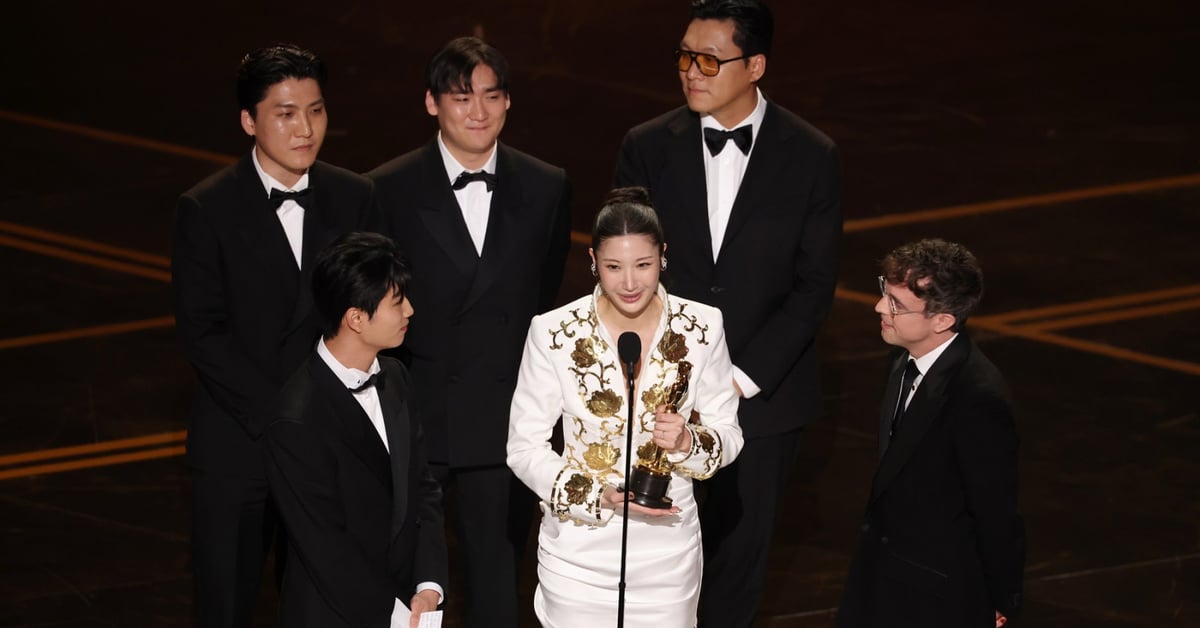
‘KPop Demon Hunters’ Wins Best Original Song — But Isn’t Allowed to Finish Acceptance Speech
Why It Matters
The win signals K‑pop’s mainstream breakthrough at Hollywood’s highest honors, while the broadcast glitch raises questions about live‑event control and artist visibility.
Key Takeaways
- •‘Golden’ wins Oscar for Best Original Song.
- •Song’s acceptance speech cut off by live broadcast.
- •Film also won Best Animated Feature, Netflix record.
- •Track topped Billboard Hot 100 for 18 weeks.
- •Songwriters near EGOT with Grammy, Golden Globe wins.
Pulse Analysis
K‑pop’s ascent into the global mainstream hit a milestone when the Oscar‑winning song “Golden” from *KPop Demon Hunters* secured the Academy’s Best Original Song award. The triumph underscores how the genre, once a niche cultural export, now commands mainstream Hollywood recognition, reflecting broader shifts in audience tastes and the music‑film synergy that streaming platforms amplify. Industry observers note that the Oscar’s nod could encourage studios to invest more heavily in cross‑cultural soundtracks, leveraging K‑pop’s massive fanbase to boost box‑office and streaming metrics.
Beyond the Oscar, “Golden” has built an impressive commercial résumé. The track dominated Billboard’s Hot 100 for 18 non‑consecutive weeks, achieved double‑platinum status from the RIAA, and already collected a Golden Globe and a Grammy for Best Song Written for Visual Media. This cascade of accolades positions its writers—Ejae, Joong Gyu‑kwak, Nam Hee‑dong, Yu‑han Lee, Teddy Park, and Mark Sonnenblick—on the cusp of an EGOT, a rare achievement that could further elevate K‑pop’s credibility among traditional award circuits. Their success illustrates how strategic songwriting collaborations can translate viral streaming momentum into sustained industry honors.
The ceremony’s abrupt muting of the acceptance speech, however, sparked criticism of the Academy’s live‑broadcast protocols. By cutting the microphone and spotlight, the momentary silence not only robbed the creators of deserved recognition but also highlighted the tension between polished production and authentic artist expression. As broadcasters refine real‑time editing tools, stakeholders are calling for clearer guidelines to protect performers’ rights during live events. The incident may prompt the Academy to reassess its handling of award presentations, ensuring that future milestones—especially those representing emerging genres like K‑pop—receive the full platform they merit.


Comments
Want to join the conversation?
Loading comments...