Key Takeaways
- •MEMS integration allows real-time twist angle tuning.
- •Device distinguishes left/right circular polarization with near‑perfect selectivity.
- •Chip‑scale size fits existing photonic manufacturing processes.
- •Enables adaptable chiral sensing for pharmaceutical analysis.
- •Potential for on‑chip dynamic modulators in optical communications.
Pulse Analysis
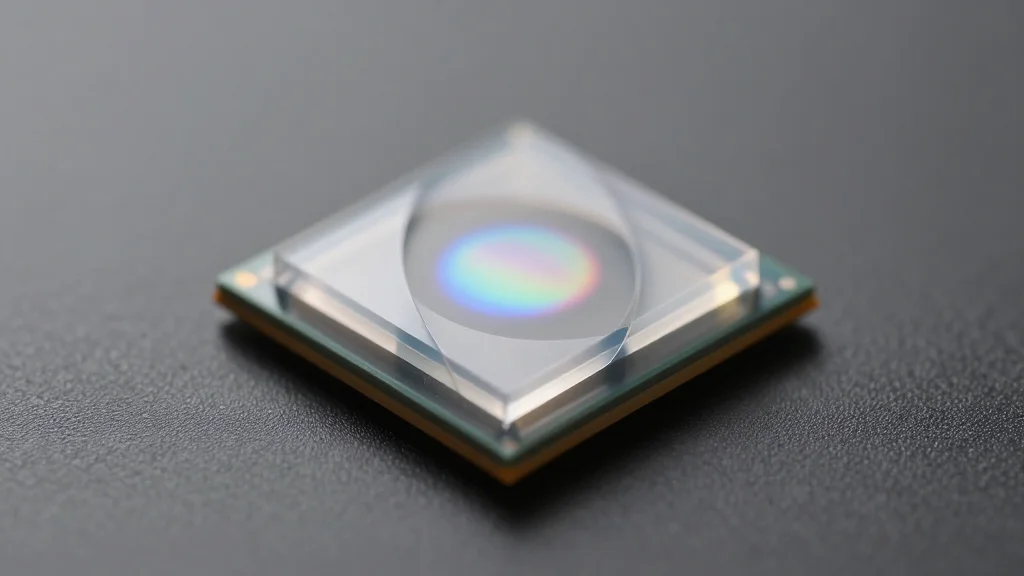
The emergence of twisted bilayer photonic crystals builds on the twistronics revolution that began with graphene, extending the concept to manipulate photons instead of electrons. By stacking two silicon‑nitride membranes and introducing a controllable rotation, researchers create a built‑in geometric asymmetry that imparts strong optical chirality. This structural approach sidesteps the limitations of static wave plates, offering a platform where the degree of handedness can be continuously tuned rather than fixed at fabrication. The integration of a micro‑electromechanical system (MEMS) actuator provides the precision needed to vary both twist angle and inter‑layer gap on demand, delivering a dynamic response that can be calibrated for specific wavelengths.
From a technical standpoint, the MEMS‑tunable chip exploits strong coupling between the photonic modes of each layer, producing dramatically different transmission spectra for right‑ and left‑circularly polarized light. Experiments demonstrate selectivity approaching theoretical limits, meaning the device can act as an almost perfect chiral filter. Because the architecture is compatible with standard semiconductor processes, scaling to wafer‑level production is feasible, and the chip’s footprint—comparable to a pinhead—fits easily into existing photonic integrated circuits. This compatibility lowers barriers for adoption in high‑speed optical interconnects and quantum information platforms where precise polarization control is essential.
The broader impact reaches several high‑value sectors. In pharmaceutical manufacturing, rapid, on‑chip discrimination of enantiomers could accelerate quality control and reduce reliance on bulky spectrometers. Optical communication networks stand to gain from dynamic polarization modulators that adapt in real time to channel conditions, enhancing bandwidth and security. Moreover, the platform’s reconfigurability invites exploration of novel quantum photonic states, potentially advancing secure quantum key distribution. As the technology matures, its blend of tunability, miniaturization, and manufacturing readiness positions it as a cornerstone for next‑generation chiral photonics.
A dynamic twist of light's 'handedness'
Comments
Want to join the conversation?