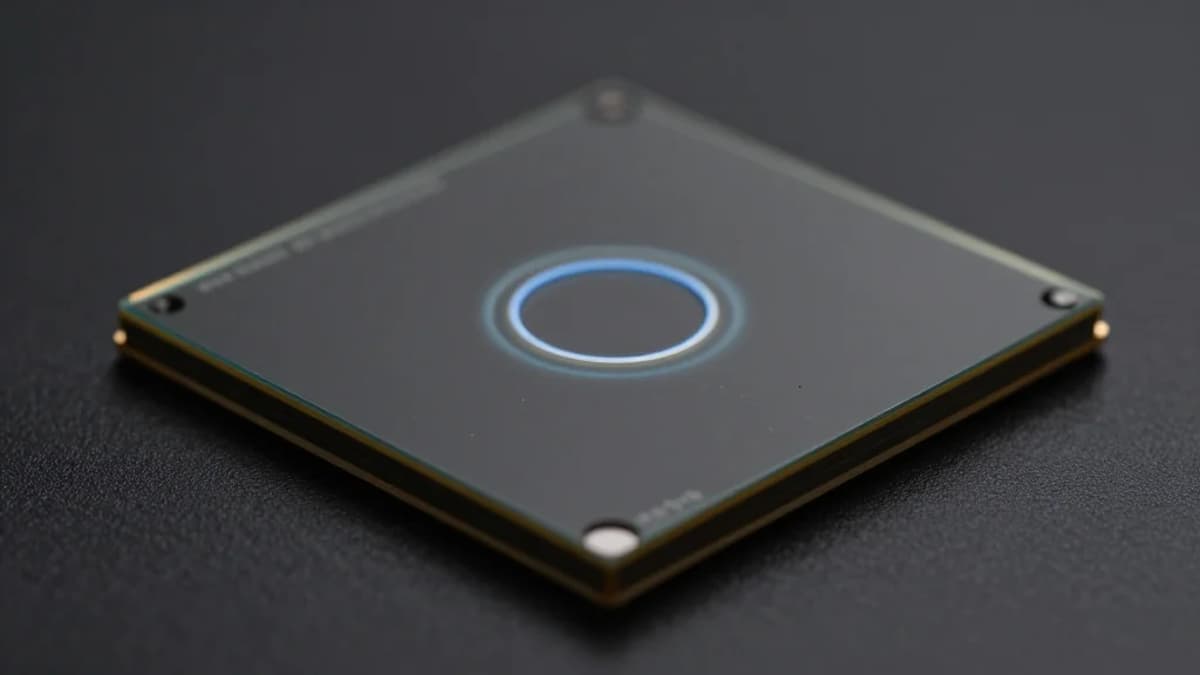
Atomic Layer Processing for Silicon Carbide-Based Quantum Photonic Circuits
•January 30, 2026
0
Why It Matters
The breakthrough enables compact, low‑loss quantum photonic chips that can be manufactured with existing semiconductor infrastructure, accelerating commercial quantum communication and sensing. It also opens a new market for ALE equipment and positions SiC as a foundational material for the emerging quantum photonics industry.
Key Takeaways
- •ALE smooths SiC surfaces, cutting optical losses.
- •SiC supports room‑temperature colour‑centre qubits.
- •Project ALP‑4‑SiC unites MPL and Fraunhofer expertise.
- •Improved resonators enable optical frequency comb generation.
- •Scalable SiC platform could accelerate quantum photonic market.
Pulse Analysis
The race to commercial quantum technologies has highlighted a shortage of a universal material that can marry photonics, electronics and quantum functionality. Silicon carbide (SiC), long celebrated for its wide‑bandgap and power‑electronics pedigree, is emerging as that bridge. Its intrinsic ability to host stable colour‑centre defects that operate at room temperature, combined with CMOS‑compatible processing, makes SiC a compelling substrate for photonic integrated circuits (PICs). By supporting waveguides, lasers and detectors on a single chip, SiC promises the miniaturisation and cost‑reduction essential for scalable quantum communication and sensing.
Despite its promise, early SiC photonic components suffered from high surface roughness, leading to scattering losses that limited waveguide and resonator performance. Atomic‑layer etching (ALE) offers a sub‑nanometre precision tool to smooth these interfaces, dramatically lowering propagation loss and enhancing Q‑factors in ring resonators. The ALP‑4‑SiC project, a joint effort between the Max Planck Institute for the Science of Light and Fraunhofer IISB, has demonstrated that ALE‑treated SiC waveguides can sustain millions of optical cycles, enabling nonlinear effects such as frequency‑comb generation and unidirectional light routing. These advances bring SiC devices within the performance envelope required for quantum‑grade photonics.
The commercial implications are significant. Manufacturers of ALE equipment stand to gain new clientele in the photonics sector, while SiC‑based PIC suppliers can differentiate with ultra‑low‑loss components for quantum key distribution, on‑chip sensors and high‑speed telecom links. A scalable, wafer‑level SiC process could shorten the supply chain, lower entry barriers for startups, and accelerate the transition from laboratory prototypes to market‑ready quantum chips. As investment in quantum infrastructure intensifies, the ALP‑4‑SiC breakthrough positions silicon carbide as a cornerstone of the next generation of quantum photonic hardware.
Atomic layer processing for silicon carbide-based quantum photonic circuits
0
Comments
Want to join the conversation?
Loading comments...