Atomic Scale Features Explain Why some Rare Earth Magnets Resist Demagnetization
Key Takeaways
- •Copper‑rich atomic layer pins domain walls
- •Layer only one to two atoms thick
- •Grain boundaries not primary weakness
- •Micromagnetic simulations validate pinning mechanism
- •Findings guide design of stronger rare‑earth magnets
Pulse Analysis
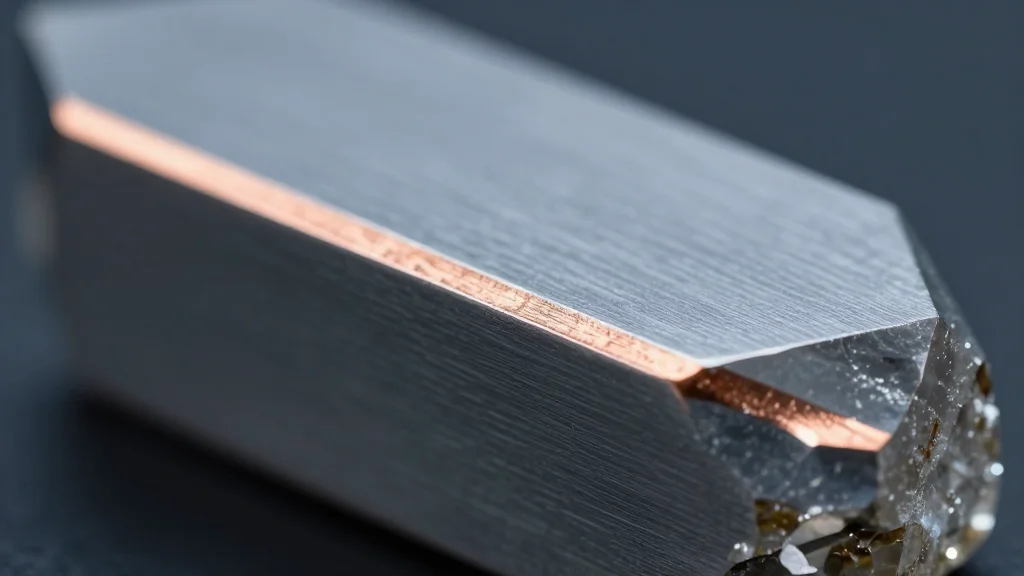
Rare‑earth permanent magnets, especially samarium‑cobalt alloys, are the workhorses of modern electrified transport, wind turbines and industrial drives. Their unrivaled energy density stems from a finely tuned nanostructure where multiple phases coexist, each contributing to coercivity and remanence. Historically, engineers focused on grain‑boundary chemistry to curb demagnetization, assuming these interfaces were the weakest link. The new study overturns that paradigm by showing that an atomic‑scale copper‑rich sheet—just one to two atoms thick—embedded at the interface of a key phase provides the dominant pinning force, effectively locking magnetic domains in place even at elevated temperatures.
The discovery was enabled by a synergistic workflow that combined high‑resolution scanning transmission electron microscopy, atom probe tomography, and state‑of‑the‑art micromagnetic modeling. These tools revealed that the copper‑rich layer creates a localized energy barrier that impedes domain‑wall motion, a mechanism the researchers term a “perfect defect.” By contrast, conventional grain boundaries exhibited only marginal influence on coercivity, shifting the design focus from extrinsic to intrinsic crystal engineering. This insight reduces reliance on expensive rare‑earth elements such as dysprosium, because magnet performance can now be boosted by precise atomic ordering rather than bulk compositional changes.
For industry, the implications are immediate. Manufacturers can target the formation of copper‑rich interfacial layers through controlled heat‑treatment and alloying strategies, shortening development cycles and cutting material costs. Moreover, the ability to predict performance via micromagnetic simulations opens a path toward virtual prototyping, accelerating the rollout of next‑generation motors for electric vehicles and renewable‑energy generators. As the global demand for high‑efficiency magnets surges, this atomic‑scale engineering breakthrough positions rare‑earth magnet technology to meet sustainability goals while maintaining economic viability.
Atomic scale features explain why some rare earth magnets resist demagnetization
Comments
Want to join the conversation?