Bimetallic MOF Electrode Sterilizes Airborne Bacteria in Milliseconds
Key Takeaways
- •99.5% kill rate for E. coli at 24 V, 0.0026 s contact
- •Bimetallic Co‑Cu MOF improves water stability and charge transfer
- •Dual mechanism: electroporation plus ROS from oxygen vacancies
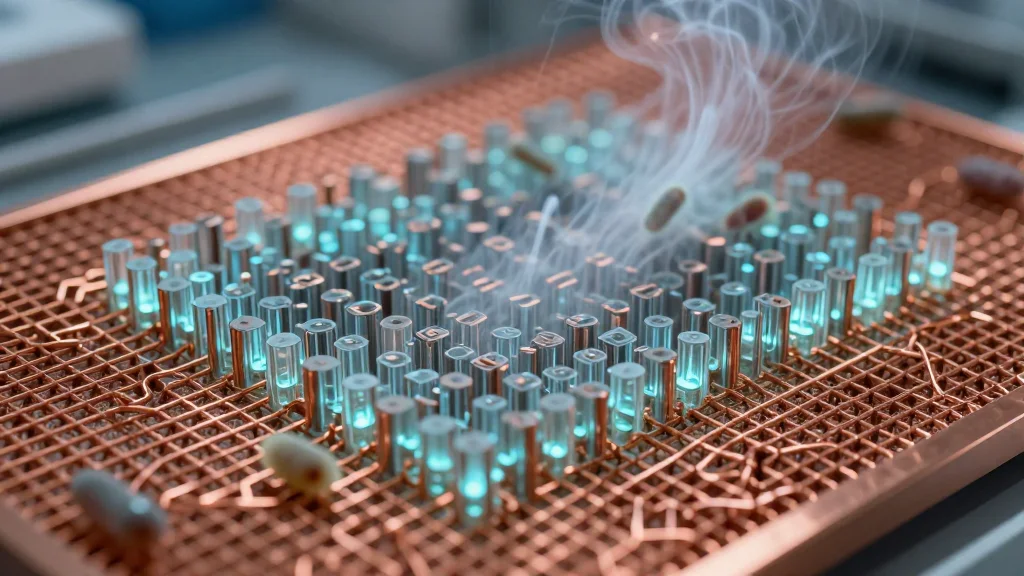
- •3D nanorod array on copper mesh ensures airflow permeability
- •Stable performance for 25 hours under continuous current
Pulse Analysis
Indoor air quality has become a strategic priority for office towers, hospitals, and transportation hubs, yet conventional disinfection tools such as ultraviolet lamps and chemical sprays struggle with high airflow rates, energy costs, and by‑product formation. The emergence of metal‑organic frameworks (MOFs) as catalytic platforms offers a promising alternative, but their practical deployment has been hampered by poor electrical conductivity and moisture sensitivity. The new 3D bimetallic MOF electrode sidesteps these hurdles by growing aligned nanorod arrays directly on a conductive copper mesh, marrying the high surface area of MOFs with the robustness of metal substrates.
At the heart of the device’s performance is a synergistic cobalt‑copper composition (Co:Cu = 0.3) that enhances charge‑transfer kinetics and stabilizes the framework in humid environments. When a modest 24 V alternating current passes through the electrode, localized electric fields trigger electroporation of bacterial membranes, while oxygen vacancies catalyze the formation of superoxide anions and other reactive oxygen species. This dual‑action mechanism achieves a 99.51% sterilization rate for Escherichia coli in just 2.6 milliseconds, even at an airflow of 1.5 m·s⁻¹. Electrochemical testing confirms low resistance and sustained activity over 25 hours, indicating readiness for continuous operation.
The commercial implications are significant. Because the system operates at low voltage and requires only a thin copper mesh insert, it can be integrated into existing HVAC ducts without major redesign, delivering energy‑efficient disinfection that avoids UV‑induced material degradation and chemical residues. Facility managers stand to lower operating expenses while meeting stricter indoor‑air‑quality regulations. Moreover, the technology’s scalability and adaptability to other pathogens position it as a versatile tool in the broader fight against airborne disease transmission, prompting further investment in MOF‑based electro‑catalytic solutions.
Bimetallic MOF electrode sterilizes airborne bacteria in milliseconds
Comments
Want to join the conversation?