Bioinspired Aerogel Cleans Heavy Metals From Soil at Depths No Plant Can Reach
Key Takeaways
- •Aligned aerogel channels double water wicking speed versus random pores
- •Solar heating drives 3.36 kg m⁻² h⁻¹ evaporation, pulling contaminated water upward
- •Captures 139 mg copper per gram under two‑sun illumination in seven days
- •Removes 68% of copper from soil at 1.5 m depth within a week
- •Scalable artificial plants operate without excavation, chemicals, or external power
Pulse Analysis
Heavy‑metal contamination of soils remains a stubborn challenge for regulators and landowners, especially when pollutants migrate beyond the reach of traditional phytoremediation. Conventional methods—excavation, chemical flushing, or shallow‑layer nanomaterials—are costly, disruptive, and often generate secondary waste. The need for a passive, in‑situ technology that can access deeper strata has driven research into biomimetic solutions that harness natural processes like transpiration.
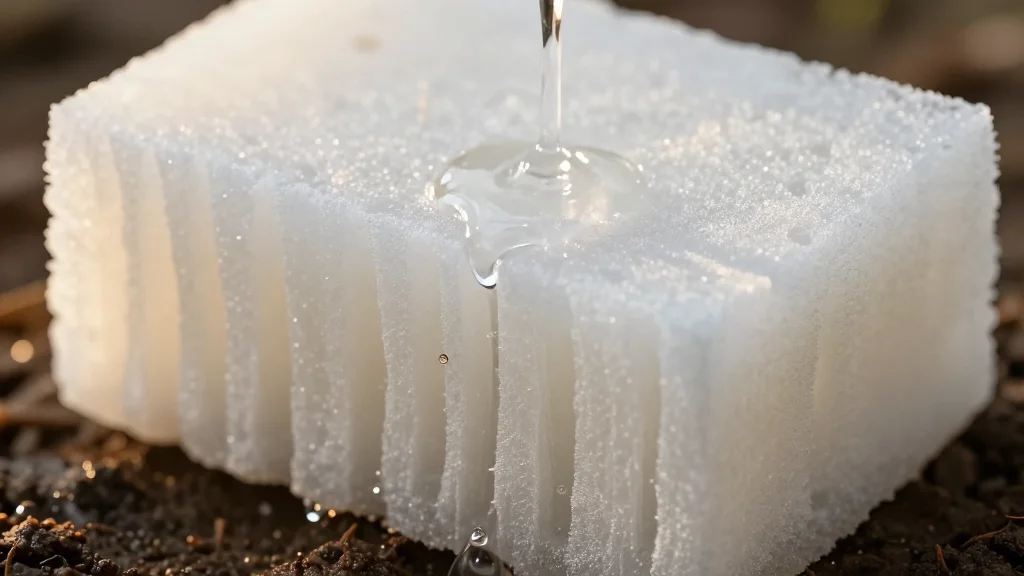
The Zhejiang University team’s breakthrough lies in an ice‑templated aerogel that reproduces the directional water transport of plant stems while eliminating biological constraints. By aligning porous channels vertically, the material creates a low‑resistance conduit for water and dissolved ions, achieving water‑wicking speeds twice that of random‑structured foams and moving copper ions eight times faster. Integrated carbon nanoparticles convert solar energy into heat, generating evaporation rates of 3.36 kg m⁻² h⁻¹ under one‑sun conditions. This convective flow dramatically boosts adsorption, capturing 139 mg of copper per gram in a week and reducing soil copper concentrations by nearly 70% at depths of 1.5 meters.
Beyond laboratory metrics, the aerogel’s design promises real‑world impact. Its modular “artificial plant” format can be deployed in arrays to treat hectares of contaminated land without digging, chemical additives, or external power sources. The ability to tailor surface chemistry for different metals expands its applicability across diverse industrial sites. As governments tighten soil‑quality standards, such scalable, solar‑driven remediation could become a cornerstone of sustainable cleanup strategies, offering a cost‑effective alternative to legacy approaches.
Bioinspired aerogel cleans heavy metals from soil at depths no plant can reach
Comments
Want to join the conversation?