First Real-Time Observation of Polaron Formation in Polar Semiconductors
Key Takeaways
- •First real‑time imaging of polaron formation achieved.
- •Formation lasts ~160 femtoseconds, mass doubles.
- •Energy loss matches Fröhlich’s theoretical model.
- •Technique combines ultrafast lasers with photoemission microscopy.
- •Insights could improve semiconductor and photocatalytic device efficiency.
Pulse Analysis
Polarons—quasiparticles formed when charge carriers drag a cloud of lattice vibrations—have been a cornerstone of solid‑state theory since Landau first proposed the concept in 1933 and Fröhlich formalized it in the 1950s. Despite their theoretical importance, direct observation of the formation process remained elusive because the interaction unfolds on femtosecond timescales and nanometer length scales. Understanding how electrons acquire additional effective mass and lose energy while moving through polar crystals is essential for predicting transport properties in a wide range of materials, from perovskite solar absorbers to wide‑bandgap oxides.
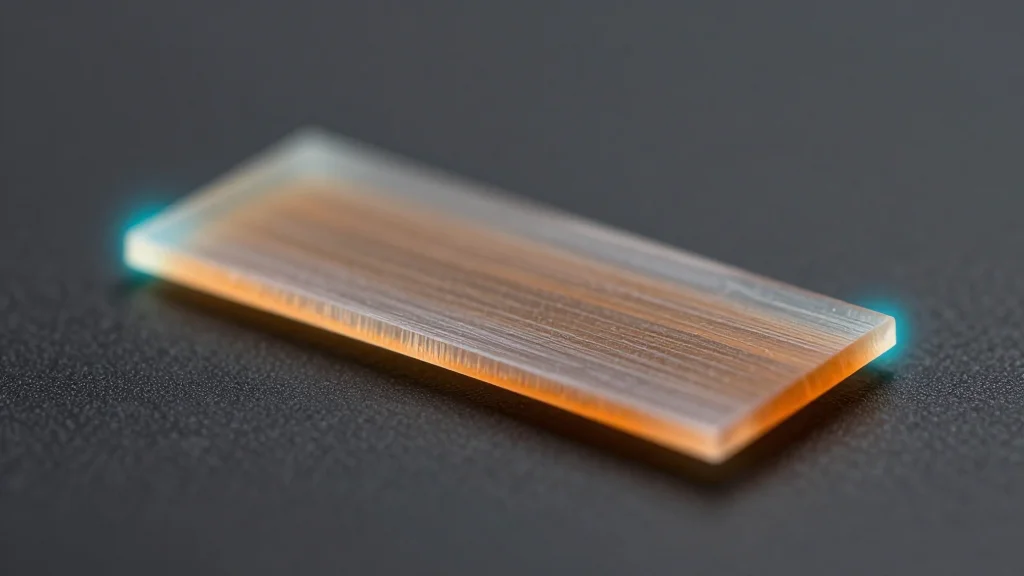
The LMU‑NTU collaboration overcame these challenges by deploying time‑resolved photoemission electron microscopy, a hybrid of ultrafast pump‑probe laser spectroscopy and high‑resolution electron imaging. An initial laser pulse excites electrons in BiOI nanoplatelets, and a delayed probe pulse extracts them for momentum‑resolved detection. By recording millions of single‑electron events, the team reconstructed the transient energy and angle distribution, revealing a 160‑femtosecond window during which the electron’s effective mass doubled and its kinetic energy dropped, precisely as Fröhlich’s equations predict.
These findings provide a practical benchmark for computational models that aim to engineer electron‑phonon coupling in next‑generation devices. With a validated experimental handle on polaron dynamics, researchers can now tailor material compositions to either suppress detrimental mass renormalization—enhancing carrier mobility in high‑speed transistors—or exploit strong coupling to drive photochemical reactions, such as light‑induced water splitting. The methodology also opens avenues for real‑time studies of other quasiparticles, positioning ultrafast microscopy as a pivotal tool in the race to develop more efficient photovoltaics, LEDs, and quantum information platforms.
First real-time observation of polaron formation in polar semiconductors
Comments
Want to join the conversation?