Flexible Capacitive Pressure Sensor Gains Sensitivity Under Increasing Load
Key Takeaways
- •Sensitivity rises to 3.079 kPa⁻¹ at 0.7 kPa pressure
- •Cage-like 3D architecture enables nonlinear electrode compression
- •Stable over 6,000 cycles with ~4% hysteresis
- •Detects pressures as low as 2 Pa for subtle signals
- •Tunable via post‑fabrication lateral strain adjustments
Pulse Analysis
Flexible capacitive pressure sensors have become a cornerstone of soft‑electronics, yet their market penetration has been hampered by a fundamental trade‑off: high sensitivity at low pressures but rapid saturation under heavier loads. This limitation restricts use cases that demand a broad dynamic range, such as robotic grasping where contact forces vary dramatically, or structural health monitoring where wind‑induced pressures can span several orders of magnitude. Industry analysts note that overcoming this bottleneck is essential for the next generation of wearable health devices and smart infrastructure solutions.
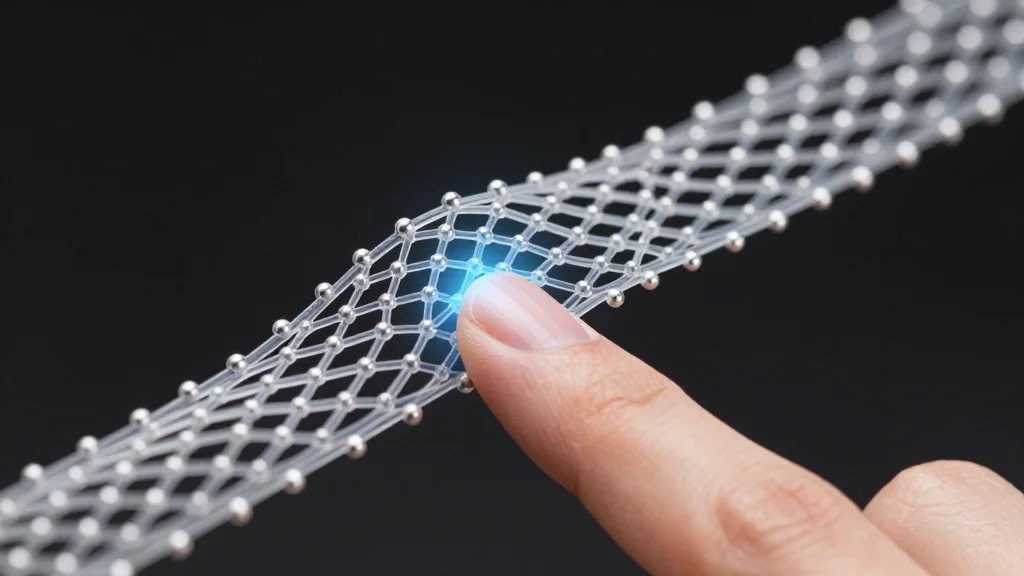
The Zhejiang University team addresses the issue with a novel three‑dimensional cage‑like electrode framework. By converting a flat precursor into a buckled, hollow lattice, the sensor’s internal gap narrows progressively as pressure rises, producing a nonlinear capacitance increase. The result is a sensitivity that climbs from 0.549 kPa⁻¹ at minimal load to 3.079 kPa⁻¹ at 0.7 kPa, while maintaining a detection floor near 2 Pa. Durability tests—6,000 cycles with only 4% hysteresis and response times around 130 ms—demonstrate that the design can survive the mechanical stresses typical of wearable and outdoor deployments.
The implications extend beyond laboratory curiosity. A sensor that becomes more informative under higher loads can simplify system architecture for autonomous vehicles, prosthetic limbs, and wind‑farm blade monitoring, reducing the need for multiple sensor types or complex calibration routines. Moreover, the ability to fine‑tune performance post‑fabrication via lateral strain offers manufacturers a flexible production pathway, potentially lowering costs and accelerating time‑to‑market. As the flexible electronics sector seeks to scale, technologies that deliver both high sensitivity and robust durability are poised to become key differentiators, positioning this 3‑D cage sensor as a catalyst for broader adoption across diverse industries.
Flexible capacitive pressure sensor gains sensitivity under increasing load
Comments
Want to join the conversation?