How Magnetic Interactions Between Neighboring Nanoparticles Influence MRI Contrast
•February 17, 2026
0
Why It Matters
Optimizing nanoparticle spacing offers a simpler, scalable route to stronger, more reliable MRI contrast agents, accelerating clinical translation and reducing reliance on potentially toxic gadolinium compounds.
Key Takeaways
- •Silica shells tune nanoparticle spacing nanometre precision.
- •Close spacing boosts collective magnetic interactions, enhancing T2 contrast.
- •Contrast gains plateau beyond optimal interparticle distance.
- •Design rules apply across conventional and ultra‑high MRI fields.
- •Strategy simplifies contrast agent development without new chemistries.
Pulse Analysis
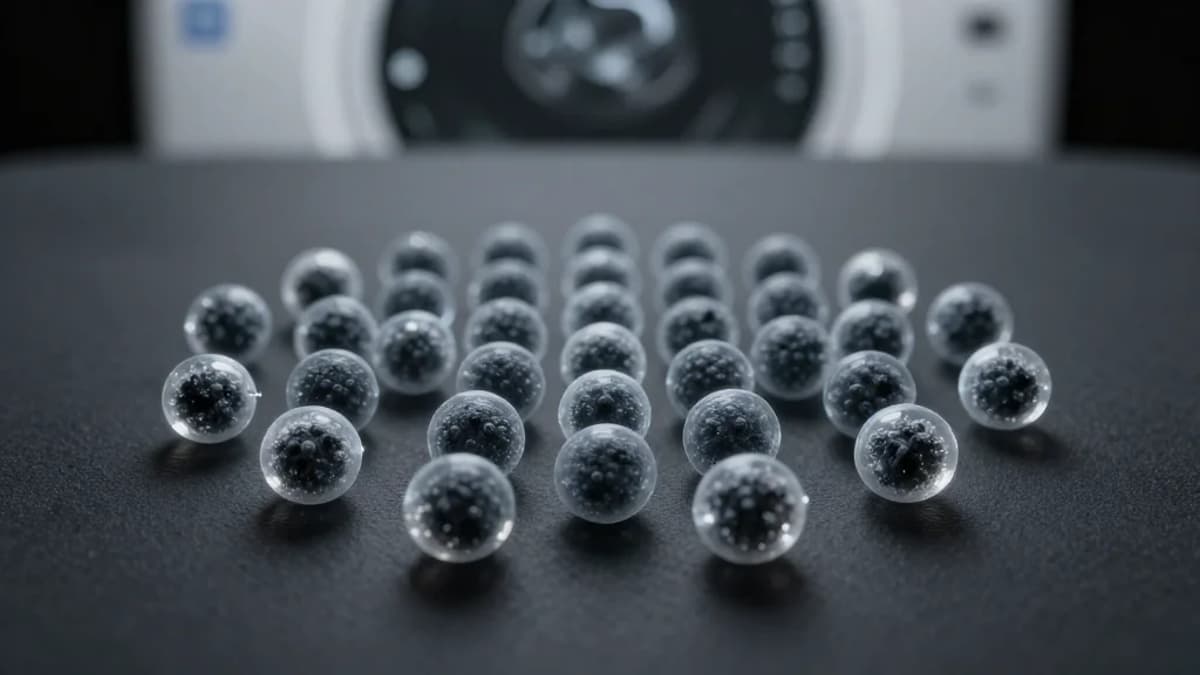
The magnetic resonance imaging (MRI) market has long sought contrast agents that improve sensitivity without compromising safety. Iron‑oxide nanoparticles have emerged as a promising alternative to gadolinium‑based agents, yet their performance hinges on subtle magnetic interactions that were previously poorly understood. By engineering silica coatings of varying thickness, the INL team achieved nanometre‑scale control over interparticle distances, revealing a clear relationship between spacing, dipolar coupling, and T2 relaxation efficiency. This precision‑tuning approach sidesteps the need for complex surface functionalization, offering a more straightforward manufacturing pathway.
Beyond the laboratory, the implications for clinical imaging are significant. The research demonstrates that optimal nanoparticle packing can double or triple contrast enhancement compared with loosely dispersed particles, directly translating to clearer delineation of pathological tissue. Importantly, the observed contrast plateau indicates a sweet spot where additional magnetic interaction yields diminishing returns, guiding manufacturers to avoid over‑packing that could increase toxicity or aggregation risks. These design principles hold across a spectrum of magnetic field strengths, from standard 1.5 T scanners to emerging ultra‑high‑field 7 T systems, ensuring broad applicability.
For the broader diagnostic ecosystem, this spacing‑centric strategy aligns with regulatory trends favoring simpler, well‑characterized agents. By focusing on physical arrangement rather than novel chemistries, developers can leverage existing production lines, accelerate regulatory approval, and reduce costs. As MRI technology continues to evolve, the ability to fine‑tune nanoparticle interactions will likely become a cornerstone of next‑generation contrast agent design, fostering more accurate diagnoses and expanding the utility of MRI in precision medicine.
How magnetic interactions between neighboring nanoparticles influence MRI contrast
0
Comments
Want to join the conversation?
Loading comments...