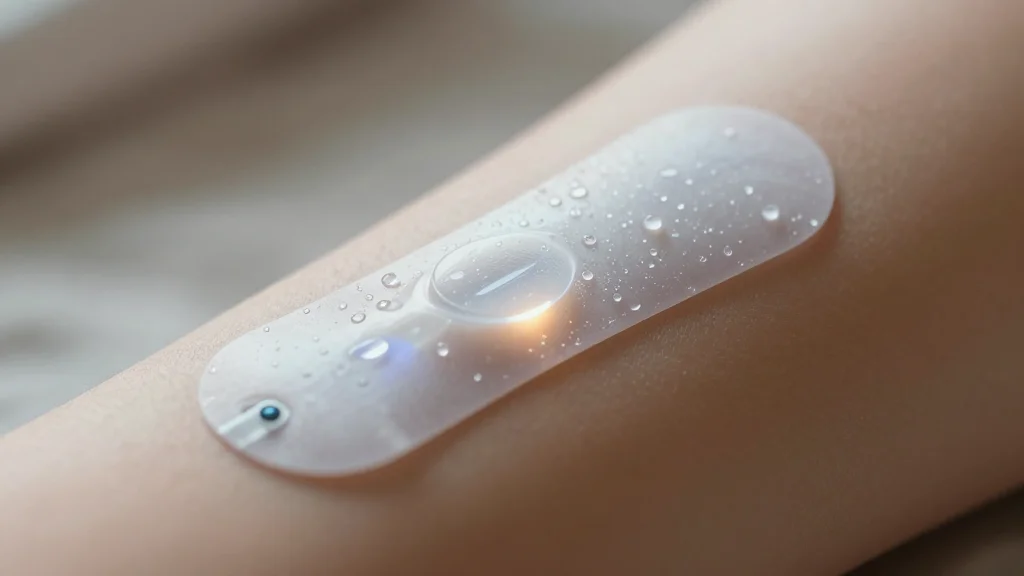
Humid Air Makes This 3D-Printed Nanogenerator Work Better, Not Worse
Key Takeaways
- •Printable hygroscopic polymer boosts TENG output at 90% humidity
- •5 wt% zwitterionic resin achieved 45.6 µA, 802 V, 48.4 W/m²
- •Device powered wireless communication through pig skin, harvesting 11–17 mW
- •Optimal water‑binding balance avoids conductive loss; higher loadings reduce performance
- •Complex 3D‑printed lattices enable wearable and implantable energy harvesters
Pulse Analysis
Triboelectric nanogenerators (TENGs) convert mechanical motion into electrical charge by repeatedly contacting dissimilar materials. In dry air the generated charge persists long enough for useful extraction, but ambient moisture creates conductive water films that rapidly dissipate the charge, causing output to collapse above 60‑70 % relative humidity. This limitation has hampered the deployment of TENGs in wearable health monitors and implantable medical devices, where exposure to sweat, skin moisture, or internal body fluids is inevitable. A recent study flips this challenge on its head by engineering a printable polymer that deliberately absorbs water, turning humidity from a liability into an asset.
The printed resin is a photocurable acrylic network enriched with amide groups and a 5 wt % loading of the zwitterionic monomer sulfobetaine methacrylate. Laboratory tests showed the device delivering 45.6 µA of current, 802 V of open‑circuit voltage, and a peak power density of 48.4 W m⁻² at 90 % relative humidity—approximately double the power density of the previous best moisture‑tolerant TENG that relied on lithium‑chloride‑filled MXene composites. Molecular dynamics and density‑functional‑theory simulations revealed that water molecules strongly bind to the sulfonate‑ammonium dipoles, amplifying the material’s dipole moment and enhancing charge transfer, while higher zwitterion concentrations create conductive clusters that erode performance.
The ability to 3D‑print intricate lattice geometries that thrive in humid environments opens a realistic pathway for self‑powered wearables and implantable sensors. Demonstrations included a finger‑sleeve that transmitted Morse code, an insole that distinguished walking from running, and a wireless backscatter link that harvested 11–17 mW through pig skin—simulating human tissue penetration. By eliminating the need for batteries or bulky encapsulation, this technology could reduce device size, lower maintenance costs, and accelerate adoption in the burgeoning Internet‑of‑Things health market, where billions of dollars are projected for autonomous medical electronics by 2030.
Humid air makes this 3D-printed nanogenerator work better, not worse
Comments
Want to join the conversation?