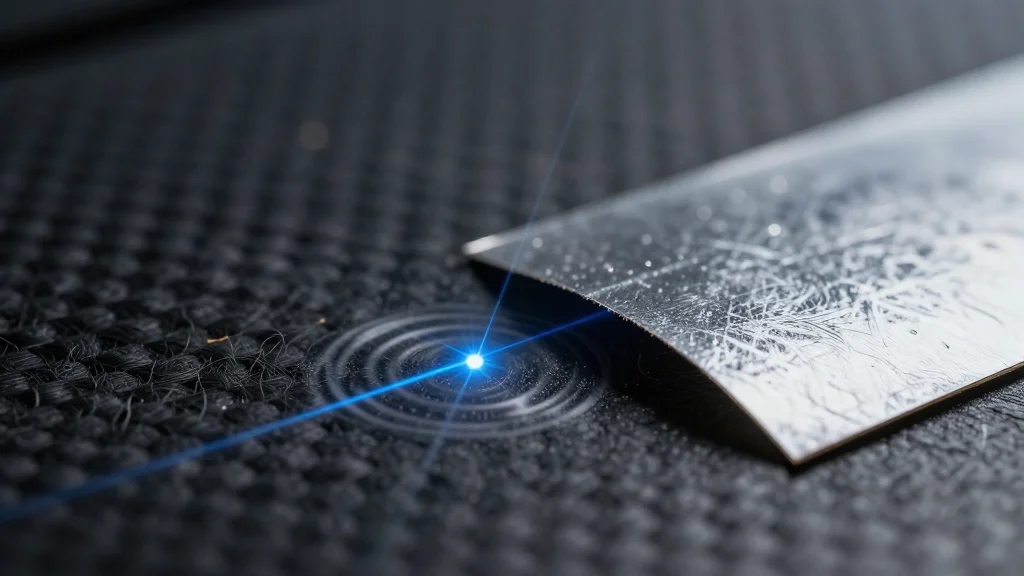
Laser Shockwaves Transform Carbon Nanotube Films Into Graphene-Rich Networks without External Heating
Key Takeaways
- •Laser shockwaves convert SWCNT films to multilayer graphene.
- •Process operates at ~2.27 GPa without external heating.
- •Thermal conductivity increases sevenfold; electrical conductivity 2.6×.
- •Film thickness reduces up to 61% after 200 pulses.
- •Method compatible with heat‑sensitive flexible substrates.
Pulse Analysis
Carbon nanomaterials have long promised breakthroughs in flexible electronics, yet the performance gap between individual nanotubes and bulk films remains a bottleneck. While graphene offers superior two‑dimensional conductivity, conventional synthesis routes such as chemical‑vapor deposition demand extreme temperatures and complex transfer steps that limit scalability and damage heat‑sensitive substrates. The industry therefore seeks a post‑fabrication transformation that can upgrade existing carbon networks without re‑engineering the entire manufacturing line.
The laser‑induced shockwave technique meets this need by delivering gigapascal‑scale pressure pulses through a plasma‑driven blast, effectively unzipping SWCNTs into flat graphene ribbons that subsequently stack into multilayer graphene domains. Operating at roughly 2.27 GPa per pulse and keeping surface temperatures below 120 °C, the method avoids the thermal budgets of traditional graphitization. After 200 pulses, the films demonstrate a sevenfold increase in thermal conductivity (up to 66 W m⁻¹ K⁻¹) and a 2.6‑times rise in electrical conductivity, while reducing thickness by up to 61 %, indicating densification and improved phonon pathways.
These performance gains, achieved without chemicals or high‑temperature furnaces, position the process as a viable route for large‑area, flexible‑substrate manufacturing. Potential applications span thermal‑management layers in wearables, high‑power‑density electrodes for batteries, and multifunctional coatings for aerospace composites. The ability to retrofit existing SWCNT‑based production lines reduces capital expenditure and shortens time‑to‑market, while the partial retention of nanotube segments offers a unique heterostructure that could be tuned for combined mechanical resilience and electronic functionality. Continued optimization of pulse parameters and layer control will likely broaden the commercial appeal of this laser‑driven carbon conversion.
Laser shockwaves transform carbon nanotube films into graphene-rich networks without external heating
Comments
Want to join the conversation?