Multiplex Modular Nanorobots Combine Magnetic Control with Reusable Catalysis
Key Takeaways
- •Janus magnetic nanoparticle and enzyme‑loaded polymersome linked via DNA.
- •92% assembly efficiency; each robot carries about four polymersomes.
- •Magnetic navigation achieves 3.5 µm s⁻¹ under 4.3 T m⁻¹ gradient.
- •Enzyme activity persists across three catalytic cycles after magnetic recovery.
- •Modular architecture allows cargo swapping without redesigning the propulsion unit.
Pulse Analysis
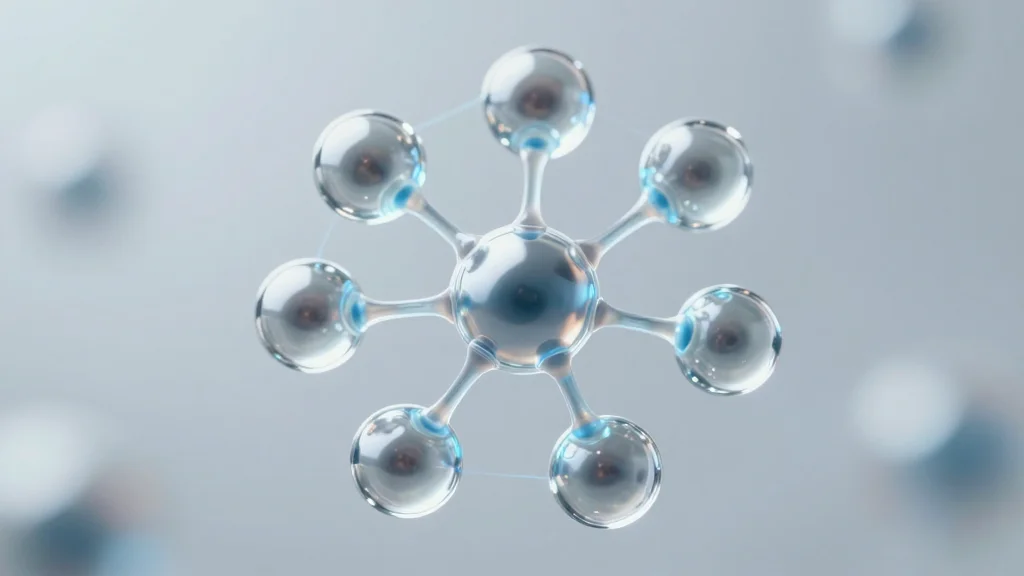
The field of synthetic nanorobotics has long been hampered by the difficulty of integrating disparate functions—magnetic actuation, cargo protection, and catalytic activity—into a single nanoscale platform. Traditional designs force incompatible components onto the same surface, leading to DNA adsorption on magnetic particles and enzyme deactivation near inorganic interfaces. By spatially separating these functions into two distinct modules—a Janus magnetic particle and an enzyme‑laden polymersome—linked through programmable DNA strands, the Basel‑Max Planck team sidesteps these interference issues and establishes a versatile assembly strategy.
Performance metrics underscore the practical potential of the system. Under a magnetic field gradient of 4.3 T m⁻¹, the nanorobots travel at an average 3.5 µm s⁻¹, outpacing bare Janus particles despite added bulk, thanks to transient clustering that amplifies magnetic pull. Assembly yields reach 92%, with each robot typically bearing four polymersomes. Crucially, enzymatic activity—whether L‑asparaginase for cancer cell targeting or alkaline phosphatase for catalytic assays—remains intact after magnetic recovery, with only marginal rate loss over three reuse cycles. This demonstrates that the DNA linkage and polymer encapsulation effectively shield the biocatalyst from mechanical stress and environmental degradation.
The modular, recoverable design opens new avenues for both industrial catalysis and biomedical interventions. In manufacturing, magnetic retrieval of active nanorobots could dramatically reduce catalyst waste and lower process costs, while the ability to swap enzyme cargos without redesigning the propulsion unit accelerates product development cycles. In medicine, precise magnetic steering combined with targeted enzymatic therapy offers a route to minimize off‑target effects and enable on‑demand drug activation. As the platform matures, scaling up production and ensuring biocompatibility will be key, but the study provides a compelling blueprint for adaptable, multifunctional nanorobots poised to transform multiple sectors.
Multiplex modular nanorobots combine magnetic control with reusable catalysis
Comments
Want to join the conversation?