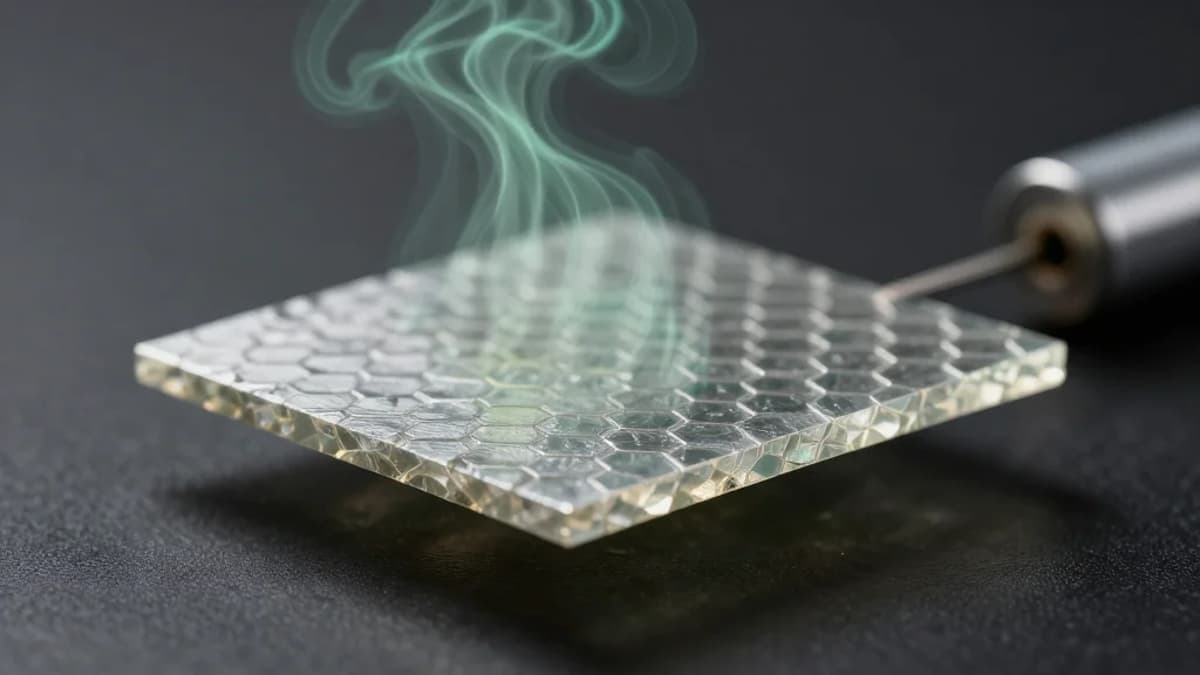
MXenes Move Closer to Real World Use in Energy Storage and Medicine
•March 12, 2026
0
Key Takeaways
- •TailorX created high‑purity MAX phase library
- •AI models predict MXene synthesis and CO₂ interaction
- •New green exfoliation avoids hydrofluoric acid
- •MXenes target CO₂ capture, energy storage, cancer therapy
- •Commercialization hindered by hazardous etching processes
Summary
A Swiss research initiative, TailorX, has advanced the synthesis, modeling, and sustainable production of MXenes, a versatile class of 2‑D transition‑metal carbides and nitrides. The team built a high‑purity library of MAX‑phase precursors, deployed AI models to predict MXene structures and CO₂ interactions, and introduced a green, acid‑free exfoliation method. These breakthroughs open pathways for MXenes in carbon capture, high‑performance supercapacitors, batteries, and targeted cancer therapies. The project, concluding in 2026, positions MXenes for faster commercialization despite earlier scalability challenges.
Pulse Analysis
MXenes have emerged as the most promising 2‑D materials beyond graphene, offering tunable electrical conductivity, mechanical strength, and surface chemistry thanks to their transition‑metal carbide or nitride composition. Their ability to be engineered at the atomic level creates a spectrum of properties that can be matched to specific challenges in energy storage, catalysis, and biomedicine, making them a focal point for both academic research and industrial investment.
The TailorX research booster at Empa tackled the three traditional bottlenecks of MXene development: reproducible synthesis, predictive modeling, and sustainable processing. By establishing a catalog of high‑purity MAX‑phase precursors and training AI algorithms to forecast crystal geometries and CO₂ adsorption behavior, the team reduced trial‑and‑error cycles dramatically. Simultaneously, a novel green exfoliation technique eliminated the need for hazardous hydrofluoric acid, delivering a scalable, cost‑effective pathway that aligns with stricter environmental regulations.
These technical strides translate into tangible market potential. High‑surface‑area MXenes can serve as electrodes for next‑generation supercapacitors and solid‑state batteries, delivering faster charge rates and longer lifespans. Their catalytic sites enable efficient CO₂ capture and conversion, supporting carbon‑negative initiatives such as "Mining the Atmosphere." In the medical arena, functionalized MXenes exhibit antimicrobial properties and can be engineered for targeted drug delivery or photothermal cancer therapy. As the supply chain matures, investors and manufacturers are poised to capitalize on MXenes’ multi‑sector applicability, heralding a new era of advanced materials commercialization.
Comments
Want to join the conversation?