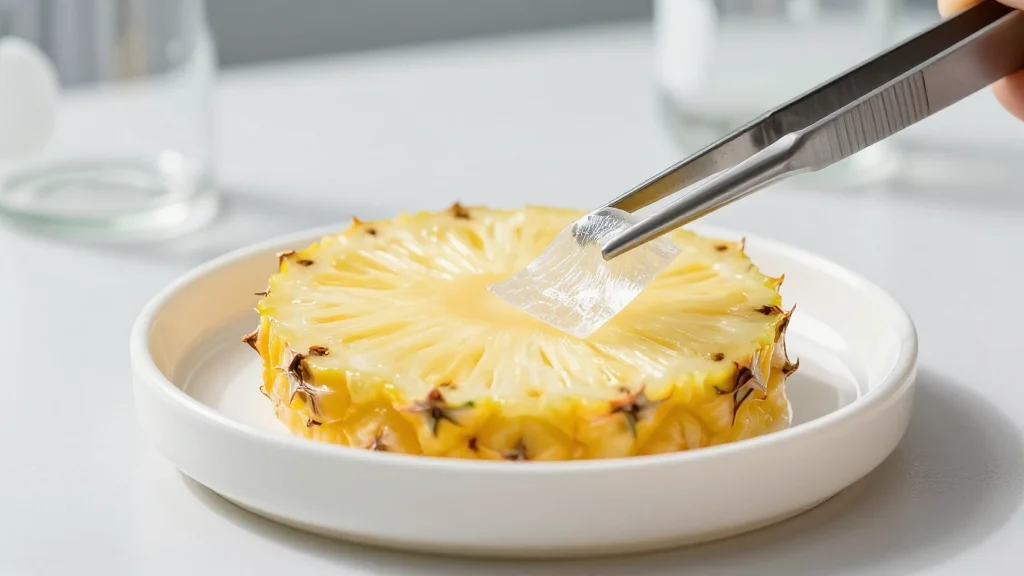
Nanocellulose From Pineapple Waste for Soil-Saving Desert Agriculture
Key Takeaways
- •Pineapple peel nanocellulose boosts sand water retention by up to 32.7%
- •Soil permeability drops 58% and compressive strength can quadruple
- •Phosphorus retention nearly doubles; tomato seedlings show higher survival at 0.25‑1% fiber
- •Excessive fiber (3%) harms plant growth, highlighting optimal dosage
Pulse Analysis
Desertification threatens food security across the Middle East, where arid soils lack the water‑holding capacity needed for reliable crop yields. Converting abundant pineapple peel waste into nanocellulose offers a novel, locally sourced amendment that addresses both waste management and soil degradation. The mechanochemical process—shredding, alkali treatment, bleaching, and ball milling—produces fibers that integrate with sand particles, creating a micro‑network that traps moisture and slows evaporation. By leveraging a by‑product of the juice industry, the technology aligns with circular‑bioeconomy principles, turning a disposal challenge into a value‑added agricultural input.
The experimental results are striking: treated sands retained up to 32.7% more water, reduced permeability by 58%, and exhibited up to four‑fold gains in compressive strength. Nutrient dynamics also improved, with phosphorus retention nearly doubling, which is critical for plant development in nutrient‑poor deserts. In greenhouse trials, cherry tomato seedlings receiving 0.25‑1% nanocellulose by weight displayed higher survival rates, more foliage, and robust growth, whereas a 3% dosage impeded development, underscoring the importance of dosage optimization. These findings suggest that modest, precisely calibrated applications can enhance water efficiency and crop resilience without compromising soil structure.
Beyond the laboratory, the approach promises scalable benefits for regions that import the majority of their food. By repurposing food‑industry waste, governments and agribusinesses can reduce landfill pressures, lower fertilizer imports, and support local farming initiatives. Future work should focus on cost‑effective production at commercial scale, integration with other agricultural residues, and field trials across diverse desert ecosystems. If successfully deployed, pineapple‑derived nanocellulose could become a cornerstone of sustainable land management, offering a pragmatic tool to combat desertification while advancing the global circular economy.
Nanocellulose from pineapple waste for soil-saving desert agriculture
Comments
Want to join the conversation?