Neural Network Switching Controller Reduces Tracking Errors in Nano-Positioning
Key Takeaways
- •NN‑SORC cuts tracking error versus PID across cosine and triangular signals
- •FPGA‑CPU architecture delivers 10 MHz inner‑loop computation
- •Lyapunov analysis guarantees stability during rapid reference switching
- •Test bench shows consistent performance on 10 µm stroke, 140 Hz bandwidth
Pulse Analysis
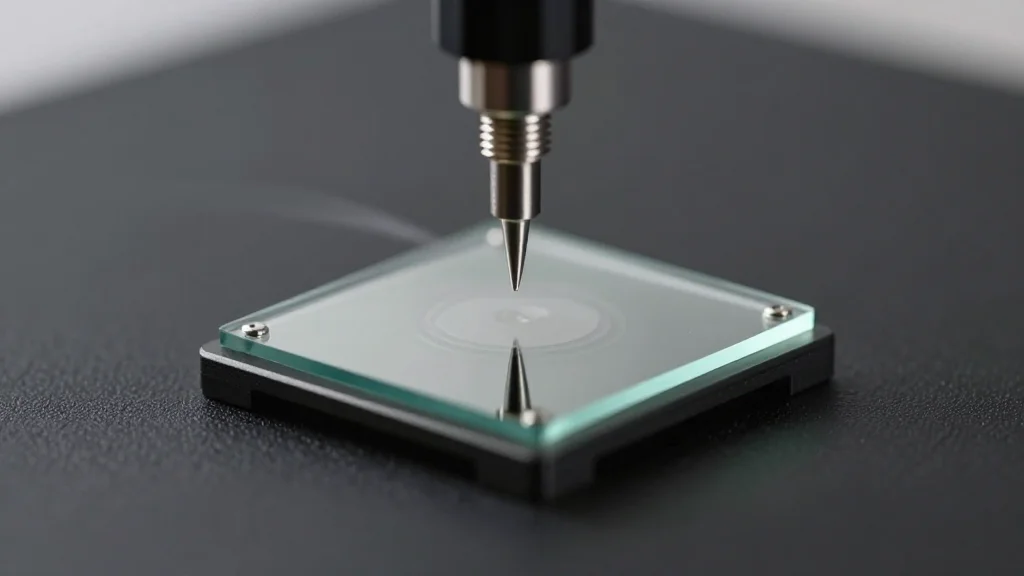
Piezoelectric nano‑positioning stages are the workhorses of modern semiconductor lithography, high‑resolution microscopy and precision inspection. Their inherent hysteresis, however, creates a moving target for control algorithms, especially when the reference trajectory jumps between waveforms or frequencies. Traditional PID loops and model‑based inverse compensation can only partially mitigate this distortion, limiting throughput and accuracy in high‑speed manufacturing environments.
The newly reported neural‑network‑based switching output regulation controller (NN‑SORC) tackles the problem by marrying adaptive intelligence with ultra‑fast hardware. A lightweight neural network continuously tunes controller parameters in response to real‑time tracking errors, while a dual‑layer FPGA‑CPU platform handles inner‑loop calculations at up to 10 MHz and outer‑loop adjustments at 100 kHz. This architecture not only outperforms conventional PID and Prandtl‑Ishlinskii inverse methods but also satisfies rigorous Lyapunov‑derived stability conditions, even when reference signals switch abruptly. Experimental validation on a 10 µm stroke, 140 Hz bandwidth stage demonstrated consistently lower error margins across both sinusoidal and triangular inputs.
The implications extend beyond a single laboratory prototype. By delivering stable, high‑speed adaptive control, NN‑SORC can accelerate cycle times in semiconductor wafer steppers, improve pattern fidelity in nano‑lithography, and enhance repeatability in metrology tools. Future work targeting multi‑axis coupling promises to broaden the technology’s applicability to complex 3‑D micro‑fabrication systems. As the industry pushes toward sub‑10 nm feature sizes, such intelligent control solutions will become critical differentiators for equipment vendors and end‑users alike.
Neural network switching controller reduces tracking errors in nano-positioning
Comments
Want to join the conversation?