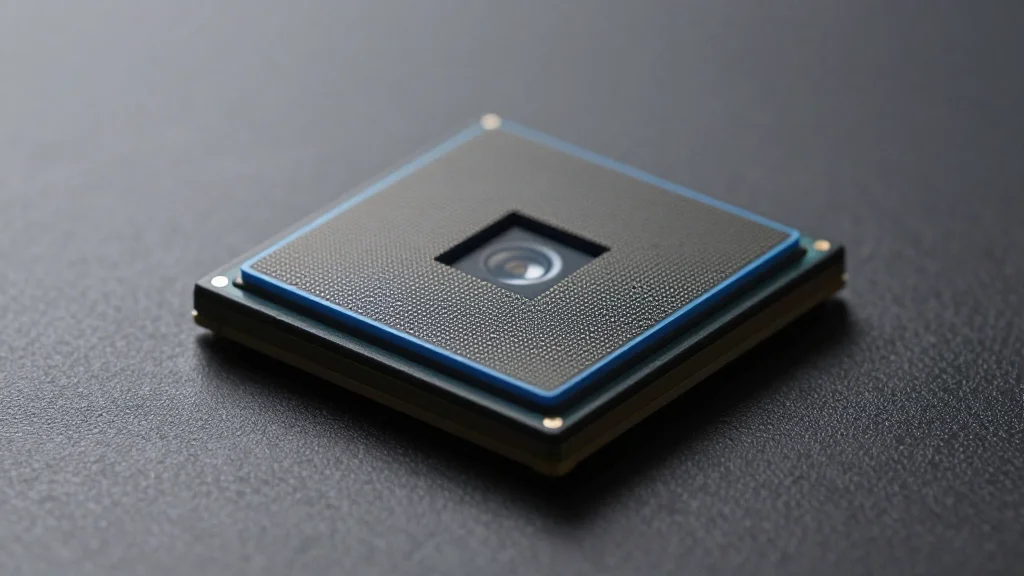
Neuromorphic Night Vision Powered by Quantum Dots with Memory
Key Takeaways
- •Ferroelectric polymer ligands create internal electric fields
- •Charge separation enables persistent photocurrent for memory
- •Synaptic phototransistor shows >7‑hour retention without encapsulation
- •Device mimics short‑term and long‑term retinal adaptation
- •Promises energy‑efficient, in‑sensor computing for autonomous systems
Pulse Analysis
Neuromorphic vision has long been hampered by the disconnect between light capture and data processing. Conventional cameras rely on external processors, which introduce latency and consume significant power—especially in low‑light scenarios where signal‑to‑noise ratios deteriorate. The emerging field of retinomorphic sensing seeks to emulate the human retina, integrating adaptation and memory directly into the sensor layer. Recent advances in quantum‑dot photonics have improved sensitivity, yet charge recombination has remained a bottleneck, limiting practical deployment in autonomous platforms and robotics.
The breakthrough reported in Advanced Materials leverages ferroelectric quantum dots (FE‑QDs) to overcome this barrier. By replacing standard surface ligands with a polyvinylidene fluoride‑based polymer that exhibits ferroelectric switching, the researchers generate an internal electric field that pulls photo‑generated electrons and holes apart. This separation produces a stable photocurrent that persists after illumination, effectively storing visual information. The resulting synaptic phototransistor functions as a floating‑gate device, where the FE‑QD layer acts both as a light absorber and a tunable memory element. Laboratory tests show memory retention exceeding seven hours under ambient conditions, as well as controllable short‑term and long‑term adaptation mimicking scotopic retinal behavior.
The implications for industry are substantial. Autonomous vehicles, low‑power drones, and edge‑based surveillance systems require rapid, reliable perception in darkness or adverse weather. Embedding memory and adaptive gain within the sensor eliminates the need for high‑bandwidth data shuttling to separate processors, slashing power draw and latency. While scalability, manufacturing yield, and integration with existing CMOS pipelines remain challenges, the FE‑QD approach provides a viable pathway toward truly neuromorphic cameras that could redefine safety standards and efficiency benchmarks across the AI‑driven mobility sector.
Neuromorphic night vision powered by quantum dots with memory
Comments
Want to join the conversation?