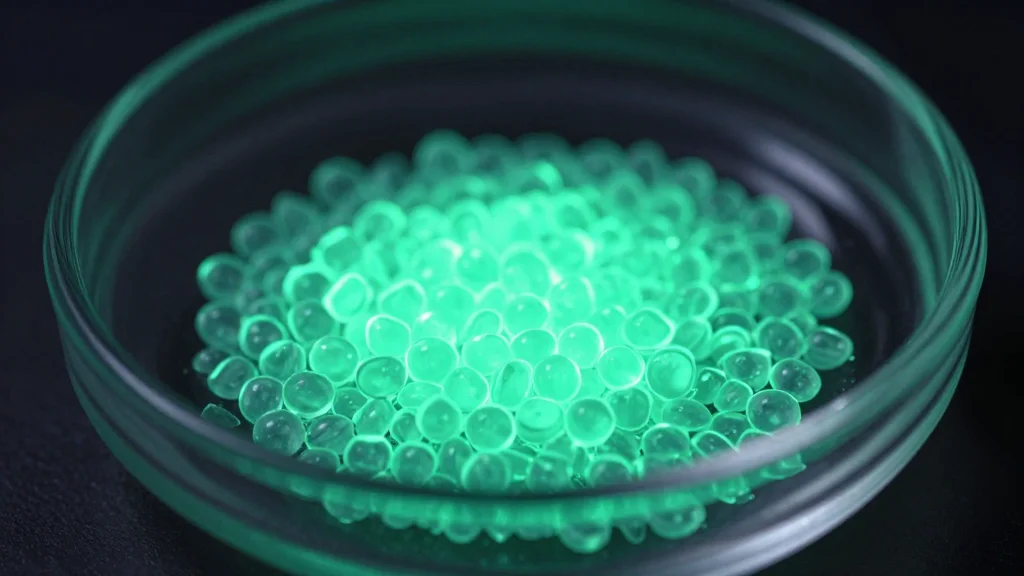
New Fluorescence Strategy Could Enable Real-Time Tracking of Microplastics Inside Living Organisms
Key Takeaways
- •Fluorescent monomers integrated into polymer backbone
- •Enables stable, real‑time imaging of microplastics
- •Tracks particles through ingestion, transport, degradation
- •Overcomes dye leakage and quenching issues
- •Supports risk assessment and regulatory decisions
Pulse Analysis
Microplastics have infiltrated ecosystems and human tissues at unprecedented scales, yet scientists lack tools to observe their behavior inside living organisms. Traditional techniques such as infrared spectroscopy or mass spectrometry require tissue destruction, yielding only isolated snapshots of particle presence. This limitation hampers efforts to link exposure to specific health outcomes, leaving regulators with incomplete risk profiles. By embedding fluorescent monomers directly into polymer chains, researchers create particles that emit light intrinsically, eliminating the need for surface dyes that often detach or dim in complex biological environments.
The core of the new strategy lies in aggregation‑induced emission (AIE) materials, which become brighter when clustered within the polymer matrix. This property ensures consistent signal intensity throughout the particle’s lifecycle, from intact microplastic to its fragmented degradation products. Uniform fluorescence across the entire particle enables continuous visualization of transport pathways, cellular uptake, and biochemical transformations without sacrificing particle integrity. Moreover, the method allows precise tuning of emission wavelength, brightness, and particle size, facilitating multiplexed studies that can differentiate between polymer types or degradation stages.
Beyond the laboratory, this technology could reshape how policymakers evaluate plastic pollution. Real‑time, longitudinal data on microplastic dynamics will enhance toxicological models, supporting more accurate exposure‑response assessments. Regulators could leverage these insights to set stricter limits on plastic additives, prioritize remediation efforts, and develop standards for biodegradable alternatives. As the scientific community validates the approach, it may become a cornerstone for interdisciplinary research, linking polymer chemistry, environmental science, and public health in the fight against plastic contamination.
New fluorescence strategy could enable real-time tracking of microplastics inside living organisms
Comments
Want to join the conversation?