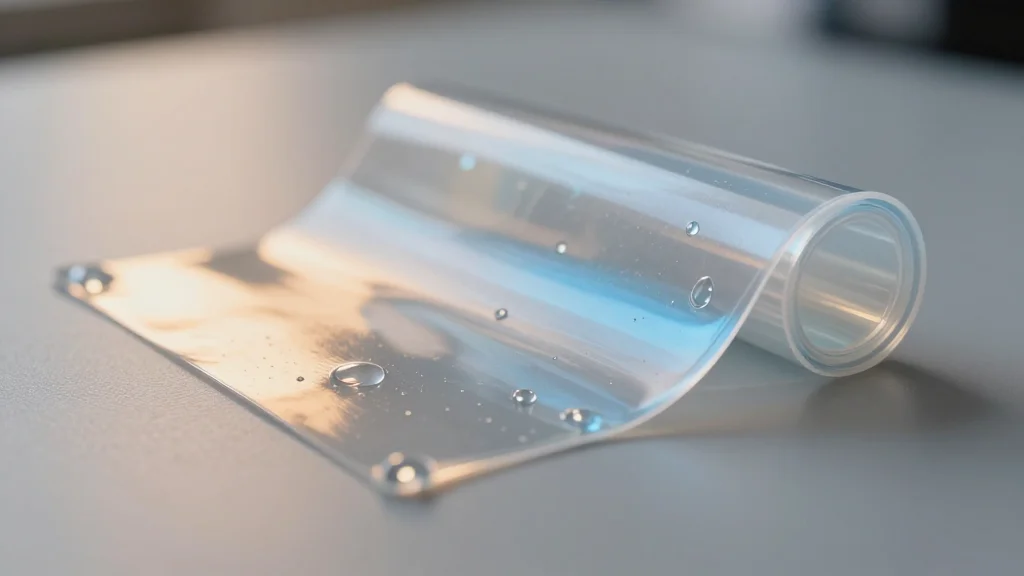
New Thermochromic Film Autonomously Switches Between Heating and Cooling for Year-Round Thermal Management
Key Takeaways
- •Thermochromic film switches heating/cooling autonomously.
- •Microcapsules sized 4‑6 µm boost mid‑IR emissivity.
- •High emissivity retained in both visible states.
- •Field tests show ~10 °C sub‑ambient cooling.
- •Potential annual energy savings >30 MJ m⁻².
Pulse Analysis
Passive radiative cooling has emerged as a promising way to shed heat without electricity, but most existing materials only work in one direction: they reflect sunlight in summer yet continue to radiate heat in winter, creating a performance trade‑off. The growing demand for climate‑neutral buildings and electric vehicles intensifies the need for a material that can both capture solar energy when it’s cold and reject it when it’s hot, without relying on active systems that consume power.
The new thermochromic film solves this dilemma through a clever micro‑architectural approach. Size‑selected microcapsules (4‑6 µm) embedded in a porous PVDF‑HFP matrix generate strong Mie resonances that amplify infrared emission within the 8‑13 µm atmospheric window, while a temperature‑triggered dye chemistry toggles visible reflectance from dark to bright. This decoupling ensures that the film remains an efficient infrared emitter in both heating and cooling states, delivering up to 245 W m⁻² of net heating and 86 W m⁻² of net cooling in controlled tests, and sustaining roughly 10 °C sub‑ambient temperatures in real‑world exposure.
Beyond laboratory performance, the technology promises substantial economic and environmental benefits. Building‑energy models forecast annual savings of more than 30 MJ m⁻² and CO₂ reductions of 5 kg m⁻² yr⁻¹ in dense urban climates, while the film’s meter‑scale roll‑to‑roll fabrication and color‑customization address scalability and aesthetic concerns. Automotive and UAV designers can leverage the same layer to extend battery range by cutting HVAC loads. As regulatory pressure mounts for net‑zero emissions, such adaptive, zero‑energy thermal management solutions are poised to become a cornerstone of sustainable design.
New thermochromic film autonomously switches between heating and cooling for year-round thermal management
Comments
Want to join the conversation?