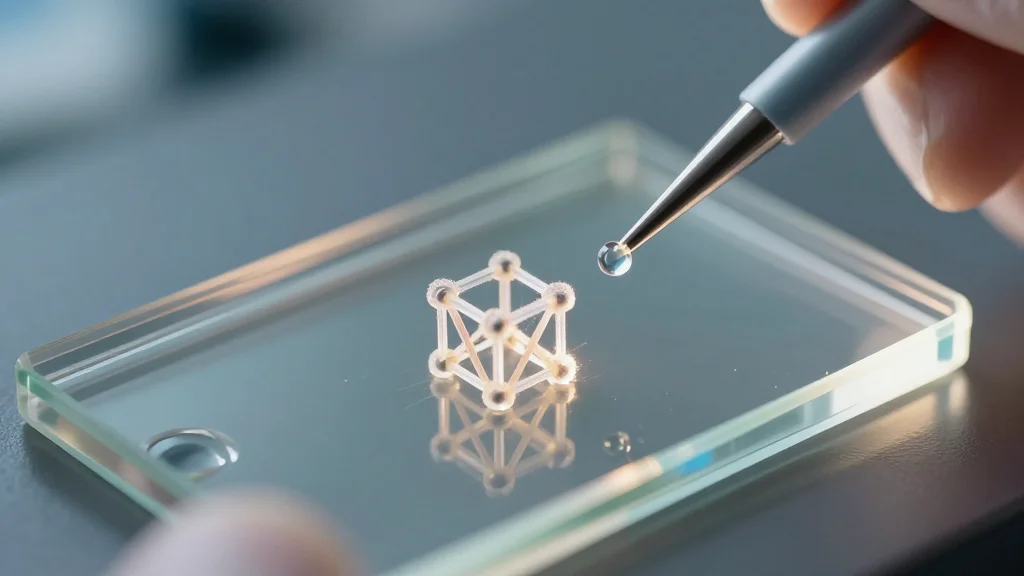
New Tool to Help Build More Reliable DNA Nanostructures
Key Takeaways
- •New computational tool predicts off‑target DNA interactions
- •Optimized scaffold sequences boost folding yield of DNA origami
- •Tool works for 2D and 3D nanostructures
- •Improves reliability for biomedical, agritech, and materials applications
Pulse Analysis
DNA origami, the art of folding long DNA strands into precise nanoscale shapes, has long been hailed for its potential in medicine, agriculture and advanced materials. Yet the technique suffers from unpredictable yields because unintended strand interactions can trap the folding process in kinetic dead‑ends. Researchers have traditionally relied on trial‑and‑error or generic scaffold sequences, which often lead to inconsistent results and limit commercial viability.
The new software from an international team led by Newcastle University tackles this problem with a multi‑objective computational framework that screens both natural and synthetic scaffold regions for off‑target binding. By scoring candidate sequences against a database of staple interactions, the algorithm selects scaffolds that reduce kinetic traps and enhance mechanical uniformity. Experimental validation demonstrated that structures built from the recommended sequences folded up to several times more efficiently than those using conventional scaffolds, across both 2‑dimensional tiles and complex 3‑dimensional cages.
For industry, this breakthrough translates into higher production yields, lower material waste, and more predictable performance of DNA‑based nanodevices. Pharmaceutical developers can now design more reliable mRNA delivery vehicles, while agritech firms may embed sensors directly into plant cells. As the tool integrates with existing design pipelines, it paves the way for scalable manufacturing of programmable nanomaterials, accelerating the move from academic prototypes to market‑ready solutions.
New tool to help build more reliable DNA nanostructures
Comments
Want to join the conversation?