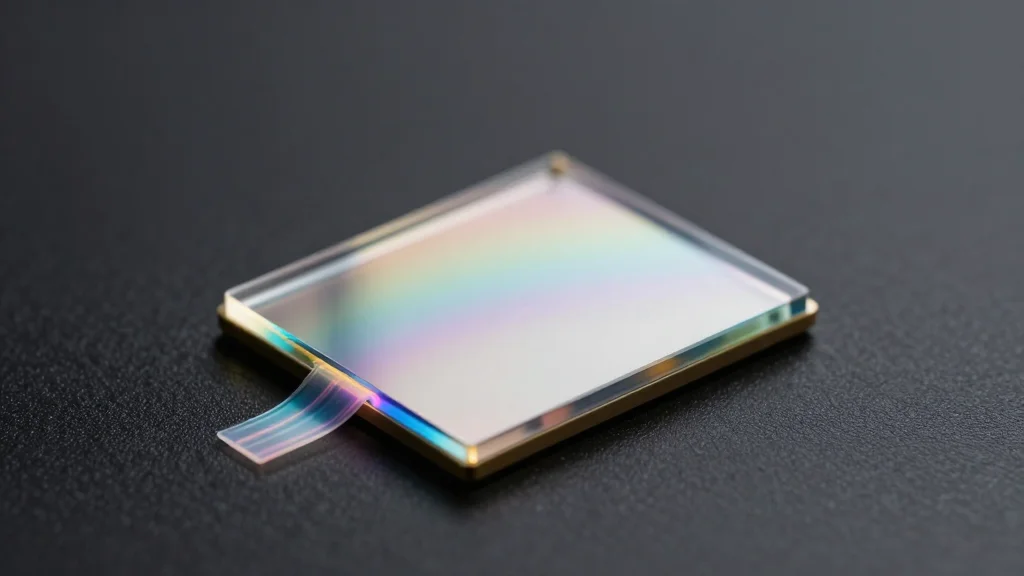
Room-Temperature Photodetector Spans Visible Light All the Way to Terahertz
Key Takeaways
- •SnBi₂Te₄ photodetector operates from visible to terahertz at room temperature
- •Combines photoconductive and electromagnetic‑induced well mechanisms for broadband response
- •Achieves 1.83 µs terahertz fall time, 30× faster than visible response
- •Noise‑equivalent power reaches 1.55 fW·Hz⁻¹/² in low‑frequency terahertz
- •Stable in air without encapsulation, unlike black phosphorus
Pulse Analysis
Broadband photodetection has long been hampered by the stark energy gap between visible photons and terahertz radiation. Conventional sensors rely on a single physical process—typically interband absorption—making them blind to one end of the spectrum. Topological insulators, with metallic surface states that span a wide energy range, present a compelling alternative, yet early attempts suffered from crystal defects and low responsivity. The recent SnBi₂Te₄ study leverages the material’s Dirac‑cone surface electrons to bridge this divide, offering a unified platform that can handle both high‑energy and low‑energy photons without cooling.
The SnBi₂Te₄ detector’s performance metrics set a new benchmark for room‑temperature devices. In the visible‑infrared band it achieves 19.4 A·W⁻¹ responsivity at 980 nm and a 70 µs response time, while its terahertz channel delivers a 1.83 µs fall time—over thirty times quicker than the visible pathway—and an NEP of 1.55 fW·Hz⁻¹/² at 0.0239 THz. These figures surpass comparable 2D‑material detectors such as graphene or black phosphorus, and the bow‑tie antenna design adds polarization sensitivity, opening avenues for advanced imaging and secure communications.
The ability to capture visible, infrared, and terahertz signatures with a single, air‑stable chip could reshape several industries. Security screening can now combine surface‑level visual inspection with concealed‑object terahertz imaging in one compact module, cutting equipment costs and simplifying deployment. In wireless communications, the ultrafast terahertz response supports next‑generation data links, while biomedical imaging benefits from simultaneous structural (visible) and molecular (terahertz) contrast. As manufacturers seek to miniaturize multi‑spectral systems, SnBi₂Te₄’s robustness and performance make it a strong candidate for commercial integration, potentially accelerating the adoption of broadband photonic sensors across the market.
Room-temperature photodetector spans visible light all the way to terahertz
Comments
Want to join the conversation?