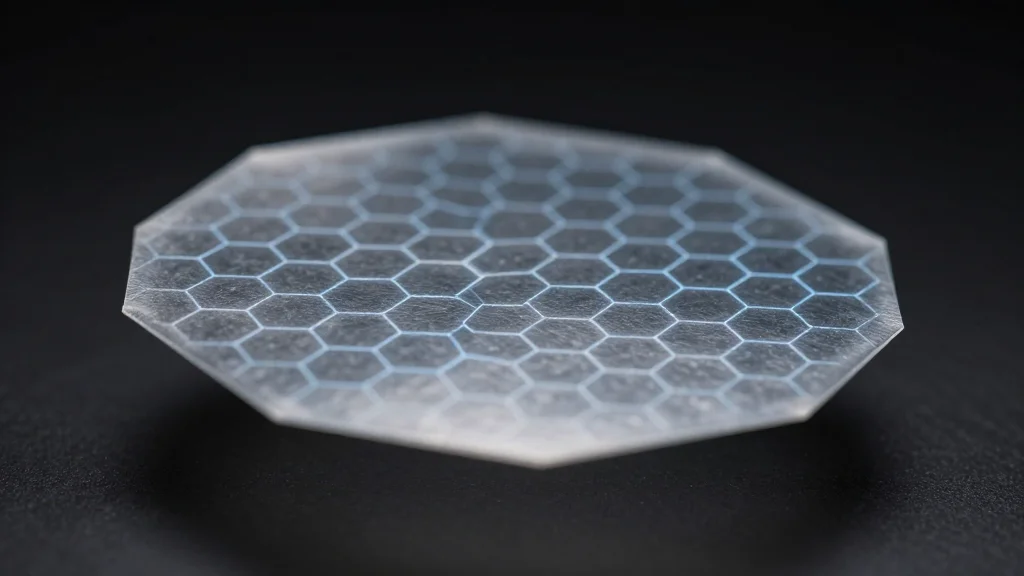
Scientists Create Ultra Thin Metal with Never Before Seen Quantum Behaviour
Key Takeaways
- •3‑nm Mn₃Sn films host 3D flat electronic band
- •Quantum confinement enhances flat‑band features
- •ARPES maps dispersion in all momentum directions
- •Method avoids twisting or complex stacking
- •Enables scalable exploration of correlated quantum states
Pulse Analysis
The discovery of a three‑dimensional flat band in an ultrathin kagome metal reshapes the landscape of quantum materials research. Historically, flat bands—where electron kinetic energy is quenched—have been confined to bulk crystals with intricate lattice symmetries, limiting their integration into device architectures. By leveraging molecular‑beam epitaxy to grow Mn₃Sn films only three nanometres thick, the Monash team demonstrated that precise thin‑film engineering can preserve, and even amplify, flat‑band characteristics. This breakthrough validates quantum confinement as a powerful tool for stabilizing exotic electronic states without resorting to moiré superlattices or multilayer stacking.
Beyond the fundamental physics, the ability to host a robust 3D flat band in a scalable thin‑film platform carries significant technological implications. Flat bands amplify electron‑electron interactions, fostering phenomena such as unconventional superconductivity, anomalous Hall effects, and magnetic ordering—all of which are central to low‑power, high‑speed electronics and topological quantum computing. The Mn₃Sn system, already known for its strong magnetic kagome lattice, now offers a tunable playground where researchers can manipulate band flatness through thickness, strain, or chemical doping, accelerating the design of devices that exploit correlated electron behavior.
Looking forward, this approach could catalyze a new class of quantum devices built on engineered flat‑band heterostructures. Industries focused on energy‑efficient computing, spintronics, and quantum information stand to benefit from materials that combine magnetic order with controllable electronic correlations. Moreover, the methodology—combining high‑precision epitaxy with advanced spectroscopic validation—sets a reproducible blueprint for other transition‑metal kagome compounds. As the field moves toward integrating quantum materials into commercial platforms, the ultrathin 3D flat‑band paradigm positions itself as a cornerstone for future low‑energy, high‑functionality technologies.
Scientists create ultra thin metal with never before seen quantum behaviour
Comments
Want to join the conversation?