Self-Assembling Luminophores Form Nanotubes with Multidirectional Exciton Transport Transport
Key Takeaways
- •Folding-driven π‑luminophore dyads self‑assemble into hollow nanotubes.
- •Nanotubes enable exciton transport both axially and circumferentially.
- •Exciton migration lengths reach 55 nm axially, 11 nm around circumference.
- •Design principle informs future organic photonic and artificial photosynthesis materials.
Pulse Analysis
The concept of folding‑driven self‑assembly has long been a hallmark of protein engineering, where precise three‑dimensional structures arise from predictable intramolecular interactions. Translating this principle to synthetic small molecules has proved difficult because steric bulk often hinders orderly aggregation. The Chiba University team overcame this barrier by designing diphenylanthracene‑based π‑luminophores that deliberately fold into conformations primed for directional π–π stacking, thereby mimicking nature’s folding‑mediated precision on a molecular scale.
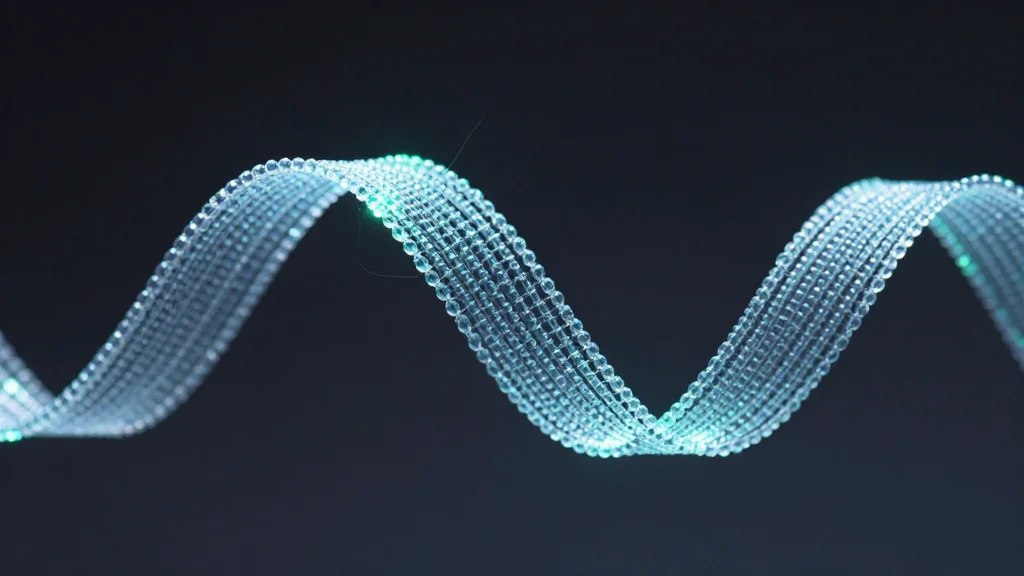
Using a suite of structural probes—including X‑ray diffraction, neutron scattering, and polarized spectroscopy—the researchers mapped a clear structural evolution: terphenylene cores formed twisted ribbons, diphenylnaphthalene yielded helical coils, and the bulkier diphenylanthracene produced stable, hollow nanotubes. Molecular simulations revealed an alternating tilt of chromophores that relieves stacking frustration, creating a herringbone‑like wall that stabilizes the curved tube. Time‑resolved fluorescence anisotropy showed that excitons travel not only along the tube’s length (≈55 nm) but also around its circumference (≈11 nm), a multidirectional transport previously unseen in one‑dimensional supramolecular systems.
These insights carry immediate relevance for the organic electronics sector. Curved nanostructures with intrinsic three‑dimensional energy flow can improve light‑harvesting efficiency in organic photovoltaics, enhance emission uniformity in OLEDs, and provide scaffolds for artificial photosynthetic catalysts. By establishing folding as a programmable handle for supramolecular curvature, the work offers a blueprint for engineers seeking to integrate complex photonic functions into flexible, solution‑processable materials. Future research will likely explore functionalizing the tube interior, scaling the assembly for device fabrication, and coupling the nanotubes with charge‑transport layers to unlock next‑generation optoelectronic performance.
Self-assembling luminophores form nanotubes with multidirectional exciton transport transport
Comments
Want to join the conversation?