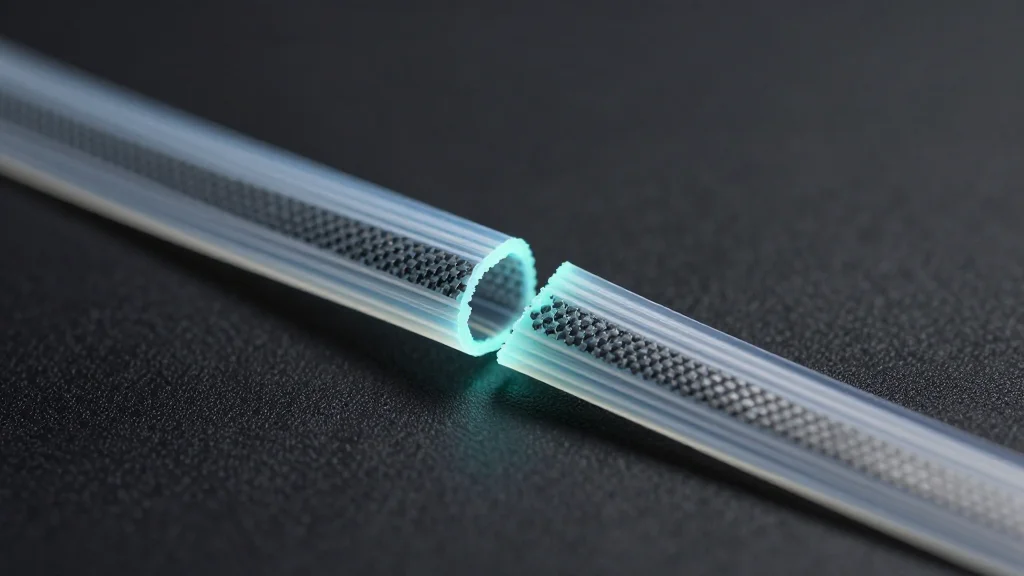
Self-Healing Synaptic Transistor Recovers Memory After Damage
Key Takeaways
- •Self‑healing synaptic transistor restores 80% current, 90% memory after cut.
- •Healing uses immiscible polymer bilayer that re‑aligns at mild warmth.
- •Memory window stays full to 50% strain; current drops after 30%.
- •Device stimulates mouse forelimb nerves, eliciting brain responses within 0‑60 Hz.
- •Stacked 5×5 arrays roll into curved modules, enabling reconfigurable neuromorphic circuits.
Pulse Analysis
Neuromorphic computing seeks hardware that mimics brain synapses, merging storage and processing in a single element. While soft, stretchable transistors have been demonstrated, they have historically faltered when damaged, as a cut disrupts the multilayer architecture that stores memory. The new self‑healing synaptic transistor tackles this by using two chemically incompatible polymers that remain distinct at a cut, allowing each layer to re‑bond spontaneously when warmed. This design, combined with carbon‑nanotube electrodes, restores most of the device’s electrical performance and retains over 90% of its programmed state, a milestone for resilient soft electronics.
The healing mechanism hinges on a bilayer gate dielectric where a fluorinated polymer crystallizes into a β‑phase when annealed atop an elastomer. This phase provides strong, switchable dipole polarization, creating a soft ferroelectric memory window 3.8 times larger than when the layers are processed separately. After a blade severs the device, the polymers realign at room temperature, and within a day the transistor’s transfer characteristics largely recover. Notably, the memory window endures up to 50% mechanical strain, whereas charge transport degrades beyond 30%, highlighting the distinct strain tolerance of polarization versus carrier mobility.
The ability to repair full‑device functionality opens avenues for implantable bio‑electronics that must endure bodily motion and occasional micro‑injuries. Researchers already demonstrated the transistor driving neural signals in a mouse, producing brain responses within the 0‑60 Hz band typical of cortical activity. Moreover, the technology supports modular stacking and rolling of 5×5 arrays, enabling reconfigurable neuromorphic circuits that can be physically rewired. Challenges remain, including high gate voltages, long‑term biocompatibility, and repeated healing cycles, but the work marks a decisive step toward durable, soft hardware that can bridge electronics and living tissue.
Self-healing synaptic transistor recovers memory after damage
Comments
Want to join the conversation?