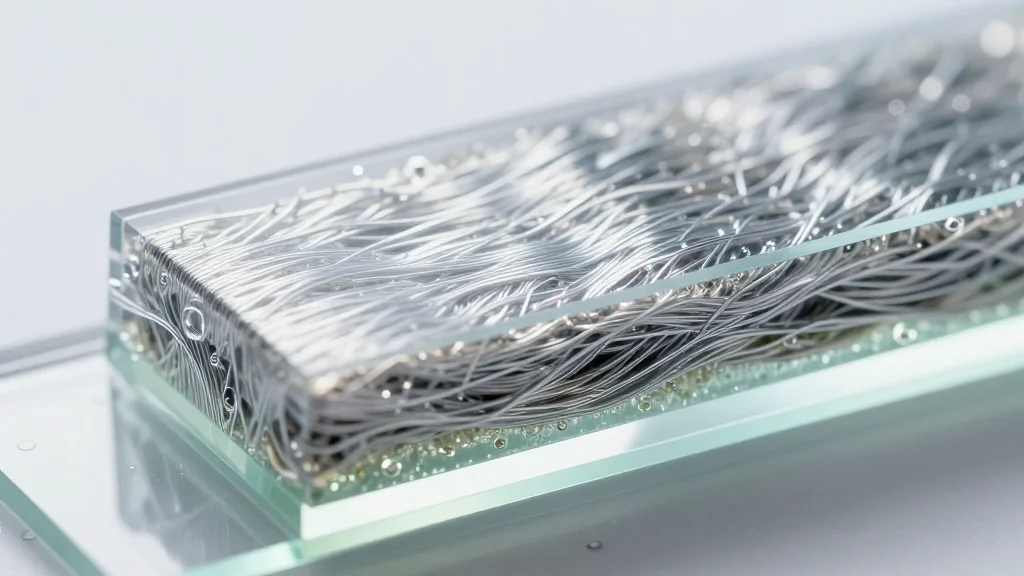
Silver Nanowire Electrodes Achieve 86% Efficiency in CO2 to Ethylene Conversion
Key Takeaways
- •86% selectivity for C2+ products in neutral electrolyte.
- •Silver nanowires act as both conductor and catalyst.
- •Three‑layer design prevents electrode flooding, improving durability.
- •Stable operation for over 50 hours with no performance decline.
- •Tandem catalysis converts CO₂ to CO, then ethylene via copper.
Pulse Analysis
Electrochemical reduction of carbon dioxide has long been touted as a pathway to close the carbon loop, yet practical deployment has been hampered by low product selectivity and rapid electrode degradation. Conventional designs often suffer from flooding, where the liquid electrolyte blocks gas‑phase CO₂ access, leading to diminished catalytic activity and short operational lifespans. The industry therefore seeks electrode architectures that can sustain high current densities while preserving gas pathways and delivering multi‑carbon chemicals such as ethylene, a cornerstone feedstock for plastics and fuels.
The KAIST team’s three‑layer electrode addresses these challenges head‑on. A hydrophobic base repels water, a copper‑oxide layer performs the core CO₂ reduction, and an ultrafine silver nanowire network serves a dual purpose: it distributes electrical charge efficiently and catalyzes the intermediate formation of carbon monoxide. This CO then migrates to adjacent copper sites for a tandem conversion to ethylene and other C₂⁺ products. The result is a record‑high 86% selectivity in neutral electrolytes and robust operation for over 50 hours without measurable decay, demonstrating that integrating conductive nanostructures can simultaneously solve flooding and catalytic efficiency issues.
If the approach scales, it could reshape the economics of carbon‑capture utilization. High selectivity reduces downstream separation costs, while the durable, flood‑resistant design lowers maintenance and replacement expenses. Moreover, the modular nature of the silver nanowire network suggests it can be adapted to other catalytic systems, potentially expanding the product slate to include ethanol, propanol, or even liquid fuels. Investors and policymakers watching the decarbonization market will likely view this development as a tangible step toward commercially viable CO₂‑to‑fuel technologies.
Silver nanowire electrodes achieve 86% efficiency in CO2 to ethylene conversion
Comments
Want to join the conversation?