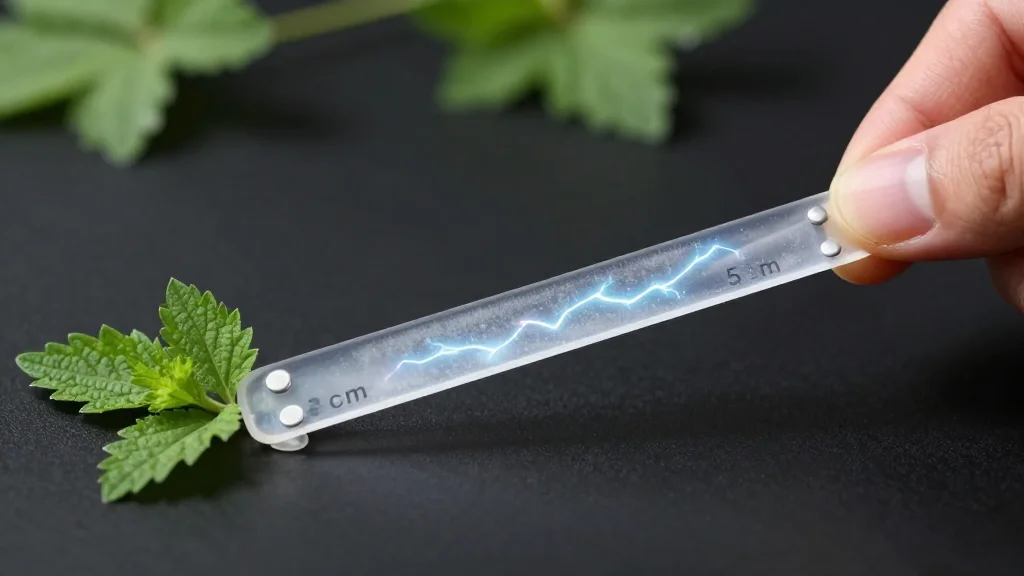
Stevia-Based Hydrogel Improves Triboelectric Nanogenerator Performance
Key Takeaways
- •Stevia-PVA hydrogel TENG achieves 2‑5× higher mechanical strength
- •Electrical output rises 3‑8×, delivering ~800 V over 16k cycles
- •Device stays stable after 30 days storage and recycling
- •XGBoost model classifies motions with 95.29% accuracy
- •Transparency above 70% and tensile strength exceeds 25 MPa
Pulse Analysis
Triboelectric nanogenerators (TENGs) have emerged as a promising route to harvest mechanical energy from everyday motion, yet hydrogel‑based variants have struggled with weak mechanical integrity and modest power output. By leveraging stevia’s abundant hydroxyl groups to reinforce a polyvinyl alcohol matrix, the new S‑TENG creates a dual‑network structure that simultaneously boosts tensile strength and ionic conductivity. This biomimetic approach not only overcomes the brittleness of traditional hydrogel electrodes but also preserves optical clarity, a critical factor for unobtrusive wearable sensors.
Performance data reveal a dramatic leap: mechanical strength climbs to over 25 MPa and elongation exceeds 510%, while electrical output jumps three to eightfold, delivering roughly 800 V across 16,000 contact‑separation cycles. The device’s durability is further underscored by unchanged output after a month of ambient storage and successful recycling through water‑assisted re‑gelation, retaining about 600 V. Compared with 2D‑material TENGs, the stevia‑hydrogel offers a compelling blend of robustness, power density, and transparency, positioning it as a viable power source for flexible electronics.
The integration of machine‑learning‑driven motion classification, achieving 95.29% accuracy with XGBoost, showcases the sensor’s readiness for real‑time health‑monitoring and human‑machine interface applications. As the wearable IoT market expands toward continuous, battery‑free operation, technologies like S‑TENG could reduce reliance on conventional batteries, lower device weight, and enable new form factors. Ongoing research will likely focus on scaling production, optimizing the hydrogel formulation for diverse environments, and embedding the generators into smart textiles, signaling a shift toward sustainable, self‑powered wearable ecosystems.
Stevia-based hydrogel improves triboelectric nanogenerator performance
Comments
Want to join the conversation?