The Role of Graphene in Photocatalytic Composites Revealed by Theoretical Modelling
Key Takeaways
- •Defect sites enable covalent TiO2–graphene bonding, replacing weak physisorption.
- •Covalent interfaces generate hybrid electronic states that speed charge separation.
- •Hybrid states suppress electron‑hole recombination, boosting photocatalytic efficiency.
- •Study suggests defect engineering as a design strategy for high‑performance composites.
- •Findings may accelerate solar‑driven CO₂ reduction and pollution remediation technologies.
Pulse Analysis
TiO₂ has long been a workhorse in photocatalysis, prized for its stability and low cost, yet its practical impact is hampered by two fundamental drawbacks: it absorbs only a narrow UV spectrum and the photogenerated electrons and holes tend to recombine before driving chemical reactions. Researchers have turned to carbon nanomaterials, especially graphene, to overcome these barriers, leveraging graphene’s high conductivity and large surface area to facilitate charge transport. However, the exact nature of the graphene‑TiO₂ interface remained ambiguous, limiting systematic material design.
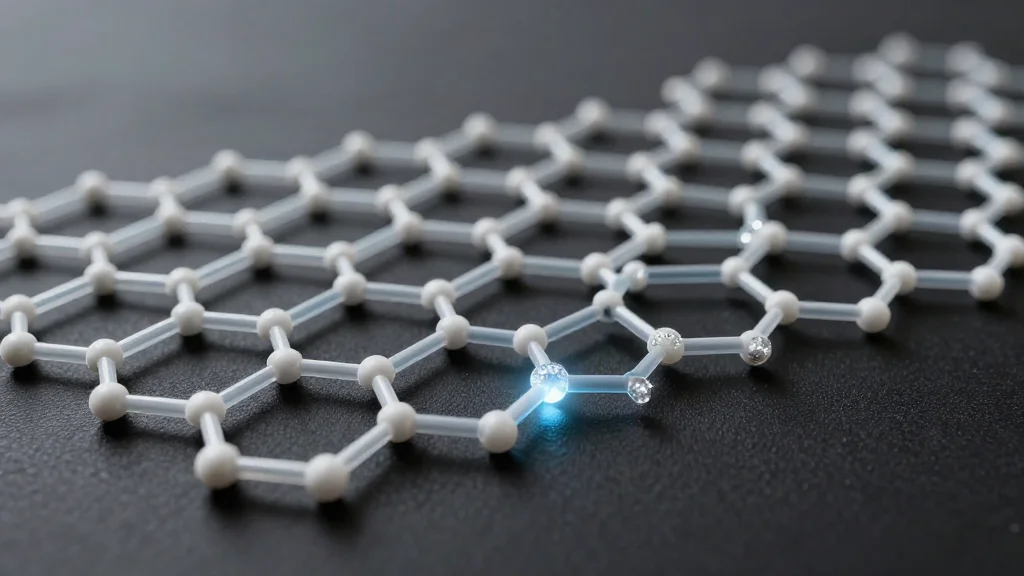
In a breakthrough study published in Carbon Future, the Sheffield team introduced realistic defect scenarios into graphene models, revealing that carbon vacancies act as anchoring points for strong covalent TiO₂ bonds. This bonding transforms the interface from a weakly adsorbed, physisorbed layer into a chemically integrated hybrid, where electronic states are shared between the two components. The resulting hybridized orbitals create efficient pathways for electrons to migrate away from holes, dramatically reducing recombination rates and enhancing overall photocatalytic activity. The computational insights align with experimental observations that defect‑rich graphene improves TiO₂ performance, providing a clear mechanistic explanation.
The implications extend beyond academic curiosity. By demonstrating that defect engineering can be a deliberate design lever, the research equips material scientists and industrial developers with a practical strategy to fabricate next‑generation photocatalysts for solar fuel production, air purification, and water treatment. As governments and corporations invest heavily in carbon‑neutral technologies, scalable methods to boost catalyst efficiency could shorten the commercialization timeline for renewable chemical processes, positioning graphene‑enhanced TiO₂ composites as a cornerstone of the emerging green‑energy market.
The role of graphene in photocatalytic composites revealed by theoretical modelling
Comments
Want to join the conversation?