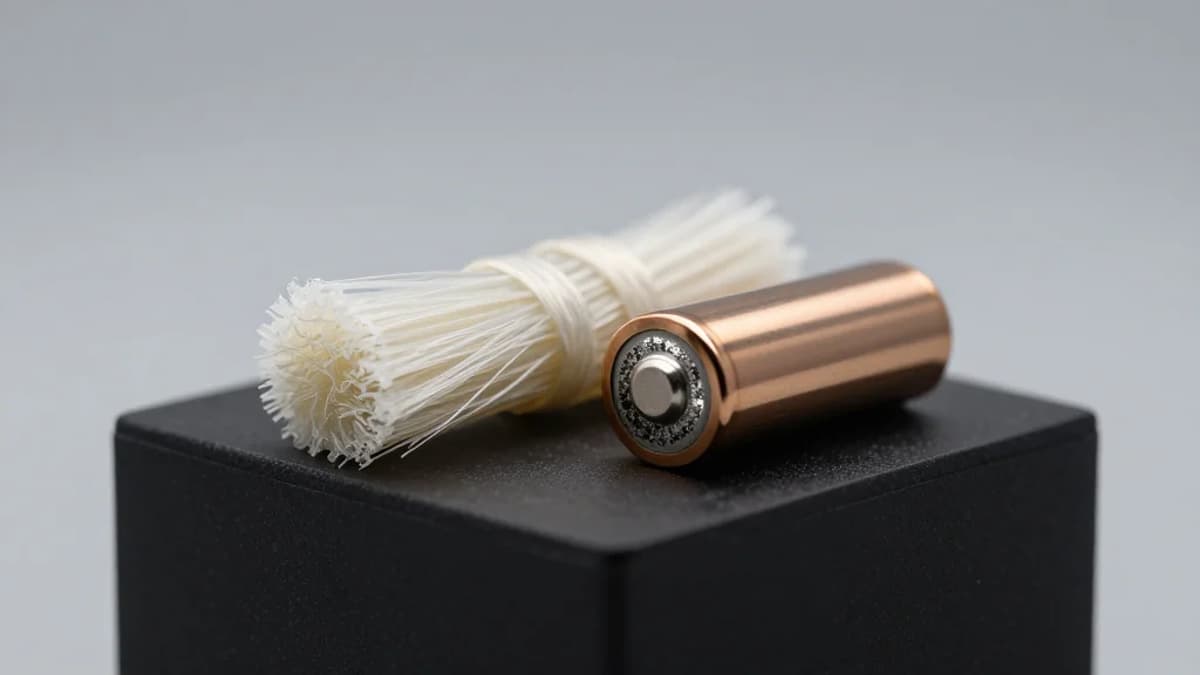
Turning Retired Wind Turbine Blades Into High-Performance Lithium-Ion Battery Anodes
•January 20, 2026
0
Why It Matters
Turning a looming blade‑waste crisis into a source of advanced battery material supports EV and grid‑storage growth, cuts landfill use, and bolsters the sustainability credentials of the wind sector.
Key Takeaways
- •225k tons blades by 2030, 43M by 2050.
- •Process yields porous Si‑C anodes with 1,256 mAh/g.
- •Hierarchical pores reduce expansion, improve cycle life.
- •Selling price $10.83/kg, competitive silicon source.
- •Recycling turns waste into high‑value battery material.
Pulse Analysis
The rapid expansion of wind power has created a parallel surge in decommissioned turbine blades, with estimates of 225,000 tonnes by 2030 climbing to over 43 million tonnes by 2050. Traditional disposal—landfilling or incineration—wastes valuable composite material and adds environmental burdens. Recent research, including a carbothermal shock method that yields graphene, demonstrates that blade waste can be a feedstock for high‑tech applications, setting the stage for economically viable recycling pathways.
Hebei University of Technology’s multistep process leverages the silica content of glass fibers. After pyrolysis removes the resin, magnesium alloying and nitridation generate a porous silicon scaffold that is later acid‑washed and carbon‑coated. The resulting hierarchical pore network—mesopores for ion transport and macropores for volume buffering—delivers a specific capacity of 1,256 mAh g⁻¹ after 300 cycles, with thickness expansion limited to 35 % versus 90 % for uncoated silicon. At a modeled $10.83 per kilogram, the material competes with conventional silicon sources, while the plant’s scale drives cost efficiencies.
Beyond the chemistry, the technology offers strategic value to the battery ecosystem and renewable energy sector. By supplying a low‑cost, high‑capacity anode material, it can accelerate electric‑vehicle adoption and grid‑scale storage, reducing reliance on mined silicon and associated carbon footprints. Moreover, integrating blade recycling into the renewable supply chain strengthens the environmental narrative of wind power, turning end‑of‑life assets into circular‑economy inputs. Future work will need to green the reagent streams and benchmark energy use against faster methods, but the demonstrated performance and economics position blade‑derived silicon‑carbon anodes as a compelling component of a sustainable energy future.
Turning retired wind turbine blades into high-performance lithium-ion battery anodes
0
Comments
Want to join the conversation?
Loading comments...