Key Takeaways
- •Ultra‑thin optical fibers create evanescent fields that boost light‑nanoparticle interaction
- •Circularly polarized light drives opposite forces on left‑ and right‑handed nanocubes
- •Researchers achieved chirality‑selective transport of metallic nanoparticles 1,000× smaller than prior methods
- •Switching light polarization reverses particle motion direction along the fiber
- •Technique could scale to molecular‑size objects, impacting drug design and chiral analysis
Pulse Analysis
Chirality lies at the heart of biochemistry; the left‑handed and right‑handed forms of a molecule can exhibit dramatically different biological activity. In pharmaceuticals, separating these enantiomers is essential to ensure efficacy and safety, yet conventional chemical methods are costly and often inefficient at the nanoscale. Optical manipulation has long offered a contact‑free alternative, but the force exerted by light diminishes sharply as particle size shrinks, making it ineffective for nanoparticles that approach molecular dimensions.
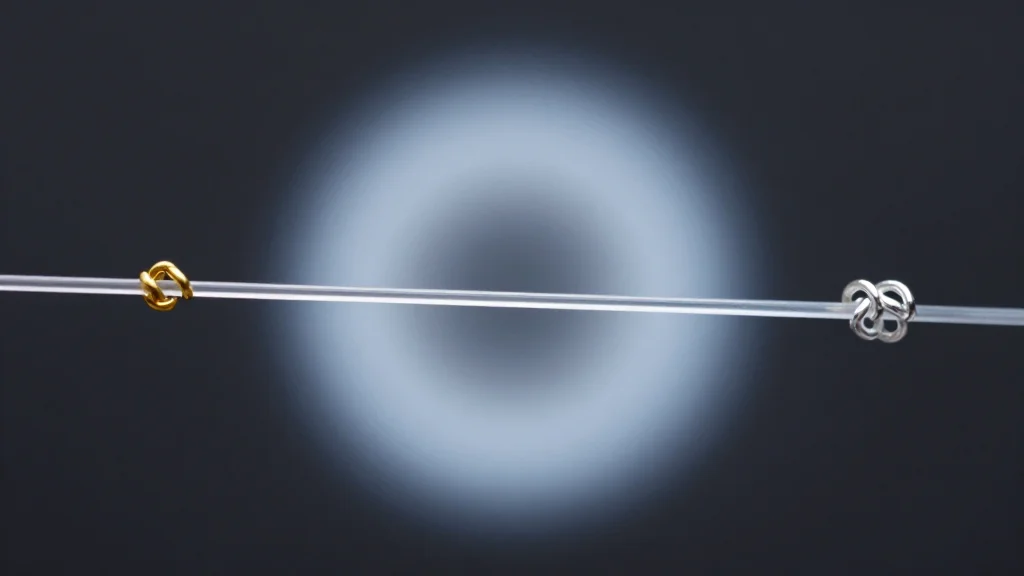
The breakthrough reported in Nature Communications leverages the evanescent field generated by an ultra‑thin optical fiber, where light is confined to a region just a few hundred nanometers from the surface. This confinement amplifies the interaction between circularly polarized photons and chiral metallic nanocubes, producing forces that depend on the particles’ handedness. Experiments showed that left‑handed and right‑handed nanocubes travel in opposite directions along the fiber, and reversing the light’s polarization flips the motion. The observed transport occurs for particles roughly a thousand times smaller than those previously sorted with optical tweezers, marking a significant step toward nanoscale chirality control.
If the technique can be extended to particles ten to one hundred times smaller, it could enable direct manipulation of individual molecules—a prospect that would transform chiral analysis, drug screening, and the synthesis of enantiopure compounds. Industries ranging from pharmaceuticals to agrochemicals stand to benefit from a rapid, label‑free separation method that reduces reliance on costly chromatography. Ongoing research will focus on scaling the fiber platform, integrating it with microfluidic systems, and exploring other material systems, paving the way for commercial devices that bring optical chirality sorting from the lab to the production line.
Twisted nanoparticles sorted by light
Comments
Want to join the conversation?