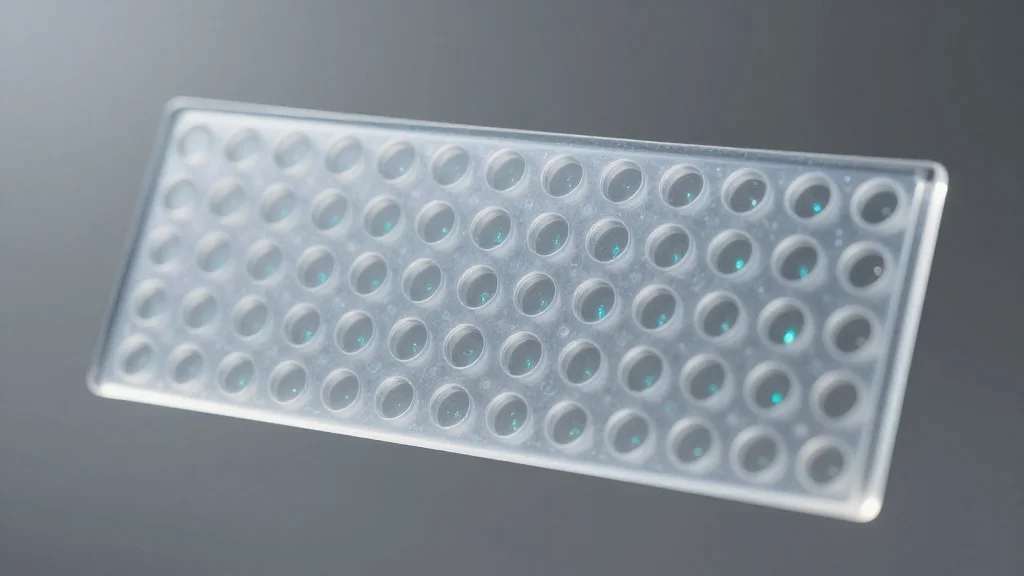
Two Nanopores Working in Concert to Control Molecular Traffic
Key Takeaways
- •DNA nanotech creates two interacting nanopores in synthetic membrane.
- •Pore activation triggers second pore, coordinating molecular transport.
- •Platform enables enzyme cascades, actin assembly, cell‑free transcription.
- •Programmable microreactor mimics collective behavior of natural cells.
- •Opens path for autonomous synthetic biomanufacturing and research tools.
Pulse Analysis
Membrane pores are the lifelines of living cells, regulating everything from nutrient uptake to signal transduction. By leveraging DNA nanotechnology—a field that repurposes DNA as a construction material—researchers have now built an artificial membrane that hosts two cooperating nanopores. This double‑necked architecture mirrors the collective organization seen in biology, where the opening of one channel can influence another, creating a cascade of controlled permeability. The ability to program such interactions marks a shift from static synthetic scaffolds to dynamic, responsive systems.
In the reported microreactor, the first nanopore’s activation mechanically or chemically induces the formation of a second pore, establishing a sequential gateway for molecules. This mechanism was used to orchestrate complex reactions: enzyme cascades proceeded stepwise, actin monomers polymerized into filamentous structures, and cell‑free transcription of Spinach RNA was tightly timed. Even the synthesis of three‑dimensional DNA crystals was confined within the compartment, demonstrating precise spatial control. Such versatility illustrates how programmable permeability can serve as a reaction‑choreography tool, delivering substrates in a defined order and isolating intermediates.
The broader impact lies in the platform’s potential to accelerate synthetic biology and biomanufacturing. Researchers can now prototype cell‑like reactors that autonomously manage multistep pathways, reducing reliance on living cells and simplifying scale‑up. This could lead to on‑demand production of high‑value chemicals, personalized therapeutics, or novel biomaterials. As the technology matures, integration with microfluidics and AI‑driven design may further enhance its utility, positioning DNA‑based programmable membranes as a cornerstone of next‑generation biotech infrastructure.
Two nanopores working in concert to control molecular traffic
Comments
Want to join the conversation?