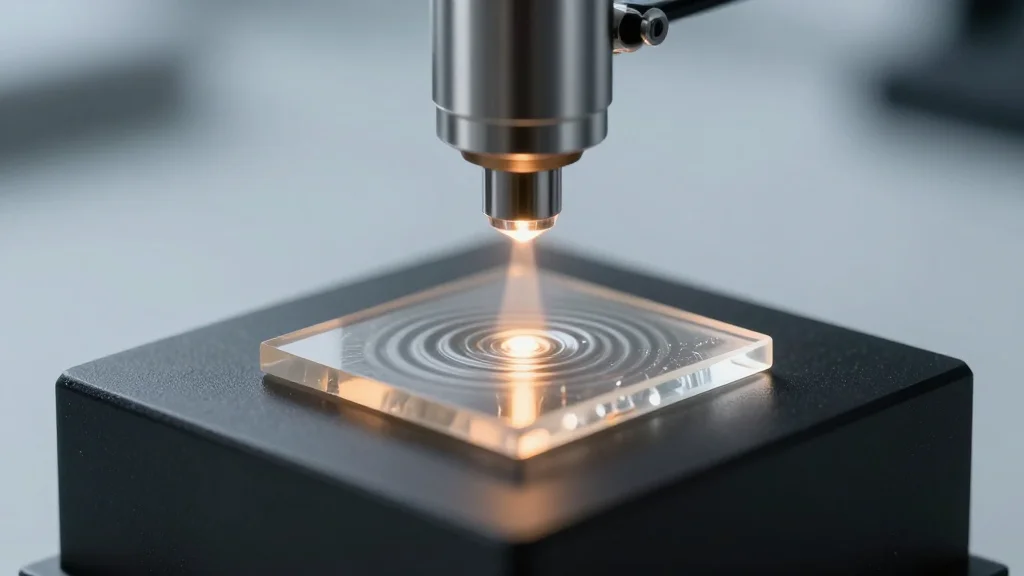
Ultrafast Spectroscopy Allows New Insights Into Energy Flow in Semiconductors
Key Takeaways
- •30‑fs laser pulses probe electron‑phonon dynamics in germanium
- •Combined Raman and reflection spectroscopy captures picosecond phonon relaxation
- •Measurements detect sub‑1% intensity and 0.2 cm⁻¹ frequency shifts
- •Findings enable design of cooler, faster semiconductor devices
- •Simulations validate experimental insight into energy loss mechanisms
Pulse Analysis
Semiconductor overheating remains a bottleneck for scaling modern processors, smartphones, and sensors. Traditional thermal models often rely on macroscopic approximations that miss the ultrafast interactions between excited electrons and the crystal lattice. The Basel team’s breakthrough—combining time‑resolved Raman with transient reflection—offers a window into these femtosecond‑scale events, capturing how energy migrates from the electronic system to phonons within picoseconds. This level of detail reshapes our fundamental understanding of heat generation at the atomic level.
The experimental setup pushes the limits of measurement precision. Using 30‑femtosecond laser pulses, the researchers recorded lattice responses every microsecond over a continuous 48‑hour run, achieving intensity changes below one percent and frequency shifts under 0.2 cm⁻¹. Such sensitivity allows discrimination between competing energy‑loss pathways, something previously obscured by noise and temporal averaging. Complementary ab‑initio simulations corroborated the observed dynamics, confirming that the captured signals reflect genuine electron‑phonon coupling rather than artefacts.
Industry implications are immediate. With a clear, quantitative picture of how heat originates and propagates in germanium, device engineers can tailor material compositions, doping strategies, and architecture to divert or dissipate energy more efficiently. This could translate into chips that run cooler, sustain higher clock speeds, and extend the lifespan of sensors in harsh environments. Moreover, the methodology is transferable to other semiconductors and emerging phononic devices, positioning ultrafast spectroscopy as a cornerstone tool for next‑generation electronics design.
Ultrafast spectroscopy allows new insights into energy flow in semiconductors
Comments
Want to join the conversation?