Why It Matters
Hybridizing graphene and diamond could unlock ultra‑durable, high‑performance components for power electronics, cutting tools, and thermal management, addressing a growing demand for materials that survive extreme conditions.
Key Takeaways
- •Van der Waals hybrids enable flexible electronic interfaces
- •Covalent hybrids provide superior mechanical strength and thermal conductivity
- •Liquid gallium method grows graphene directly on diamond surfaces
- •Hybrid tools reduce wear and cutting forces in machining
- •Scaling large-area, uniform hybrids remains major hurdle
Pulse Analysis
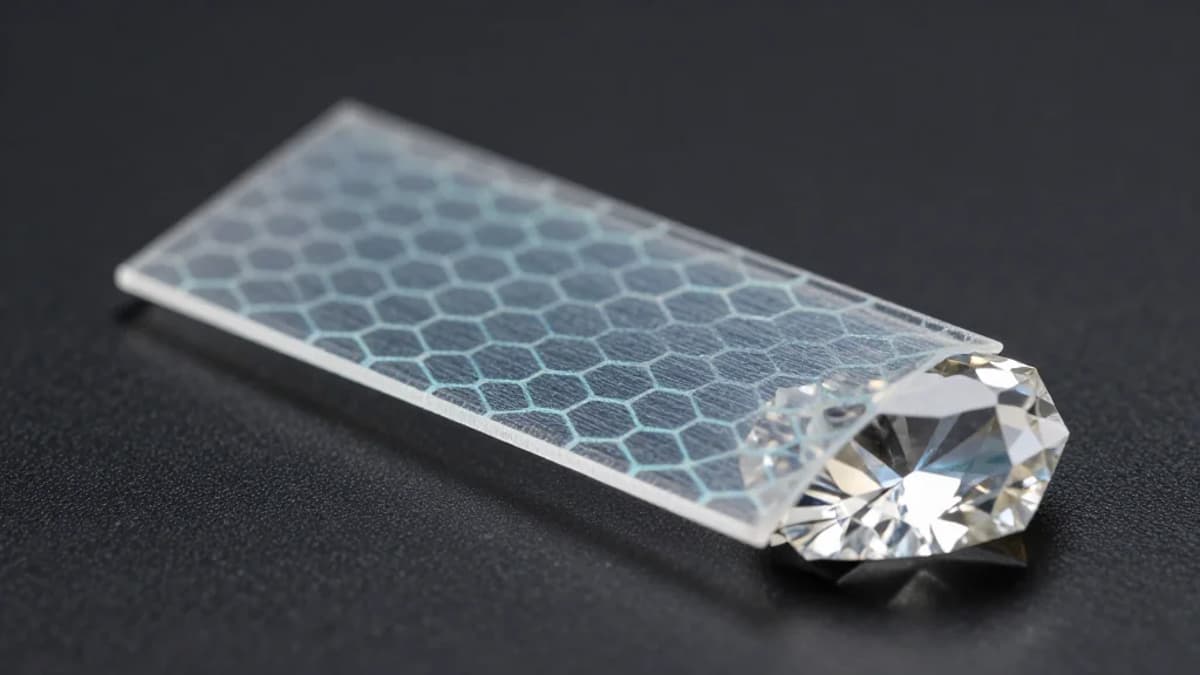
The convergence of graphene and diamond represents a paradigm shift in materials engineering. Graphene’s single‑atom thickness and exceptional electrical conductivity make it ideal for next‑generation circuitry, while diamond’s unrivaled hardness and thermal conductivity excel in demanding mechanical environments. By marrying these two carbon allotropes, engineers can tailor interfacial properties to meet specific performance criteria, creating a new class of composites that transcend the limitations of each constituent alone.
Recent research distinguishes two primary hybrid architectures: van der Waals graphene‑diamond hybrids (V‑GDHs) that rely on weak physical adhesion, and covalent graphene‑diamond hybrids (C‑GDHs) that form robust carbon‑carbon bonds. Advances such as catalytic graphene growth directly on diamond substrates and liquid‑gallium‑induced transformation of diamond into vertically aligned graphene sheets have streamlined fabrication, delivering materials with record‑breaking thermal interface conductance and electrical current capacity. Covalent hybrids, though more complex to produce, demonstrate dramatically reduced tool wear and lower cutting forces, promising breakthroughs in precision machining.
Despite these gains, commercial adoption faces hurdles. Uniform, large‑scale synthesis of covalent hybrids demands high temperatures or pressures, and comprehensive performance data under real‑world operating conditions are still scarce. Ongoing efforts focus on atom‑by‑atom growth mechanisms and scalable, low‑impact manufacturing routes. Success in these areas could catalyze a wave of ultra‑reliable power electronics, high‑efficiency heat sinks, and next‑generation cutting tools, positioning graphene‑diamond hybrids as a cornerstone of extreme‑environment technology.
When the softest carbon meets the hardest
0
Comments
Want to join the conversation?
Loading comments...