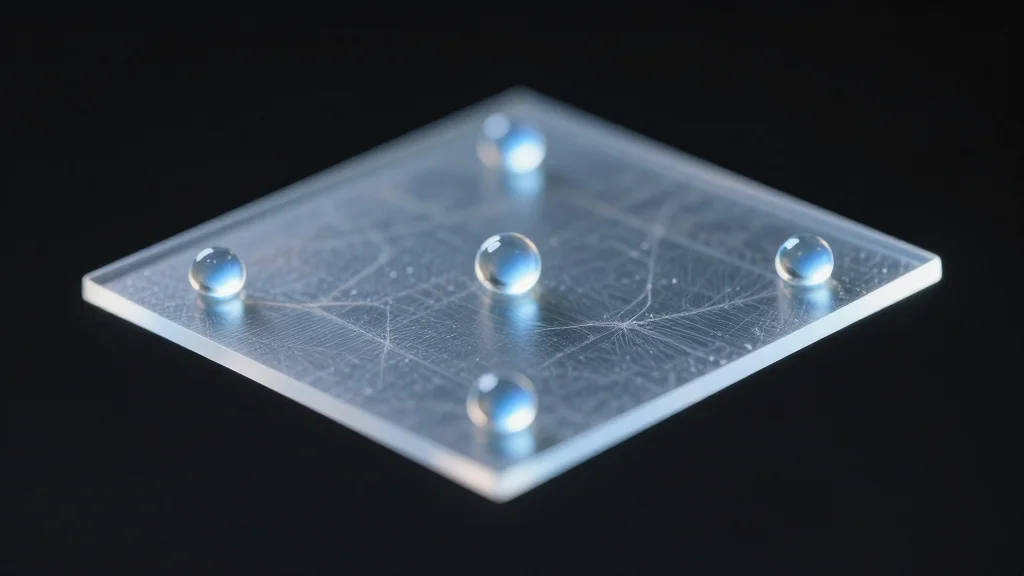
0D/2D Nanomaterials Heterostructures for High‐Performance Photodetectors: Combining Quantum Dots With 2D Materials
Why It Matters
Mixed‑dimensional photodetectors promise faster, more sensitive imaging and communication sensors, addressing growing demand in wearables, LiDAR, and telecom. Their integration could lower costs and enable flexible, lightweight optoelectronic platforms.
Key Takeaways
- •Quantum dots provide tunable absorption via size control.
- •2D layers deliver high carrier mobility and flexibility.
- •Heterostructures boost responsivity and reduce dark current.
- •Scalable synthesis remains a bottleneck for commercial devices.
- •Emerging perovskite QDs improve room‑temperature photodetector performance.
Pulse Analysis
The convergence of zero‑dimensional quantum dots and two‑dimensional layered crystals creates a new class of mixed‑dimensional heterostructures that leverage the best of both worlds. Quantum dots offer size‑dependent bandgaps and strong light‑matter interaction, while 2D materials such as graphene, MoS₂, or black phosphorus provide atomically thin channels with high carrier mobility and mechanical flexibility. When stacked or chemically bonded, these components form intimate interfaces where charge transfer can be engineered with sub‑nanometer precision, unlocking photodetector designs that were previously unattainable. Such engineered heterojunctions also facilitate carrier multiplication, further amplifying photocurrent.
Recent reports demonstrate that 0D/2D photodetectors can exceed 10⁴ A W⁻¹ responsivity and achieve sub‑microsecond response times, rivaling conventional semiconductor devices. For instance, MoS₂ combined with lead‑halide perovskite quantum dots delivers broadband detection from visible to near‑infrared with low dark current, while graphene‑quantum‑dot hybrids enable flexible, transparent sensors for wearable electronics. Nevertheless, reproducible large‑area growth of defect‑free 2D layers and uniform quantum‑dot deposition remain technical hurdles. Interface traps, energy‑level mismatches, and environmental degradation of perovskite dots also limit long‑term quantum efficiency. Optimizing the quantum dot surface chemistry has shown to raise external quantum efficiency beyond 70%.
The commercial upside of mixed‑dimensional photodetectors lies in their compatibility with existing silicon photonics and the possibility of roll‑to‑roll manufacturing. High‑speed, low‑noise sensors are critical for LiDAR, optical communication, and biomedical imaging, where the added flexibility of 2D substrates can reduce system weight and cost. Ongoing research focuses on scalable chemical vapor deposition of 2D crystals, ligand‑exchange strategies for quantum dots, and encapsulation techniques to improve stability. Investors and OEMs should monitor this field as it moves from laboratory prototypes toward volume‑ready optoelectronic components. Standardization of testing protocols will accelerate adoption across telecom and consumer markets.
0D/2D Nanomaterials Heterostructures for High‐Performance Photodetectors: Combining Quantum Dots With 2D Materials
Comments
Want to join the conversation?
Loading comments...