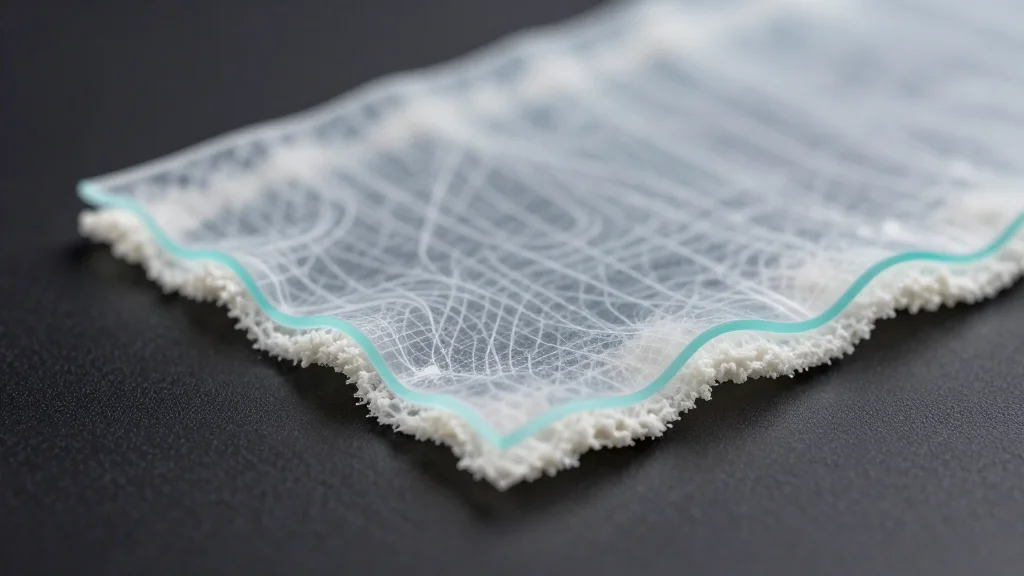
2D Ultrathin Ion‐Selective Membranes With Negatively Charged Interlayer Spacing Enabled by Edge‐Sulfonated Graphene Oxide for Efficient Osmotic Power Generation
Why It Matters
The breakthrough demonstrates that ultrathin, highly charged 2D membranes can maintain high power density at industrial scales, removing a key barrier to commercializing osmotic power. This could unlock a renewable energy source that leverages existing seawater‑river interfaces worldwide.
Key Takeaways
- •Edge-sulfonated graphene oxide creates negatively charged interlayer spacing
- •Heterogeneous SGO‑OMFC membrane reaches 132.7 W/m² power density
- •Power density stays above 0.7 W/m² at 10,000× larger area
- •Combines size sieving with high surface charge for fast cation flux
- •Outperforms commercial ion‑exchange membranes in scalability tests
Pulse Analysis
Reverse electrodialysis (RED) has long promised to convert the chemical potential of salinity gradients into electricity, but its adoption has been hampered by the performance gap between laboratory‑scale membranes and those that can be manufactured at scale. Conventional ion‑exchange membranes suffer from limited charge density and thick structures that impede ion flux, causing power densities to plummet as membrane area grows. Recent advances in two‑dimensional nanomaterials have shown that atomically thin layers can deliver exceptional selectivity, yet translating those gains to square‑meter‑scale devices has remained elusive.
The newly reported SGO‑OMFC composite tackles this scalability dilemma by integrating edge‑sulfonated graphene oxide—a material that introduces abundant sulfonate groups along the sheet edges—into an ultrathin selective film. This chemistry creates a highly negative surface charge and widens the interlayer spacing, allowing cations to zip through with minimal resistance while repelling anions. The supporting oxidized micro‑fibrillated cellulose layer not only reinforces the membrane against mechanical stress but also contributes additional negative charge, reinforcing the ion‑selective pathway. The resulting architecture achieves a power density of 132.7 W·m⁻² on a standard test cell, a figure that remains respectable (0.74 W·m⁻²) even when the active area is magnified by four orders of magnitude.
From a commercial perspective, this performance leap could make RED a credible complement to solar and wind, especially in coastal regions where river‑to‑sea mixing zones are abundant. The ability to sustain high power output across large membrane panels reduces the cost per kilowatt‑hour and simplifies system integration with existing desalination or water‑treatment infrastructure. Moreover, the heterogeneous design is compatible with roll‑to‑roll manufacturing, suggesting a clear route to mass production. As policymakers and investors seek diversified renewable portfolios, scalable osmotic power could emerge as a niche yet impactful contributor to the low‑carbon grid.
2D Ultrathin Ion‐Selective Membranes With Negatively Charged Interlayer Spacing Enabled by Edge‐Sulfonated Graphene Oxide for Efficient Osmotic Power Generation
Comments
Want to join the conversation?
Loading comments...