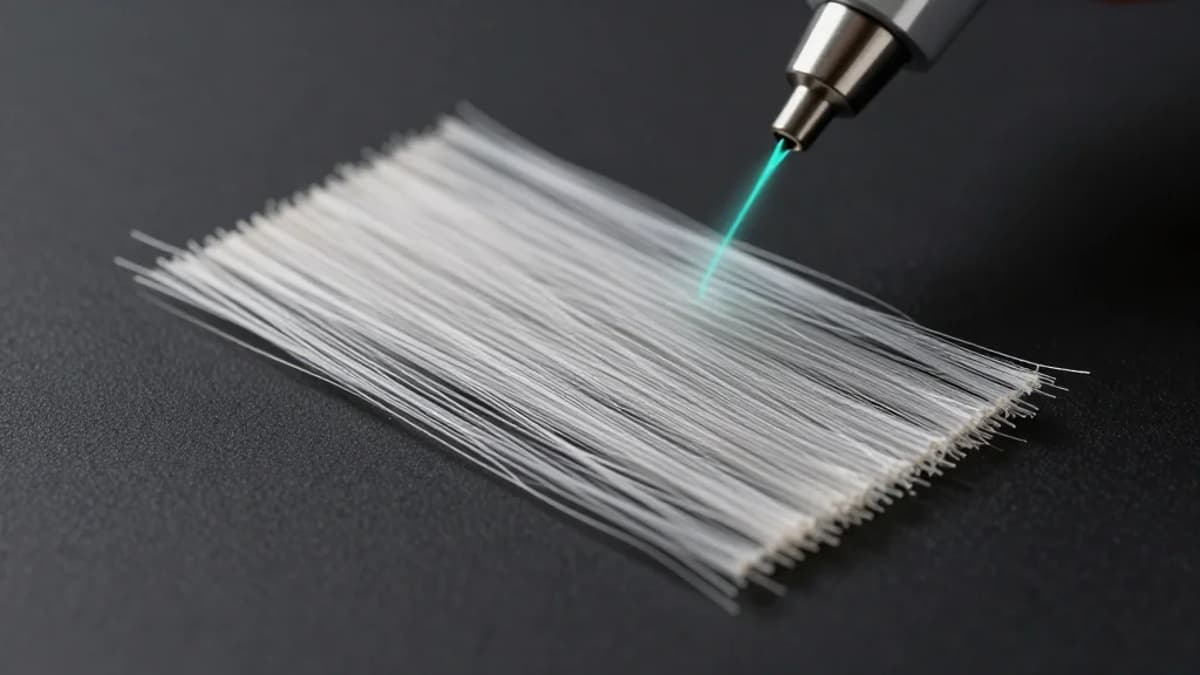
A Comprehensive Review on Electrospinning: Mechanisms, Functional Modifications and the Importance of Nanofiber Systems
•January 8, 2026
0
Why It Matters
Enhanced electrospun nanofibers unlock new product opportunities, driving innovation in high‑performance materials and sustainable technologies. The review consolidates knowledge that can accelerate commercial adoption and guide R&D investment.
Key Takeaways
- •Electrospinning yields high‑aspect‑ratio nanofibers.
- •Mechanical strength and thermal stability remain challenges.
- •Composite and polymer blend strategies improve performance.
- •Functionalization expands applications in health, energy, environment.
- •Review maps chronological advances and modification techniques.
Pulse Analysis
Electrospinning has transitioned from a laboratory curiosity to a cornerstone technology for nanofiber fabrication, attracting significant interest from sectors ranging from biomedical devices to energy storage. The process leverages a high‑voltage electric field to draw polymer solutions into ultra‑fine fibers, delivering products with surface‑to‑volume ratios unattainable by conventional methods. Market analysts project a compound annual growth rate exceeding 15% for electrospun materials, fueled by demand for lightweight filtration media, wound‑care dressings, and flexible electronics. This surge underscores the technique’s scalability and its alignment with sustainability goals, as many electrospun polymers are recyclable or derived from bio‑based feedstocks.
Despite its advantages, the baseline electrospun fiber often suffers from inadequate tensile strength, poor thermal resistance, and limited functional groups, restricting its utility in demanding applications. Researchers have responded with a toolbox of modification strategies: embedding inorganic nanoparticles to reinforce mechanical integrity, co‑spinning polymer blends to balance elasticity and rigidity, and grafting reactive moieties for targeted bioactivity or catalytic performance. Such engineered composites have demonstrated up to a three‑fold increase in Young's modulus and enhanced flame retardancy, while preserving the intrinsic porosity that makes nanofibers valuable for filtration and tissue scaffolding. The review systematically categorizes these approaches, linking processing parameters to property outcomes, and provides a reference framework for engineers seeking to tailor nanofiber characteristics.
Looking ahead, the convergence of electrospinning with emerging fields like additive manufacturing and artificial intelligence promises to further accelerate material innovation. Real‑time monitoring of jet dynamics, guided by machine‑learning algorithms, can optimize fiber uniformity and reduce waste, while multi‑material printing expands design freedom for hierarchical structures. As industries prioritize lightweight, high‑performance, and environmentally benign solutions, electrospun nanofibers are poised to become integral components of next‑generation products, from smart textiles to next‑gen batteries. Continued investment in scalable equipment and standardized testing will be critical to translate laboratory breakthroughs into reliable commercial offerings.
A Comprehensive Review on Electrospinning: Mechanisms, Functional Modifications and the Importance of Nanofiber Systems
0
Comments
Want to join the conversation?
Loading comments...