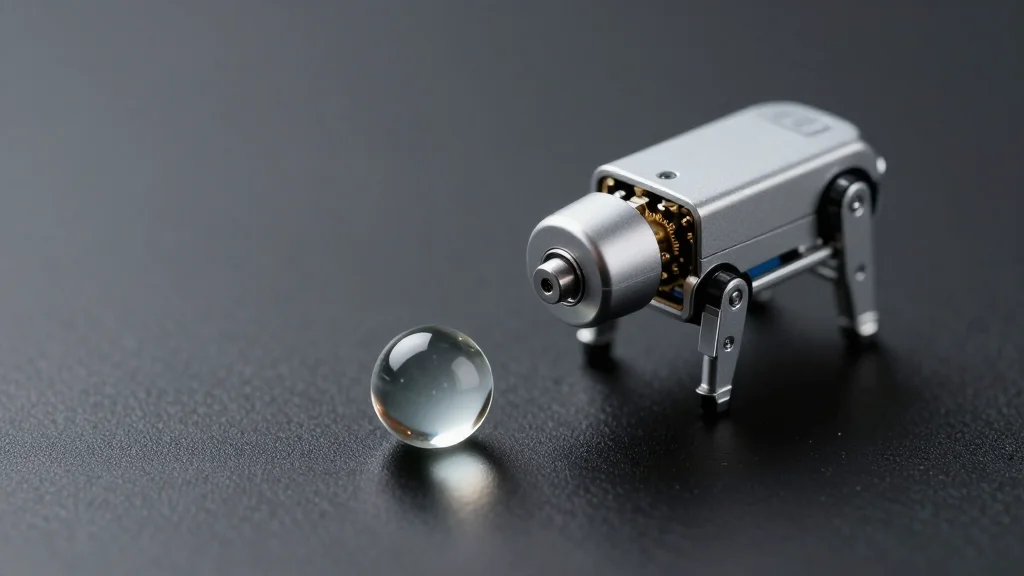
A Nanoscale Robotic Cleaner Can Hunt, Capture and Remove Bacteria
Why It Matters
The technology showcases a scalable, light‑driven method for manipulating microorganisms, opening pathways for rapid diagnostics, infection control, and precision drug delivery. Its ability to operate without chemical reagents could transform microbiology labs and future clinical tools.
Key Takeaways
- •Nanorobots under 1 µm capture and relocate bacteria via light
- •Photon recoil provides propulsion comparable to bullet recoil
- •Polarisation-controlled steering enables rapid 90° turns
- •Potential uses include infection diagnostics and targeted drug delivery
- •Demonstrated in lab; scaling to clinical settings remains challenge
Pulse Analysis
Light‑driven nanorobots are reshaping how scientists interact with the microscopic world. By harnessing the recoil of individual photons, the Würzburg team built sub‑micron devices that accelerate despite their tiny mass. The embedded plasmonic nanoantennas absorb specific wavelengths and re‑emit photons directionally, turning light into a propulsion engine that rivals the force of a bullet’s kickback. This photon‑based thrust eliminates the need for onboard fuel, allowing continuous operation in aqueous environments where traditional micro‑actuators falter.
Steering these nanorobots relies on the alignment of antenna wires with the polarisation of incident light. Adjusting polarisation angles rotates the robot, enabling it to execute swift 90° turns and scan large sample areas efficiently. In laboratory tests, the robots captured individual bacteria and larger clusters, transporting them to predefined locations before releasing them intact. Their agility persists even when hauling dense bacterial aggregates, though speed modestly declines. This level of control demonstrates that optical manipulation can move beyond observation to active, programmable cleaning at the cellular scale.
The implications for biotechnology are profound. Precise bacterial handling could accelerate pathogen detection, streamline sample preparation, and enable targeted delivery of therapeutics directly to infection sites. Moreover, the reagent‑free, light‑only operation reduces contamination risk and simplifies integration with existing microscopy platforms. Commercializing such nanorobots will require scaling production, ensuring biocompatibility, and navigating regulatory pathways, but the foundational physics are now proven. As the field matures, we can expect a new class of optical micromanipulation tools that bridge the gap between lab research and real‑world medical applications.
A nanoscale robotic cleaner can hunt, capture and remove bacteria
Comments
Want to join the conversation?
Loading comments...