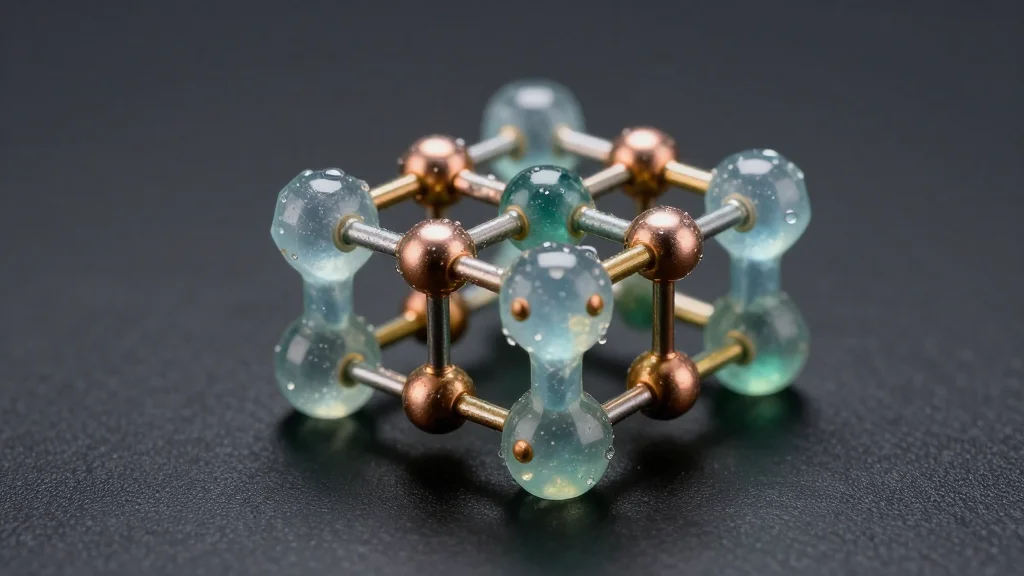
A Versatile Heterometallic Microporous MOF for Photocatalytic Hydrogen Generation
Why It Matters
The work demonstrates a scalable, noble‑metal‑free photocatalyst that overcomes stability and synthesis barriers, moving solar hydrogen production closer to commercial viability. Its water‑only route and robust performance could accelerate adoption of MOF‑based renewable energy technologies.
Key Takeaways
- •One‑pot water synthesis yields robust heterometallic MOFs
- •Cu‑based MIP‑215 generates >1 mmol g⁻¹ H₂ in 5 h without cocatalyst
- •Ni variant shows higher initial rates but suffers metal leaching
- •Photocatalysis driven by ligand‑to‑metal charge‑transfer states
Pulse Analysis
Solar hydrogen generation hinges on affordable, stable photocatalysts that can harvest a broad spectrum of sunlight. Traditional particulate systems often rely on expensive noble metals or suffer from narrow visible‑light absorption and rapid degradation in water, limiting their scalability. Metal‑organic frameworks (MOFs) have emerged as promising candidates because their tunable pores and electronic structures can be engineered for optimal light capture and charge transport, yet most reported MOFs require multistep syntheses and exhibit fragile stability under operational conditions.
MIP‑215 represents a breakthrough in MOF design by marrying zirconium oxoclusters with pyrazolate‑carboxylate metalloligands containing either copper or nickel. The one‑pot, ambient, water‑only synthesis eliminates hazardous solvents and reduces production costs, while the resulting 4,8‑connected scu topology creates uniform 1D micropores that remain chemically robust in both aqueous and organic environments. Moreover, the framework’s reversible flexibility upon dehydration and rehydration offers a rare combination of rigidity for structural integrity and adaptability for guest molecule interactions, a feature that can be leveraged to fine‑tune catalytic sites.
Performance testing under simulated sunlight shows that the Cu‑based MIP‑215 achieves sustained hydrogen evolution exceeding 1 mmol g⁻¹ in five hours without any additional cocatalyst, a metric comparable to many noble‑metal systems. The Ni analogue, while initially faster, loses activity due to metal leaching, underscoring the importance of metal‑ligand stability. Computational studies attribute the high activity to ligand‑to‑metal charge‑transfer excitations that efficiently separate charge carriers. This insight not only validates the design strategy but also points to a broader principle: engineering charge‑transfer pathways within MOFs can unlock superior photocatalytic efficiencies, paving the way for cost‑effective, large‑scale solar fuel production.
A Versatile Heterometallic Microporous MOF for Photocatalytic Hydrogen Generation
Comments
Want to join the conversation?
Loading comments...