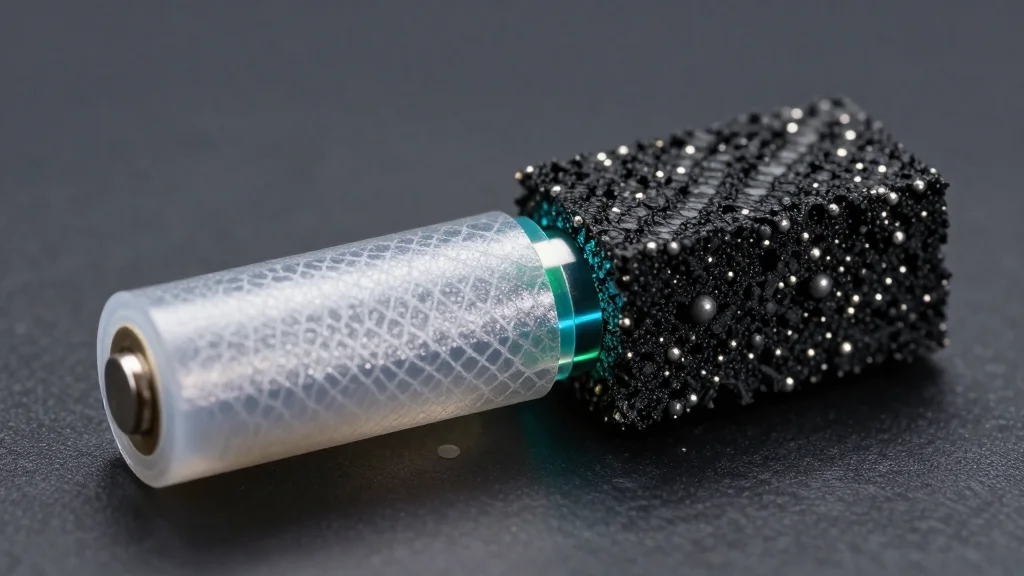
Advanced Separator Engineering with MOF and Carbon Nanofiber Cathode for Suppressed Polysulfide Shuttling in Li–S Batteries
Why It Matters
By suppressing the polysulfide shuttle and stabilizing electrode structure, the technology moves lithium‑sulfur batteries closer to commercial adoption for electric vehicles and grid storage, offering higher energy density at lower cost than conventional lithium‑ion systems.
Key Takeaways
- •In-doped CuCoMOF separator chemically adsorbs polysulfides
- •Co@PCNF cathode provides porous conductive network
- •Battery achieves 1145 mAh g⁻¹ at 1 C rate
- •Retains 1100 mAh g⁻¹ after 500 cycles
- •6.45 mAh cm⁻² areal capacity at 5.5 mg cm⁻² loading
Pulse Analysis
Lithium‑sulfur (Li‑S) batteries have long promised energy densities far beyond those of today’s lithium‑ion cells, but practical deployment has been hampered by the notorious polysulfide shuttle, sluggish redox kinetics, and dramatic volume expansion of sulfur during cycling. Researchers are therefore focusing on engineering both the separator and cathode to create physical and chemical barriers that trap polysulfides while maintaining rapid ion and electron transport. In this study, an indium‑doped copper‑cobalt metal‑organic framework (In‑doped CuCoMOF) is deposited on a Celgard separator, delivering strong chemical affinity for lithium polysulfides and catalytic sites that accelerate their conversion back to solid sulfur species, effectively curbing shuttle losses.
Complementing the advanced separator, the cathode employs heteroatom‑doped cobalt nanoparticles embedded in porous carbon nanofibers (Co@PCNF). This architecture furnishes a highly conductive, three‑dimensional network that accommodates the ~80% volume change of sulfur, ensures uniform sulfur distribution, and enhances electron pathways. The synergistic interaction between the MOF‑modified separator and the porous carbon cathode accelerates sulfur redox reactions, resulting in a specific capacity of 1,145 mAh g⁻¹ at 1 C and remarkable retention of 1,100 mAh g⁻¹ after 500 cycles. Notably, the cell achieves an areal capacity of 6.45 mAh cm⁻² at a practical sulfur loading of 5.5 mg cm⁻² while operating under lean electrolyte conditions, underscoring its relevance for real‑world applications.
The performance metrics reported here address two critical hurdles for Li‑S commercialization: energy density per unit mass and longevity under realistic loading and electrolyte constraints. By delivering high specific and areal capacities with minimal capacity fade, this separator‑cathode strategy could lower the cost per kilowatt‑hour for electric‑vehicle batteries and enable longer‑duration grid‑scale storage. Moreover, the use of scalable MOF synthesis and carbon nanofiber fabrication suggests a viable manufacturing pathway. Future work will likely explore further dopant optimization, electrolyte formulations, and integration with pouch‑cell designs to translate these laboratory gains into commercial products.
Advanced Separator Engineering with MOF and Carbon Nanofiber Cathode for Suppressed Polysulfide Shuttling in Li–S Batteries
Comments
Want to join the conversation?
Loading comments...