Agenda Update: Skeleton Technologies Joins Graphene Connect 2026!
•February 3, 2026
0
Companies Mentioned


Why It Matters
Skeleton Technologies’ participation signals growing commercial interest in graphene‑based energy storage, accelerating the transition from lab research to market‑ready solutions. This event offers stakeholders a platform to gauge adoption trends across multiple industries.
Key Takeaways
- •Skeleton Technologies presents at Graphene Connect 2026.
- •Session titled “From 2D to 3D…”.
- •Event focuses on scalable graphene production.
- •Over 1,500 expert talks available on-demand.
Pulse Analysis
Graphene Connect 2026 continues to cement its reputation as the premier virtual hub for the graphene and broader 2D materials ecosystem. Hosted online March 11‑12, the two‑day program assembles a balanced roster of startups, scale‑ups, academic labs, and industrial consortia such as the Graphene Flagship and GEIC‑University of Manchester. By spotlighting scalable production techniques, advanced characterization, and cross‑sector applications, the conference helps bridge the gap between laboratory breakthroughs and commercial deployment, reinforcing Europe’s leadership in next‑generation materials. Live Q&A panels enable direct dialogue between innovators and customers.
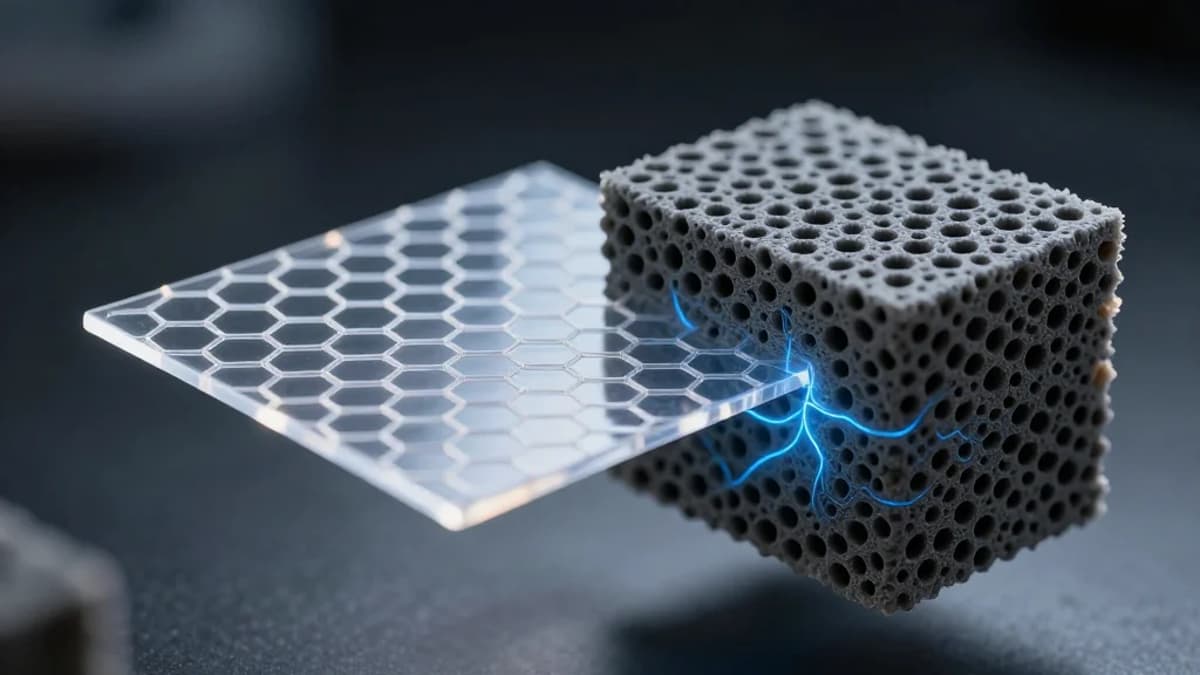
Skeleton Technologies’ inclusion underscores the rising relevance of graphene‑derived carbon structures in high‑power energy storage. In its session “From 2D to 3D: Turning Advanced Materials into Product‑Level Benefits,” the company will illustrate how ultrathin graphene sheets can be engineered into three‑dimensional architectures that deliver rapid charge‑discharge cycles, high energy density, and enhanced safety. This approach aligns with the industry’s push toward lightweight, long‑lasting batteries for electric vehicles, grid storage, and portable electronics, positioning graphene as a viable alternative to traditional lithium‑ion chemistries. Scalable roll‑to‑roll manufacturing lowers cost, speeds market entry.
The expanded agenda also grants participants unlimited access to TechBlick’s on‑demand library, which houses more than 1,500 expert talks spanning past and future events. This resource enables engineers, investors, and policymakers to stay abreast of rapid commercialization trends across composites, sensors, and electronics. As more companies demonstrate viable product pathways, the momentum generated by gatherings like Graphene Connect is likely to accelerate funding cycles, stimulate supply‑chain development, and ultimately drive broader market adoption of 2D material technologies. AI‑driven design tools will further shorten cycles, unlocking revenue.
Agenda Update: Skeleton Technologies joins Graphene Connect 2026!
0
Comments
Want to join the conversation?
Loading comments...