AI Helps Researchers Measure Nanofibers Beyond Diameter Alone
Why It Matters
Automating nanofiber characterization speeds product development and quality assurance across biomedical, filtration and energy sectors, giving manufacturers a competitive edge in scaling advanced materials.
Key Takeaways
- •Deep‑learning architectures deliver accurate diameter and pore measurements
- •Generative AI creates synthetic fiber images to expand training data
- •Real‑time AI vision systems enable closed‑loop control of electrospinning
- •Data scarcity and computational cost remain major hurdles for adoption
- •Open datasets and lightweight models are key to democratizing analysis
Pulse Analysis
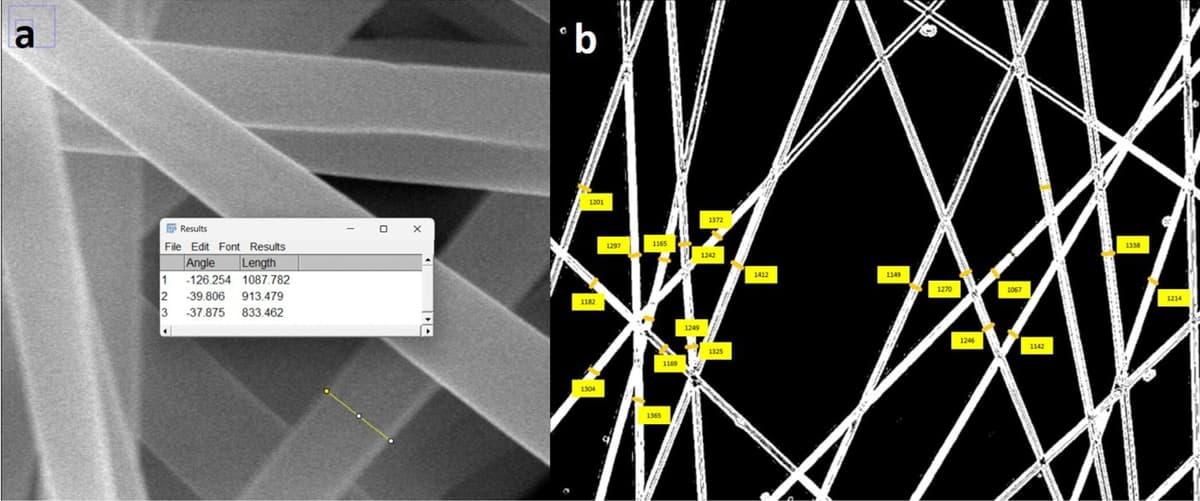
The characterization of electrospun nanofibers has traditionally relied on manual measurements or semi‑automated tools that struggle with overlapping fibers and noisy microscopy images. Recent advances in artificial intelligence, especially convolutional neural networks and U‑Net variants, have transformed this workflow by learning hierarchical features directly from raw SEM or optical images. These deep‑learning models produce pixel‑level segmentations, allowing precise extraction of diameter, pore size and morphological descriptors without extensive parameter tuning. By leveraging generative adversarial networks to synthesize realistic fiber images, researchers can also overcome the chronic shortage of labeled training data, further boosting model robustness.
From a manufacturing perspective, AI‑driven vision systems are moving nanofiber production toward smart, closed‑loop operation. Continuous imaging of the forming mat feeds a trained model that instantly flags defects such as beads, diameter drift or misaligned fibers, prompting automatic adjustments to voltage, flow rate or collector distance. This real‑time quality control dramatically reduces scrap rates and shortens development cycles for applications ranging from biomedical scaffolds to high‑efficiency filters. Post‑process inspection can scan entire rolls in minutes, delivering statistically significant uniformity metrics that were previously impractical with manual sampling.
Despite the promise, widespread adoption faces practical obstacles. Training deep models requires sizable, diverse datasets, and the computational load can be prohibitive for small labs or legacy production lines. Researchers are therefore exploring transfer learning, lightweight architectures and explainable‑AI techniques to improve generalization and build user trust. Community‑driven open datasets, benchmark challenges and standardized validation protocols will be essential to ensure reproducibility and accelerate innovation. As these hurdles recede, AI‑enhanced nanofiber analysis is poised to become a foundational tool that accelerates material discovery and scales advanced manufacturing across multiple sectors.
AI Helps Researchers Measure Nanofibers Beyond Diameter Alone
Comments
Want to join the conversation?
Loading comments...