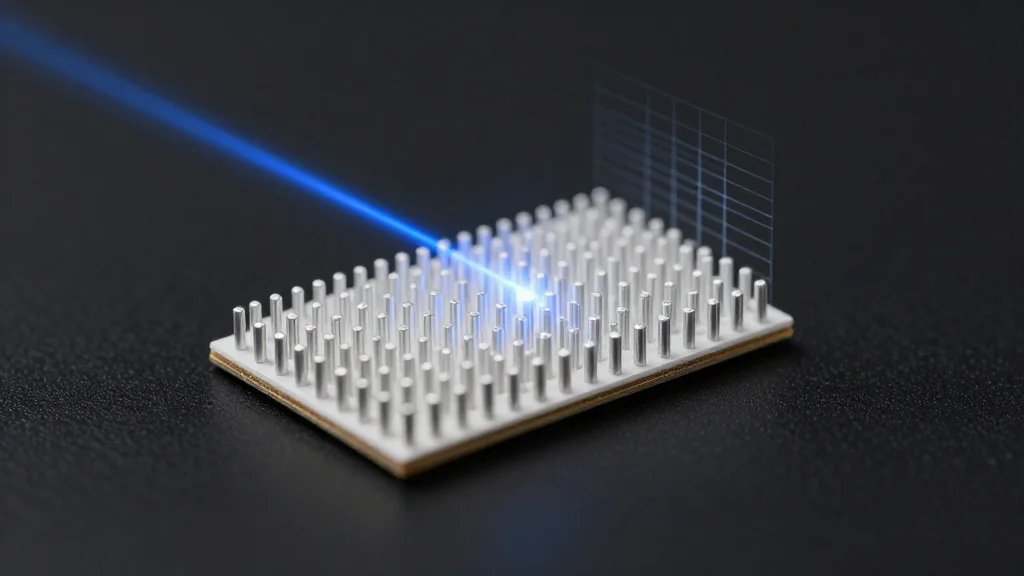
AI Paired with Tiny Optical Device Corrects Distorted Light for Sharper Imaging
Companies Mentioned
Why It Matters
By delivering single‑shot wavefront correction in a compact form factor, the technology can shrink and accelerate advanced imaging systems, opening new performance levels for scientific, industrial and consumer optics.
Key Takeaways
- •AI-designed metasurface corrects distortions from a single image
- •Device fits within 1 cm × 0.5 mm, negligible weight
- •Works across multiple wavelengths and noisy conditions
- •Scalable solution for microscopes, telescopes, smartphones
- •Patent‑pending approach promises real‑time aberration correction
Pulse Analysis
Optical aberrations—tiny imperfections in lenses or mirrors—have long plagued imaging devices, from high‑end microscopes to everyday smartphone cameras. Traditional correction techniques rely on iterative measurements, adaptive optics hardware, or computationally intensive post‑processing, which add bulk, cost, and latency. As industries push for ever‑smaller, faster, and more reliable visual systems, the demand for a lightweight, single‑shot solution has become acute, especially in fields where space and power are at a premium.
The UC San Diego team addressed this gap by training a deep neural network to recognize the unique signature of each wavefront distortion. Coupled with an AI‑designed metasurface—an array of titanium‑dioxide nanopillars fabricated in the Qualcomm Institute’s Nano3 cleanroom—the system can infer the distortion from a single captured image and instantly compute the corrective phase pattern. The device operates over a broad spectral range, tolerates noisy inputs, and has been validated experimentally, demonstrating a practical path from simulation to real‑world deployment.
Beyond academic interest, the technology promises tangible benefits across multiple markets. In biomedical research, sharper microscope images accelerate cell‑level discoveries; astronomers can achieve clearer views without massive adaptive‑optics rigs; and manufacturers gain tighter tolerances in laser‑based processes. The patent‑pending status suggests commercial licensing opportunities, while the compact form factor makes integration into consumer cameras feasible. As AI continues to merge with nanophotonics, this breakthrough could redefine how optical systems are designed, built, and operated, driving a new wave of innovation in imaging and photonics.
AI paired with tiny optical device corrects distorted light for sharper imaging
Comments
Want to join the conversation?
Loading comments...