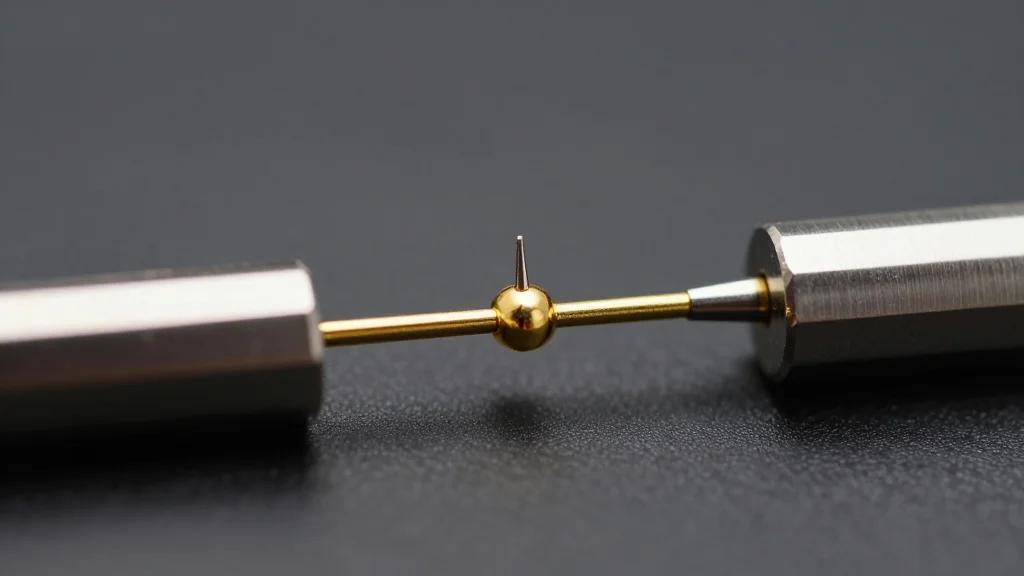
Alicante Lab Shows Room‑Temp Nanometre Calibration, 3‑Atom Gold Wires

Why It Matters
The new calibration method tackles two entrenched challenges in nanotechnology: the need for ultra‑precise distance measurement and the prohibitive cost of cryogenic equipment. By delivering atomic‑scale accuracy at room temperature, the technique lowers the entry barrier for research labs worldwide, potentially speeding up the pipeline from discovery to commercial nano‑electronic components. In addition, the ability to reliably produce three‑atom‑thick gold contacts under ambient conditions could become a cornerstone for quantum‑effect devices, where control over single‑atom dimensions dictates performance. Beyond academia, the cost‑effective, 3D‑printed instrumentation could inspire a new class of modular, open‑source hardware for nanofabrication. This democratization aligns with broader trends in the nanotech sector, where scalable, low‑cost solutions are essential for translating laboratory breakthroughs into market‑ready products such as ultra‑dense sensors, molecular switches, and next‑generation computing elements.
Key Takeaways
- •University of Alicante’s QT‑Lab developed a room‑temperature nanometre calibration system.
- •First observation of gold nanocontacts three atoms thick under ambient conditions.
- •Technique combines scanning tunnelling microscopy (STM) with mechanically controllable break junctions (MCBJ).
- •Low‑cost 3D‑printed instrumentation replaces equipment that previously cost millions of euros.
- •Method validated in labs across the Netherlands, Belgium and Germany.
Pulse Analysis
The Alicante breakthrough arrives at a moment when the nanotech industry is seeking scalable, cost‑effective pathways to embed quantum phenomena into everyday electronics. Historically, the reliance on cryogenic environments limited the commercial viability of atomic‑scale devices, confining them to niche research facilities. By eliminating the temperature barrier, the new method not only reduces capital expenditure but also shortens development cycles, allowing firms to iterate designs more rapidly.
From a competitive standpoint, the scarcity of MCBJ expertise has been a strategic moat for a handful of institutions. UA’s decision to open‑source the hardware via 3D‑printing could erode that advantage, fostering a more collaborative ecosystem. Companies that can quickly adopt the calibration protocol may gain a first‑mover edge in producing molecular‑scale transistors or sensors, especially as the semiconductor industry approaches the physical limits of silicon lithography.
Looking forward, the real test will be integration into manufacturing lines. If the calibration technique can be adapted for roll‑to‑roll or wafer‑scale processes, it could catalyse a new wave of nano‑electronics that combine the precision of atomic engineering with the throughput required for commercial products. Investors and venture capitalists should monitor the upcoming patent filings and industry workshops, as they will signal how quickly the technology moves from the lab bench to the market.
Alicante Lab Shows Room‑Temp Nanometre Calibration, 3‑Atom Gold Wires
Comments
Want to join the conversation?
Loading comments...