An Ultra‐Tough Fluorescent Elastomer Engineered Using Hierarchical Dynamic Interactions to Integrate Damage Detection and Protection
Why It Matters
The breakthrough merges optical sensing with structural resilience, enabling smarter, self‑monitoring infrastructure and reducing maintenance costs across high‑risk industries.
Key Takeaways
- •Record toughness 668.9 MJ/m³ achieved
- •Strength reaches 78.3 MPa, surpassing prior elastomers
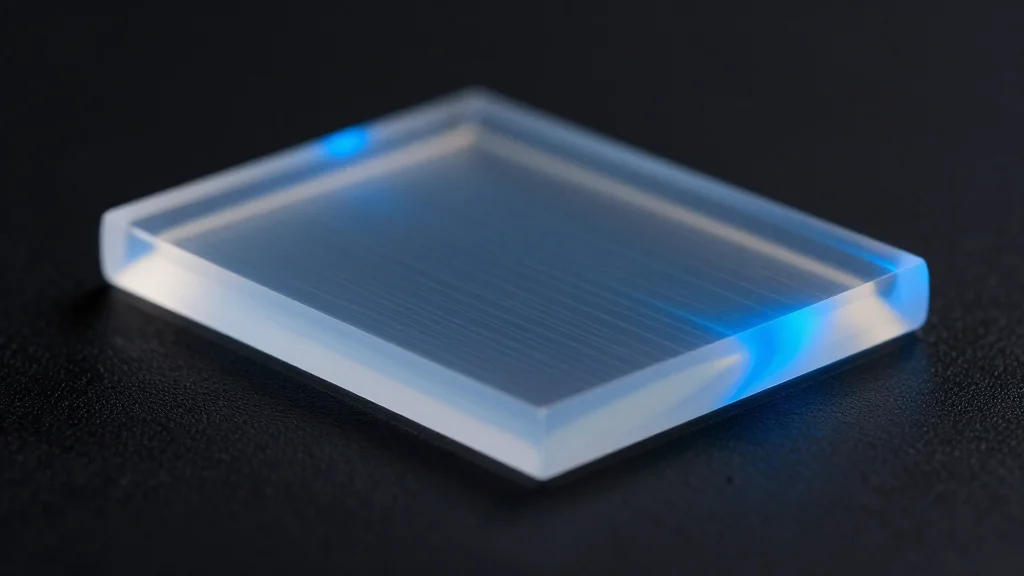
- •Fluorescence via La3+ coordination, blue under UV
- •Detects damage, water leaks, and blast impacts
- •Recyclable, maintains performance after multiple reprocessing cycles
Pulse Analysis
Integrating fluorescence into load‑bearing polymers has long been a paradox: adding chromophores typically softens the matrix, while preserving strength often quenches emission. The new study resolves this tension by leveraging a double‑aggregation approach—aggregation‑induced emission coupled with aggregation‑enhanced fluorescence—paired with La³⁺ ions that act as bulky coordination centers. These ions lock polymer chains into a dense, hierarchical hydrogen‑bond network spanning nine interaction levels, simultaneously restricting intramolecular motion for bright blue emission and providing multiple energy‑dissipation pathways that boost toughness.
The resulting poly(urea‑urethane) elastomer delivers unprecedented mechanical metrics: a toughness of 668.9 MJ m⁻³ and a tensile strength of 78.3 MPa, both far exceeding previously reported fluorescent elastomers. Moreover, the material retains its performance after repeated reprocessing, confirming true recyclability—a rare combination in high‑performance polymers. Its fluorescence remains stable up to 240 °C, enabling applications in optical anti‑counterfeiting and secure information encryption where thermal resilience is essential.
Beyond laboratory metrics, the elastomer’s integrated sensing functions—real‑time damage visualization, water‑leak detection, and blast‑impact resistance—open avenues for smart infrastructure in nuclear facilities, energy grids, and aerospace. By embedding self‑diagnostic capabilities directly into structural components, operators can anticipate failures, reduce downtime, and enhance safety. As industries seek materials that combine durability with embedded intelligence, this hierarchical dynamic elastomer sets a new benchmark for multifunctional polymer design.
An Ultra‐Tough Fluorescent Elastomer Engineered Using Hierarchical Dynamic Interactions to Integrate Damage Detection and Protection
Comments
Want to join the conversation?
Loading comments...