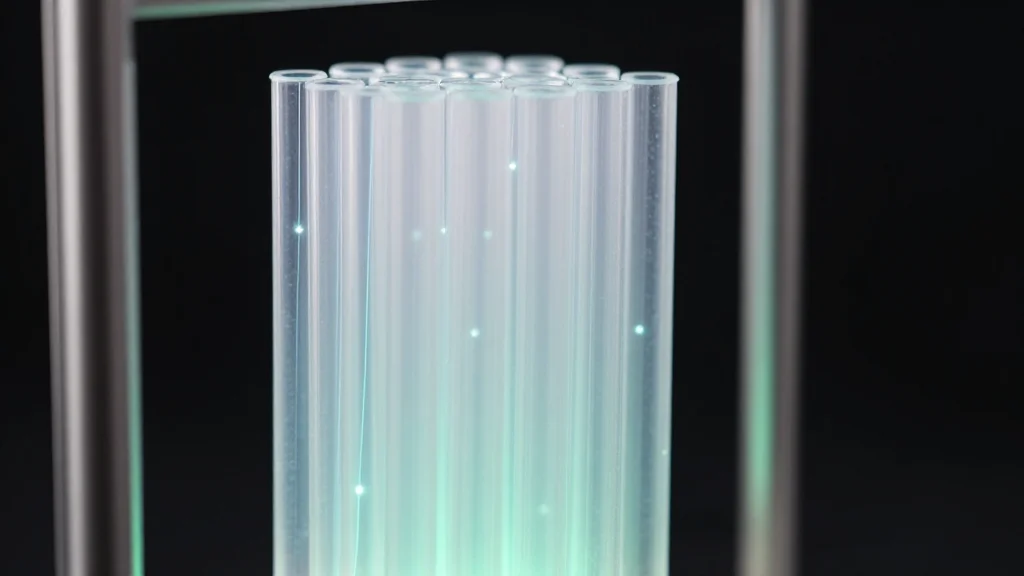
Anomalous Ultrafast Lithium-Ion Transport Through Boron Nitride Nanotube Membranes
Companies Mentioned
Why It Matters
Ultrafast Li‑ion transport can dramatically reduce charging times and boost power density in next‑generation batteries, while the same nanofluidic platform opens new avenues for blue‑energy harvesting and selective ion separation.
Key Takeaways
- •BNNT membranes achieve Li‑ion conductivity >10 S m⁻¹.
- •Transport rates exceed carbon nanotube pores by factor of three.
- •Selectivity favors Li⁺ over Na⁺ and K⁺ ions.
- •Potential to halve charging time for lithium‑ion batteries.
- •Scalable electric‑field‑assisted alignment enables large‑area BNNT membranes.
Pulse Analysis
Boron nitride nanotube (BNNT) membranes have emerged as a compelling alternative to carbon‑based nanofluidic channels because of their chemically inert basal planes, atomically smooth interiors, and exceptional mechanical strength. Unlike graphene or carbon nanotubes, BNNTs possess a permanent surface charge that can be tuned during synthesis, enabling precise control over ion transport without sacrificing structural integrity. Recent advances in electric‑field‑assisted alignment have made it possible to fabricate large‑area, vertically aligned BNNT arrays, overcoming a long‑standing scalability hurdle that limited laboratory‑scale demonstrations.
In the latest study, the authors report lithium‑ion conductivities surpassing 10 S m⁻¹, a value that translates to ion fluxes on the order of 10⁹ ions s⁻¹ per individual tube—approximately three times higher than the fastest carbon‑nanotube pores reported to date. The ultrafast transport is attributed to a combination of low friction within the hydrophilic BNNT lumen, reduced dehydration barriers for Li⁺, and the intrinsic negative surface charge that preferentially attracts cations. Selectivity experiments show a Li⁺/Na⁺ permeability ratio exceeding 5, indicating that the membrane can discriminate between closely sized alkali ions, a feature valuable for both battery electrolytes and ion‑separation technologies.
The implications for industry are significant. Faster lithium‑ion migration could halve the charging time of high‑energy‑density batteries, addressing a key consumer demand for rapid‑charge electric vehicles. Moreover, the same nanofluidic architecture can be leveraged for blue‑energy devices that harvest power from salinity gradients, offering a sustainable route to supplemental electricity generation. Challenges remain, including cost‑effective mass production and integration with existing cell architectures, but the demonstrated scalability of BNNT membrane fabrication positions this technology as a strong candidate for next‑generation energy storage and conversion solutions.
Anomalous ultrafast lithium-ion transport through boron nitride nanotube membranes
Comments
Want to join the conversation?
Loading comments...