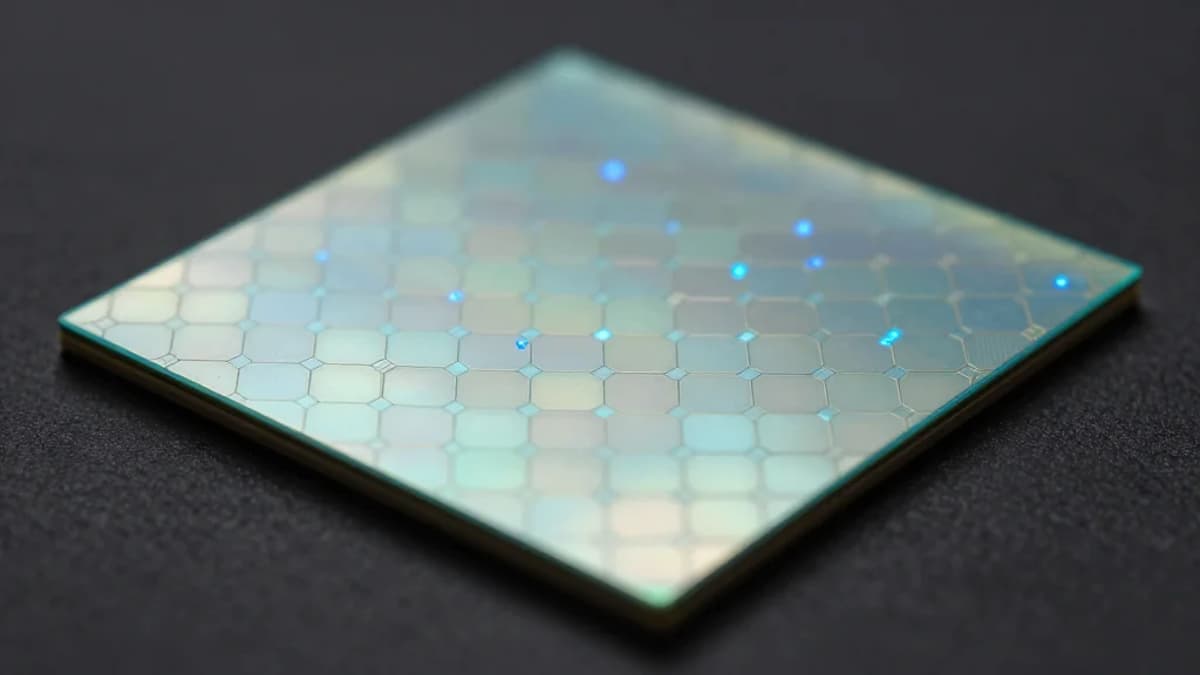
Archer Materials Advances Graphene and Carbon Quantum Technologies
•January 29, 2026
0
Companies Mentioned

Why It Matters
The breakthroughs de‑risk carbon‑based qubits and bring scalable, room‑temperature quantum hardware closer to market, challenging dominant superconducting platforms. This positions Archer as a potential early mover in a rapidly expanding quantum ecosystem.
Key Takeaways
- •Electrical detection of spin states achieved directly on chip.
- •Room‑temperature spin lifetimes exceed 0.4 µs.
- •One‑inch wafer synthesis enables scalable qubit production.
- •Partnership with Emergence Quantum expands material discovery.
- •Gating and transistor designs refined for scalable architecture.
Pulse Analysis
Graphene and other carbon allotropes have attracted intense interest as alternative qubit hosts because of their low spin‑orbit coupling and potential for room‑temperature operation. Unlike superconducting circuits that require millikelvin cooling, carbon‑based spins can retain coherence at much higher temperatures, reducing system complexity and cost. However, achieving reliable readout, precise electrostatic control, and wafer‑scale material quality has remained a bottleneck. Recent advances in electrically detected magnetic resonance and spin‑to‑charge conversion are beginning to close that gap, positioning carbon platforms as credible competitors to silicon and trapped‑ion technologies.
In the December 2025 quarter Archer Materials reported several milestones that directly address those bottlenecks. The company demonstrated on‑chip electrical detection of quantum spin states and implemented electrical gating of carbon films, proving that charge and spin can be manipulated with transistor‑like precision. More strikingly, electron spin lifetimes surpassed 0.4 µs at room temperature—a figure that rivals early superconducting qubits and far exceeds many prior carbon‑based results. Scaling was further validated by synthesizing the qubit material on a full one‑inch silicon wafer, a critical step toward mass‑production and integration with existing semiconductor fabs.
These technical gains are amplified by Archer’s new collaboration with Emergence Quantum, which broadens the search for graphene‑enabled quantum devices and accelerates pathway to commercialization. If the 12CQ platform can translate laboratory performance into reliable, manufacturable qubits, it could open new markets in quantum computing, high‑sensitivity sensing, and medical diagnostics, all while leveraging existing CMOS infrastructure. Investors are likely to view the progress as de‑risking for a sector still dominated by a few large players, and the partnership signals a strategic push to capture early‑stage market share in next‑generation quantum hardware.
Archer Materials advances graphene and carbon quantum technologies
0
Comments
Want to join the conversation?
Loading comments...