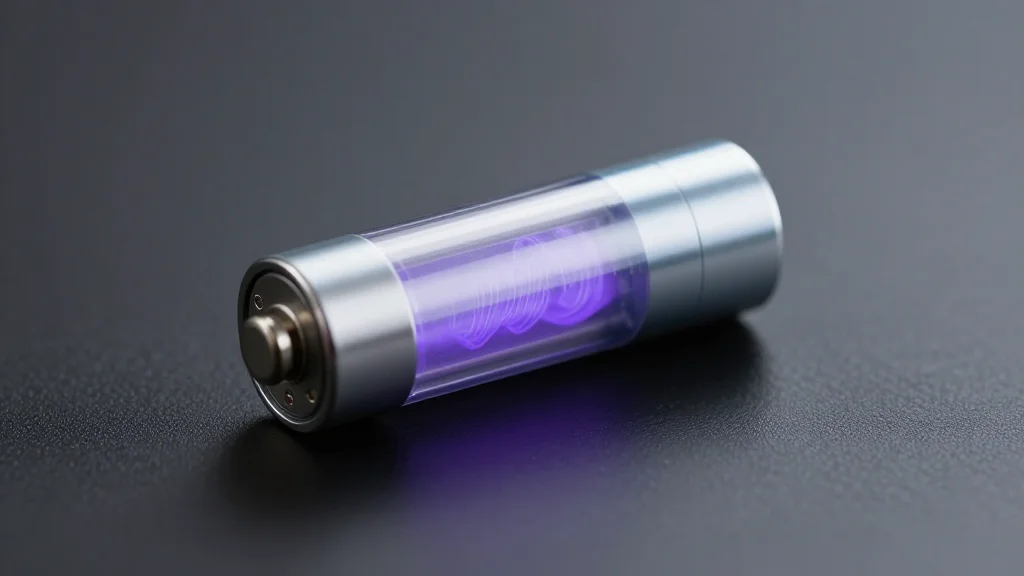
Australian Team Demonstrates First Quantum Battery Using Nanomaterials

Why It Matters
The quantum battery prototype showcases how nanomaterials can act as a bridge between quantum physics and practical energy storage, a convergence that could unlock charging speeds orders of magnitude faster than current technologies. By proving that quantum effects can be harnessed at room temperature, the work challenges the long‑standing belief that quantum devices require cryogenic conditions, opening a pathway for commercial applications. Beyond speed, the approach could reduce reliance on scarce or hazardous materials used in conventional batteries, aligning with sustainability goals. If the charge‑as‑you‑scale phenomenon holds at larger sizes, manufacturers may achieve higher power densities without sacrificing safety, reshaping design strategies for everything from smartphones to electric‑vehicle powertrains.
Key Takeaways
- •CSIRO, University of Melbourne and RMIT built the first proof‑of‑concept quantum battery.
- •Prototype uses nanomaterial‑mediated quantum super‑absorption to charge in femtoseconds.
- •Researchers demonstrated rapid charging at room temperature, a first for quantum‑based storage.
- •Next research focus: extending discharge time while maintaining ultra‑fast charge rates.
- •Potential to disrupt nanotech energy storage market by offering faster, cleaner charging solutions.
Pulse Analysis
The quantum battery announcement marks a pivot from incremental chemistry tweaks to a fundamentally different storage paradigm. Historically, nanotech has improved electrode surfaces, electrolyte stability, and thermal management, but the underlying energy conversion remained electrochemical. By leveraging quantum coherence and collective photon absorption, the Australian team introduces a mechanism that could bypass diffusion limits entirely. This could force incumbents—such as lithium‑ion manufacturers and solid‑state battery startups—to reassess R&D roadmaps, especially if scaling challenges are resolved.
From a market perspective, the timing is crucial. Global battery demand is projected to exceed $1 trillion by 2030, driven by EV adoption and renewable integration. Investors are actively seeking breakthroughs that can deliver both higher power density and faster turnaround. While the quantum battery is still a laboratory proof‑of‑concept, its demonstration may attract venture capital and government funding aimed at quantum technologies, potentially spawning a new sub‑segment within the nanotech energy ecosystem.
Looking ahead, the key question is whether the quantum effect can be maintained in larger, manufacturable formats without prohibitive cost. If successful, we could see a new class of ultra‑fast chargers that complement, rather than replace, existing battery chemistries—much like how solid‑state batteries are positioned today. The next 12‑18 months will be critical as the team publishes scalability data and engages industrial partners. Should those milestones be met, the quantum battery could shift from a scientific curiosity to a commercial catalyst, redefining performance benchmarks across the nanotech sector.
Australian Team Demonstrates First Quantum Battery Using Nanomaterials
Comments
Want to join the conversation?
Loading comments...