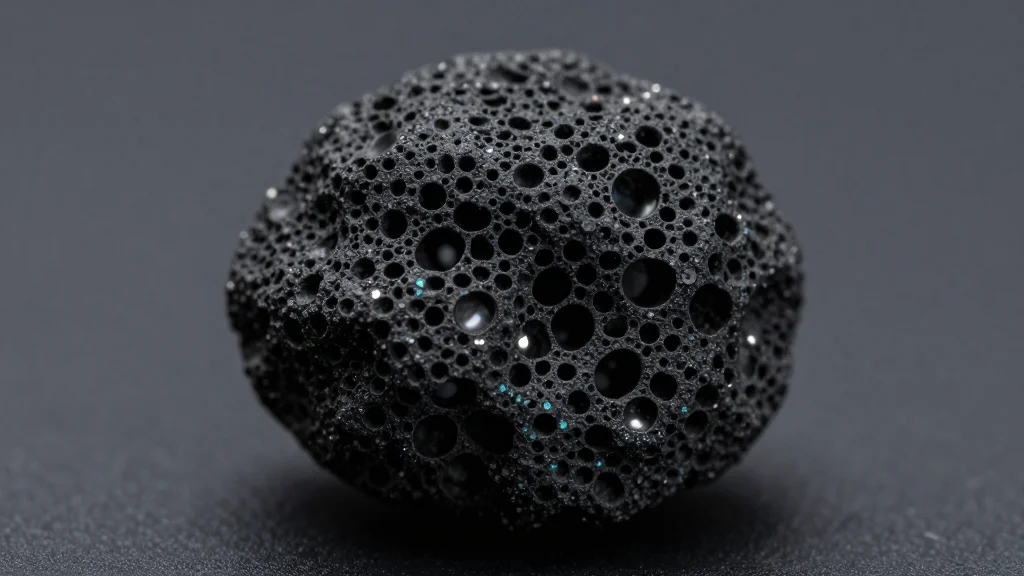
B, N, and O Co‐Doped Nanoporous Activated Carbon With High Surface Area and Hierarchical Porous Structure for Enhanced Li‐Ion Battery and Supercapacitor Performance
Why It Matters
The dual‑function electrode dramatically lifts both battery capacity and supercapacitor power, meeting the growing market demand for higher‑energy, longer‑life storage systems.
Key Takeaways
- •B,N,O co-doping creates hierarchical pores and high surface area
- •Supercapacitor delivers 34.3 Wh kg⁻¹ and 600 W kg⁻¹ power
- •Lithium‑ion anode reaches 1,606 mAh g⁻¹ at low current
- •Capacity is eight times higher than undoped nanoporous carbon
- •Material retains 100% capacity after 10,000 supercapacitor cycles
Pulse Analysis
Heteroatom‑doped carbons have become a cornerstone of next‑generation energy storage because they combine electrical conductivity with tunable surface chemistry. Incorporating elements such as boron, nitrogen and oxygen introduces faradaic sites that improve charge transfer while preserving the intrinsic high surface area of porous carbon. This chemistry is especially valuable for devices that must balance energy density with rapid charge‑discharge capability, a trade‑off that traditional graphite anodes or activated carbons struggle to resolve.
The new synthesis route leverages a solid‑state activation of a simple mixture of boric acid, sucrose and aminoguanidine, using potassium citrate as a mild activating agent. This approach yields a hierarchical pore architecture—micropores for ion adsorption, mesopores for electrolyte diffusion, and macropores for rapid transport—while uniformly embedding B, N and O functional groups. The resulting electrode delivers 34.3 Wh kg⁻¹ and 600 W kg⁻¹ in a symmetric supercapacitor, and an impressive 1,606 mAh g⁻¹ at 0.05 A g⁻¹ in lithium‑ion cells, an eight‑fold improvement over bare carbon. Ex‑situ SEM, TEM, EIS and XRD confirm that the structure remains intact after extensive cycling, underscoring its durability.
For the broader market, this material offers a rare combination of high energy storage and long cycle life, positioning it for applications ranging from electric vehicles to grid‑scale buffering. Compared with conventional lithium‑ion anodes, the capacity boost could translate into lighter batteries or longer driving ranges, while the supercapacitor performance rivals that of commercial activated carbons but with far superior stability. As manufacturers seek cost‑effective, scalable solutions, the solid‑state co‑activation process—relying on inexpensive precursors—could accelerate commercialization, prompting further research into scaling, safety testing, and integration with existing cell architectures.
B, N, and O Co‐Doped Nanoporous Activated Carbon With High Surface Area and Hierarchical Porous Structure for Enhanced Li‐Ion Battery and Supercapacitor Performance
Comments
Want to join the conversation?
Loading comments...