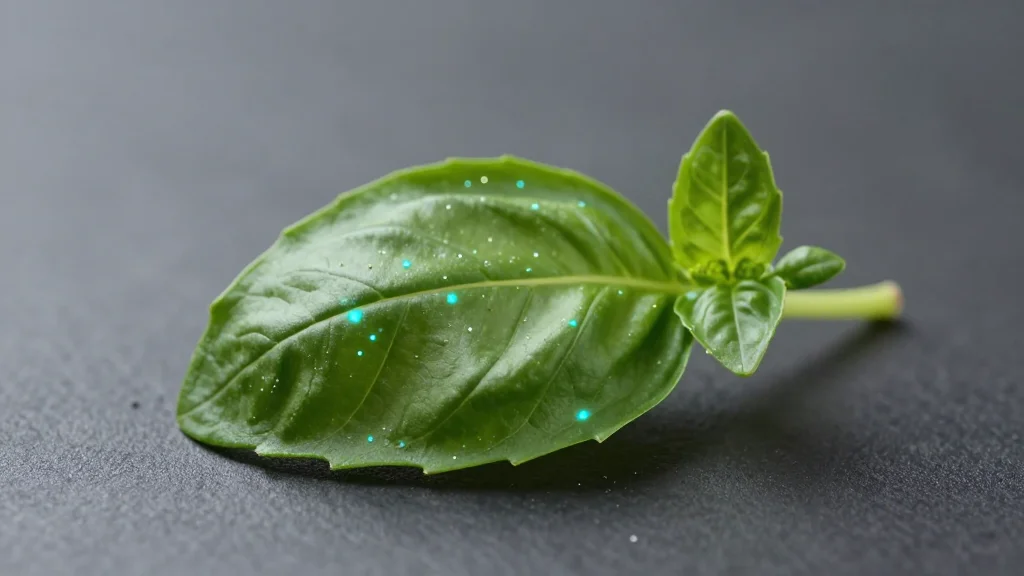
Basil‑Derived Carbon Dots Boost Fenugreek Growth, Offer Green Path for Agriculture

Why It Matters
The study highlights a shift toward bio‑derived nanotechnologies that align with circular‑economy principles, reducing dependence on petrochemical‑based agro‑inputs. By turning a kitchen herb into a functional nanomaterial, the research opens a pathway for low‑cost, locally produced solutions that could be especially valuable for resource‑constrained farmers. Beyond immediate yield gains, the approach could mitigate environmental damage linked to fertilizer runoff and pesticide residues, contributing to healthier soils and waterways. If scaled, such biodegradable nanodots may become a cornerstone of climate‑smart agriculture, supporting both food security and sustainability goals.
Key Takeaways
- •Researchers at ENES‑León, UNAM and UAQ created 5‑8 nm carbon dots from sweet‑basil leaves.
- •Optimal nanodot concentration increased fenugreek root length, shoot height and biomass in greenhouse tests.
- •The particles are biodegradable, inexpensive and derived from an edible plant, reducing environmental risk.
- •Future work will test the nanodots on field crops under drought and poor‑soil conditions.
- •Successful commercialization could lower fertilizer use and cut agro‑chemical emissions.
Pulse Analysis
Basil‑derived carbon dots represent a convergence of nanotechnology and agronomy that could redefine input economics. Historically, nanomaterials in agriculture have been dominated by metal‑oxide particles—such as zinc oxide or titanium dioxide—whose production is energy‑intensive and whose persistence raises regulatory concerns. The shift to plant‑based carbon nanodots sidesteps many of these hurdles, offering a feedstock that is renewable, abundant and already accepted in the food chain.
Market analysts estimate the global agricultural nanotech sector could exceed $5 billion by 2030, driven by demand for precision delivery systems and stress‑mitigation agents. However, adoption has been slowed by high production costs and uncertain regulatory pathways. The basil approach could undercut cost barriers: hydrothermal synthesis uses low‑temperature water baths and no hazardous chemicals, making it scalable in modest facilities. Moreover, because the end product is essentially carbon, it may face fewer hurdles from agencies like the EPA or EFSA, provided toxicity studies confirm safety.
Competitive dynamics will soon revolve around who can integrate such biogenic nanodots into existing seed‑treatment pipelines. Large agribusinesses may partner with university spin‑outs to secure supply chains, while startups could leverage the technology for niche markets—organic farms, high‑value horticulture, or regions with limited access to synthetic inputs. The key risk remains the translation from controlled greenhouse conditions to variable field environments. If the upcoming field trials demonstrate robust performance across soil types and climate zones, basil carbon dots could catalyze a broader movement toward bio‑nanomaterials, reshaping both the nanotech and agricultural landscapes.
Basil‑Derived Carbon Dots Boost Fenugreek Growth, Offer Green Path for Agriculture
Comments
Want to join the conversation?
Loading comments...