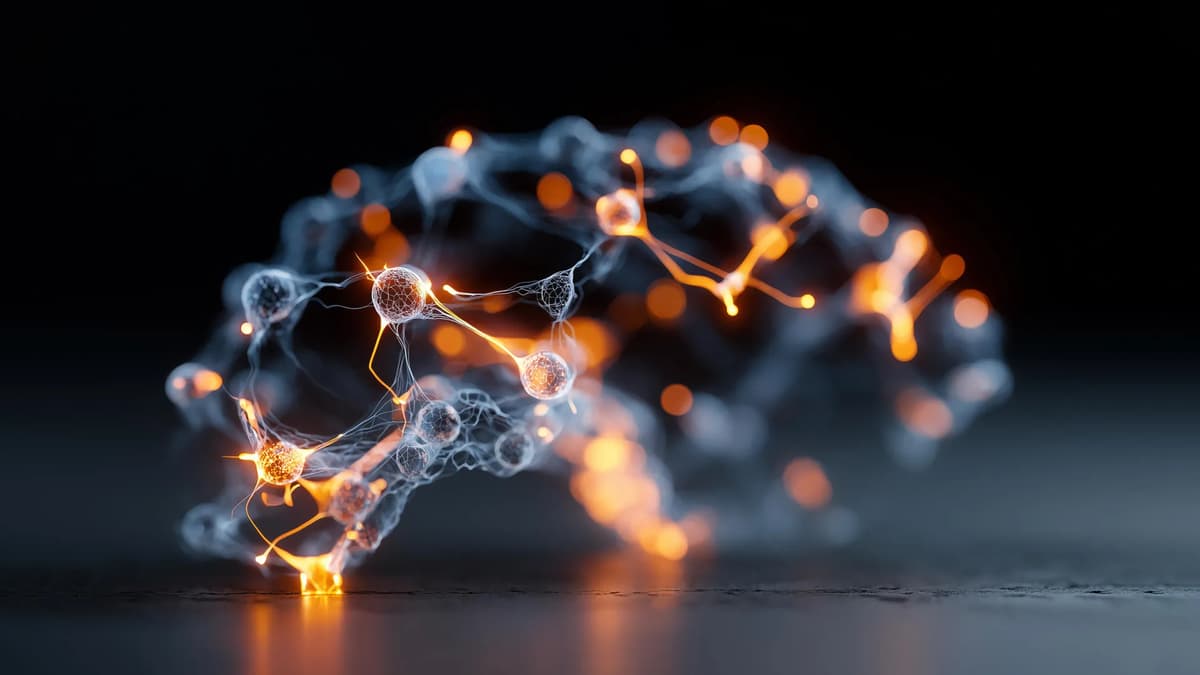
Beyond Silicon: These Shape-Shifting Molecules Could Be the Future of AI Hardware
•January 3, 2026
0
Why It Matters
The breakthrough merges molecular electronics with neuromorphic computing, enabling hardware that stores, computes, and learns within a single material, potentially reshaping AI accelerator design and power consumption.
Key Takeaways
- •Molecular devices act as memory, logic, synapse
- •Ruthenium complexes tuned via ligands and ions
- •Transport model predicts behavior from molecular structure
- •Potential for energy‑efficient neuromorphic AI hardware
Pulse Analysis
For decades, silicon has dominated electronic design, but its physical limits have spurred a search for molecular alternatives that could deliver higher density and novel functionalities. Early attempts struggled because isolated molecules behaved unpredictably when packed into devices, leading to nonlinear responses that defied conventional modeling. Simultaneously, neuromorphic computing pursued materials capable of co‑locating memory and processing, yet most implementations rely on engineered oxides that mimic learning rather than embody it. The convergence of these two research streams sets the stage for a new class of adaptive hardware.
The IISc team, led by Assistant Professor Sreetosh Goswami, leveraged the rich chemistry of ruthenium complexes to create devices whose electrical response can be reconfigured on demand. By systematically varying ligands and surrounding counter‑ions across 17 synthesized molecules, they demonstrated seamless transitions between digital switching, analog modulation, and synaptic plasticity within a single nanoscale junction. A sophisticated transport model, grounded in many‑body physics and quantum chemistry, translates molecular structure into predicted conductance states, offering a predictive design tool that has long been missing from molecular electronics. This chemistry‑driven versatility mirrors biological neurons, where a single protein can store, transmit, and adapt signals.
If these molecular systems can be reliably integrated onto conventional silicon platforms, they promise AI accelerators that consume far less power while performing in‑memory computation and on‑chip learning. Such hardware could accelerate edge AI applications, reduce data‑center energy footprints, and open pathways for truly intelligent materials. However, challenges remain in scaling fabrication, ensuring long‑term stability, and interfacing molecular layers with existing CMOS processes. Continued interdisciplinary collaboration will be essential to translate this laboratory breakthrough into commercial neuromorphic processors that redefine the economics of artificial intelligence.
Beyond silicon: These shape-shifting molecules could be the future of AI hardware
0
Comments
Want to join the conversation?
Loading comments...